Sunday, June 30, 2013

Inspiring High School Students Through Supply Chain Management

Tackling the issues surrounding today's supply chains requires the best in optimization, engineering, economics, and business management.

Supply chains are fascinating and to appropriately model and analyze them requires a holistic, system perspective. 

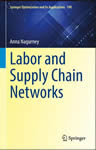
I have now authored two books on supply chains:  Supply Chain Network Economics: Dynamics of Prices, Flows, and Profits and Networks Against Time: Supply Chain Analytics for Perishable Products, which I wrote with two of my former doctoral students, Min Yu, Amir H. Masoumi, and Ladimer S. Nagurney (my husband)

Yesterday, my husband, the other Professor Nagurney, spoke to a group of 200 high school students at the Olin College of Engineering in Needham, Massachusetts.

His presentation was entitled: What is Supply Chain Management?

He presented numerous applications so that the high school students would appreciate the various aspects of supply chain management from sourcing to outsourcing and even corporate social responsibility and environmental awareness. He also spoke about conflict minerals.

The high schoolers could very much relate to the apple juice supply chain and remembered drinking from juice boxes as toddlers and in elementary school. They also appreciated the forestry supply chain, the pharmaceutical supply chain, which we have done a lot of writing on. One very observant student notices that, except for the tail fin, parts for the Boeing 787 come from outside the state of Washington.


He also spoke on the medical nuclear supply chain, noted immediately above, which is a supply chain network that we have written about and which, in our mathematical models, we utilize also physics to capture the decay of medical radioisotopes over space and time. He also noted that smart grids are supply chains.

The questions that the students had were very impressive and included the following:

1. How do you decide whether to  outsource or not?

2. Does anything matter besides price of a product?

3. What happens to the supply chain when a supplier goes out of business?

Remember, the audience consisted of high school students!

The students appreciated the system perspective and the engineering and business issues.

Through supply chains, one gets to appreciate the distinct paths that products take.

For those who are interested, the full presentation can be downloaded from the Supernetwork Center website.

And for our latest research on supply chain networks with applications to food, healthcare, fast fashion, and even electric power, please visit our Supernetwork Center publication page.

Saturday, June 29, 2013

Supernetwork Center Associates at Euro INFORMS in Rome, Italy


I returned last week from Europe, where I have been spending part of my sabbatical as a Visiting Professor of Operations Management at the School of Business, Economics and Law at the University of Gothenburg in Sweden.

This sabbatical has been fabulous and I am now writing several research papers, inspired by my time in Europe and discussions with colleagues in Sweden.

The Euro INFORMS Conference will be taking place soon -- July 1-4, 2013, in Rome, Italy, and I am pleased to report that several Supernetwork Center Associates will be taking part and that they represent 4 different countries! It is wonderful to see so many operations researchers and management scientists converging from around the globe for this conference!

The last time that I was in Rome, Italy, was May 28-30, 2009, when I delivered a plenary talk at NET 2009: Evolution and Complexity at the Sapienza University of Rome (the photo below is from that conference.)
 Net2009

Although I won't be going to Euro INFORMS, our research group will be well-represented there.

Being the Director of the Virtual Center for Supernetworks, which I founded in 2001, has been incredibly rewarding and I am very pleased that we have sustained its richness of activities in terms of research, education, and outreach and that our website gets visited every day internationally. We have built a community of Supernetwork Center Associates, many of whom received their PhDs from the Isenberg School of Management at UMass Amherst, that collaborates and supports one another.

Conferences are the perfect venues in which to reconnect face to face and the Euro INFORMS Conference will be bringing together Center Associates: Professor Patrizia Daniele of the Department of Mathematics and Computer Science at the University of Catania in Italy, Professor Dmytro Matsypura of the School of Business at the University of Sydney in Australia, Professor Tina Wakolbinger of the Vienna University of Economics and Business, and Professor Jose M. Cruz of the School of Business at the University of Connecticut.

Patrizia Daniele has organized a session on Recent Advances in Dynamics of Variational Inequalities I and will be speaking on: Variational Inequalities and Applications to Network Models in session II. In the latter, Tina Wakolbinger and Jose Cruz will deliver their joint paper: Applications of Variational Inequalities in Supply Chain Management — Status Quo and Future Directions. Finally, Dmytro Matsypura will present on: Incremental Network Design with Maximum Flows. His paper is joint work with Martin Savelsbergh and  Thomas Kalinowski.

And, since I could not resist, below are photos of several of the Center Associates with me, when Professor Daniele and her husband visited the Supernetwork Laboratory for Computation and Visualization at the Isenberg School at UMass Amherst, back in the summer of 2004, July 9-10.

In the photo immediately above, Tina Wakolbinger is the second one from the left, and Jose Cruz is standing behind me (I'm in the flowered dress). Dmytro Matsypura is behind Patrizia, who is also next to me.
 
It is wonderful to see the academic social network flourishing!

Friday, June 28, 2013

Internet of Things and Distributed Cyber-Physical Systems

I was delighted to see that the latest round of Presidential Innovation Fellows announced recently by the White House includes not only our very own Dr. Bev Woolf, of the Computer Science Department at UMass Amherst, but also two Fellows in Disaster Response & Recovery and also two in Cyber-Physical Systems in the list of 43 new Fellows.

Coincidentally, a paper written by Professors Tilman Wolf, Michael Zink, and me, and entitled: "The Cyber-Physical Marketplace: A Framework for Large-Scale Horizontal Integration in Distributed
Cyber-Physical Systems," will be presented on July 8, 2013, in the opening session, following the keynote, at The Third International Workshop on Cyber-Physical Networking Systems, in Philadelphia.  In our paper, we acknowledge support from the National Science Foundation on our project: Network Innovation Through Choice.

As we state in our paper: Cyber-Physical Systems (CPS) promise to provide technical solutions to solve some of the most important societal and environmental problems. By combining sensing and response actions in the physical domain with processing and communication functionality in the computational domain, CPS can provide novel solutions in the areas of health care, transportation, energy, disaster response, manufacturing, defense, etc. It can be expected that cyber-physical systems will become ubiquitously deployed in the coming decade as users demand more “smart” solutions in their environment.

Traditionally, cyber-physical systems have been considered to be tightly integrated solutions that are aimed at specific application domains. Typical examples include industrial control, flight control in airplanes, agriculture, etc. These traditional application domains of CPS are often characterized by safety concerns and tight performance constraints. In parallel, a broader view of cyber-physical systems has emerged, often termed distributed cyber-physical systems (DCPS) orthe “Internet of  Things,” where interacting components are more loosely coupled and real-time constraints and safety concerns are less dominating. Application domains from this space include home automation (e.g., lighting and temperature control), smart appliances (e.g., operation based on energy availability and price), smart traffic control, etc.

In our paper,  we argue that in order to develop a common infrastructure for a large-scale DCPS, it is critical to develop a framework that allows for horizontal integration of CPS components. We discuss the vision, requirements, and design of such a framework. We present several specific technical challenges that need to be addressed in this context as well as potential solution approaches. We also provide examples to illustrate how our framework can lead to innovative new uses, from weather sensing to smart transportation,  that can have meaningful impact on practical problems.

Wednesday, June 26, 2013

Back in the USA

I made it back from Gothenburg, Sweden via Amsterdam to Boston Logan yesterday evening, after spending 5 weeks in Europe. Already I am missing Swedish coffee and cakes and the people in Sweden!
 
There were several folks from Amherst on my flight from Amsterdam to Boston, including Dr. John Dubach, the UMass Amherst CIO (Chief Information Officer). Plus, in the seats in front of me, there was Dr. Suresh Nair from UConn's School of Business and his wife. He is in the Department of Operations and Information Management.

It is rare that I don't see someone I know on a flight or at an airport.

Having had a chance to take part in Midsummer (summer solstice) activities this past weekend in Sweden was special. And there I ran into Dr. Robin Biddulph of the School of Business, Economics and Law, who has organized our wonderful Visiting Professor Program lunches and get-togethers! Most of the city, otherwise, was eerily quiet.

The clouds parted long enough for the Midsummer  festivities in Schlottskogen, the gorgeous park in Gothenburg, to take place.

The photos below are from the special event.


Happy Summer to all those north of the equator!

Monday, June 24, 2013

Should Pharmaceutical Production be Outsourced -- Competing on Quality

With the 2013 INFORMS Healthcare Conference in full swing in Chicago, I thought it appropriate to highlight some recent research on quality competition and the outsourcing of the production of pharmaceuticals (medicines).

Medicines are essential to healing and, hence, their quality is paramount to health.

I have written on healthcare supply chains on this blog on multiple occasions from the broken humanitarian healthcare supply chain to medical nuclear supply chains to advanced analytics for pharmaceutical supply chains.  Our book, Networks Against Time: Supply Chain Analytics for Perishable Products, published by Springer in 2013, contains several chapters focused on healthcare supply chains.

And, my most recent PhD student at the Isenberg School of Management, in Management Science,  Amir H. Masoumi, successfully defended his dissertation entitled Supply Chain Management  of Perishable Products with Applications to Healthcare, so clearly there is also great interest in healthcare applications among our students. My interest in healthcare supply chains, grew in part, because of the work with Amir, beginning with blood supply chains, which was a special interest of his.

Professor Hari Balasubramanian, who is the Program Chair of the 2013 INFORMS Healthcare Conference, was on Amir's doctoral dissertation committee.

Most recently, we have been researching quality competition, beginning with the paper, A Dynamic Network Oligopoly Model with Transportation Costs, Product Differentiation, and Quality Competition, Anna Nagurney and Dong Li, which is in press in the journal, Computational Economics.

Given the importance of healthcare and pharmaceuticals, as well as the growth in the outsourcing of pharma production globally, along with numerous issues raised in terms of quality, it was important to investigate how math modeling could contribute to issues of quality, reputation, outsourcing, and competition.

Our paper, Pharmaceutical Supply Chain Networks with Outsourcing Under Price and Quality Competition,
Anna Nagurney, Dong Li, and Ladimer S. Nagurney, is now in press in the journal, International Transactions in Operational Research. This paper quantifies the effects of quality levels on a firm's reputation and develops a game theory model of outsourcing for a pharmaceutical firm. We developed both a static version (at the equilibrium state) and a dynamic version to illustrate how the quantity and quality levels evolve over time. We utilized variational inequality theory for the former and projected dynamical systems for the latter.

Math modeling, operations research (O.R.), and analytics are contributing tremendously to the understanding of healthcare issues in our society. Doing Good  with Good O.R. continues as a theme of our profession.

Sunday, June 23, 2013

Thanks for a Great Visiting Professorship Program!

All good things must come to an end and I am starting to pack up since soon I will be heading back to the US from Sweden.

This has been my fifth stay in Gothenburg, Sweden, at the School of Business, Economics and Law at the University of Gothenburg and my experiences as a Visiting Professor here have been fabulous.

I would like to thank the staff, my colleagues, and the students for making me feel so welcome during my sabbatical from the Isenberg School of Management at the University of Massachusetts Amherst.

As I stated in my recent commencement speech, this has become my second home!

Thank you for the wonderful lunches, conversations, visits to your homes, research discussions, much laughter, conferences, additional lectures, and more! The research collaborations will continue across the miles.

The memories will always be part of me.

Many thanks to the sponsors of the Visiting Professor Program for seeing the importance of university and corporate relationships and internationalization.


Thursday, June 20, 2013

Staying Healthy While Traveling

I do a lot of traveling, especially flying, as part of my roles as a Professor and a Speaker.

I have also lived outside of the US, due to Fulbrights and Visiting Professorships (and was born in Canada). These experiences have been some of the richest and most rewarding ones in my career and life.

Having lived in Innsbruck, Austria  (on a Fulbright) with views of the Alps, as well as in Stockholm, Sweden and, now, in Gothenburg, Sweden, travel and living abroad stimulate ideas, enhance experiences that you can share with students, and provide you with cultural richness that you can't obtain by just staying in one place, no matter how comfortable you are. I have also spent time in Italy as a Fulbrighter.

This past week, I wrote about speaking in Athens, Greece and  in Gothenburg, Sweden and last night my family made it back to Amherst, Massachusetts after two legs of flying and a drive from Boston.

This morning, while checking the news in my office in Sweden, I was shocked to see that James Gandolfini, who starred as Tony Soprano, in the award-winning series, Sopranos, died at age 51 while on holiday in Rome, Italy.

The fabulous mayor of Boston, Thomas Menino, was taken ill last Fall, while on a short vacation in Italy, and has endured multiple health issues since.

Last week, I was shocked to hear that Dr. Jesus Artalejo, the Editor of TOP, an operations research journal, had died (a heart attack is being suspected), while at a conference in Arizona. There are other examples of colleagues that have also passed away while at a conference in another country.

My tips for staying healthy while traveling and  spending extended periods overseas:

1. Try and practice social distancing from those who are coughing heavily or are like typhoid Mary -- this has been harder to do on packed flights. If all else fails, put on your face mask -- I have done this twice and it worked. I have also spent a lot of time in the back of planes on long flights where I have met some of the most fascinating people! Especially now with the MERS virus it is important to not pick up dangerous infections (remember SARS?).

2. Wash your hands often and use your hand sanitizer during travel and at your destination.

3. Exercise, exercise, exercise -- walking through airports and at your destination will help you to overcome jetlag and will go a long way in keeping you fit and healthy. I rarely sit at an airport -- we do enough of that on transoceanic flights.

4. Drink a lot of water every day.

5. Eat healthy, nutritious food and enjoy cuisines from around the world but pay attention to food safety.

6. And, if possible, get enough sleep -- sleep needs vary from person to person.

7. Take your vitamins.

8. Don't overexert yourself.

9. Make sure that you have the necessary vaccinations for the country that you are traveling to.


10. Ejoy the experiences while traveling and pace yourself appropriately!

More advice for health and travel can be found here.

Many of my colleagues will be heading to the EURO  Conference on Operations Research in Rome, Italy, so do take care of yourselves, wherever your travels may take you!