Wednesday, September 25, 2019

Fascinating Visit to KSE (Kyiv School of Economics) in Ukraine as an International Academic Board Member

Over a year ago I was invited to serve on the International Academic Board of the Kyiv School of Economics (KSE) in Ukraine. I accepted this appointment enthusiastically since I believe that it is important to help to support education in economics and business in this unique country. Plus, it was a big honor to be appointed to this board, which includes faculty from the US, Canada, and Europe.
It was extra special to see Professor Larry Samuelson of Yale University on the board since both of us had a magical time as Visiting Fellows at All Souls College at Oxford University in 2016. Also, the Nobel laureate in Economics, Professor Roger Myerson of the University of Chicago, is also a member of the International Academic Board of KSE.

Last year, I Skyped into the board meeting, but, this year, I was determined to make my way to Kyiv. As another board member - Professor Charlie Becker of Duke University told me - it is very important to have one's physical presence there to offer insights, to take part in discussions, and to meet with students, faculty, and staff.

Now this was a bit of a logistical challenge, since the meetings were over the weekend and I teach Thursdays and Tuesdays and did not want to miss a class. So, last Thursday morning I taught my Transportation and Logistics class at the Isenberg School and then headed to Boston Logan airport for a Delta flight to Amsterdam and then onwards to Kyiv via KLM (I had hoped). Well, while we were still on the tarmac at Logan, a part of the engine arrived and was assembled and my window seatmate could see this being done. Two engine checks were successful, so off we went on a "maiden" voyage, with a delay (and I had a short connection). So, despite the cheery crew telling us all that we would make our connections since "it only takes 5 minutes to disembark the plane," when we landed, we had to deplane via the stairs and then got bussed. I missed my KLM flight to Kyiv, despite running to the gate, and spent almost 5 hours in the Amsterdam Schiphol airport (which, luckily, is one of my favorites). I managed to get a flight to Kyiv on Ukraine Air, which I had flown on a while back from Kyiv to Simferopol in Crimea and back (quite the adventure, I must say, and I had blogged about that conference in Yalta).

The International Academic Board meeting took place all day Saturday at KSE in Kyiv and I was also welcomed to take part in the Board of Directors meeting all day on Sunday.
I would walk with Dr. Becker and Dr. Rick Ericson from the IBIS hotel to KSE each morning and it was fascinating to see the buildings, landscape, shops, infrastructure, and signs in Ukrainian.
In the photo below, another board member, Dr. Torbjorn Becker of Sweden, is in the background, in front of KSE and the car.
I was very impressed by the students, who have matriculated into the various Master's programs at KSE, and I had the pleasure of meeting entrepreneurs and even a medical doctor and a former minister of the Ukrainian Parliament! Their English was outstanding and I learned that children begin learning English in Ukraine in elementary school.

It was so special to meet the very motivated faculty, who are pushing for reforms and educating this generation. Moreover, I was absolutely delighted to hear that a colleague of mine at UMass Amherst, economics professor Dr. Ina Ganguli, had had a Fulbright at KSE in 2003, so we took a group photo of faculty who know her, which I forwarded to her. Her husband, Dr. Bogdan Prokopovych, is from Kyiv and is a fellow faculty member of mine at the Isenberg School.
 There was even KSE "swag" on display.
The Management Team at KSE has many females and I was very impressed by the number of female students that we got a chance to meet. The research being conducted there is very innovative and has immense potential given the tech talents of many individuals as well as the natural resources that Ukraine has.

We had wonderful coffee breaks and meals and, after a very fulfilling and busy Saturday, we took part in a dinner cruise (with dancing) on the Dnipro River, which was a KSE alumni event. I met alums who now work in major consulting companies, the government, the energy sector, etc. - very impressive! It was extra special to have Dr. Timofiy Mylanov at this and other events. He is the Honorary President of KSE and was recently appointed the Minister of Economic Development, Trade and Agriculture of Ukraine! Amazingly, he is also an Economics Professor at the University of Pittsburgh (on leave).
The bridge in the photo above is over the Dnipro River and the light show was magnificent!

The beauty of Kyiv is spectacular and I managed to fit in a few walks to take in a number of sights.
I might add that the food was delicious at the hotel and at the various KSE events and I got a chance to have some borshcht but passed on the stuffed cabbage at the breakfast buffet.
I was delighted that I got asked for directions multiple times in both Ukrainian and in Russian. Ukrainian is my first language (I was born in Canada) and I have a degree from Brown University in Russian Language and Literature (as well as multiple degrees in Applied Math, specializing in Operations Research). My PhD dissertation was half on transportation and half on spatial economics.

Kyiv is quite a green city and I enjoyed the botanical gardens.
I purchased chocolates to bring back to my students, relatives, and friends, and, I must admit that the chocolates made in the factory of the former President of Ukraine, Poroshenko, are fabulous!

I made my flight from Kyiv to Amsterdam on Monday afternoon and then made it to Boston, also on KLM. Bright and early on Tuesday morning, I taught my Transportation and Logistics class. My students at the Isenberg School of Management were very interested to hear about my experiences in Ukraine, a country certainly in the news lately. And they devoured the box of chocolates below that I had brought back just for them.
I look forward to working with the faculty of KSE and its International Academic Board in order to further the success of its programs, faculty, and students. Reform is challenging but, if done right, will be transformative.

Sunday, September 15, 2019

My 200th Article - Remembering a Great One

This week I finished a paper with a colleague of mine, Professor Patrizia Daniele of Italy, which I had been invited to submit to a special issue of a journal. The paper is on international human migration networks, a topic that is very timely, given the various refugee crises around the globe. The topic of human migration I have been publishing on for over 25 years and it is even tackled, using network models, in my first book, Network Economics: A Variational Inequality Approach, published in 1993, with the second edition appearing in 1999.  In the book, the first citation in the chapter on migration is to  Beckmann, M., “On the equilibrium distribution of population in space,” Bulletin of Mathematical Biophysics 19 (1957) 81–89. 

Professor Martin Beckmann was a member of my PhD committee at Brown University, which was chaired by my dissertation advisor, Professor Stella Dafermos. He was renowned in economics, regional science, and transportation science and was the recipient of the Robert Herman Lifetime Achievement Award of the Transportation Science Section of  ORSA/TIMS, now INFORMS. He received this award in 1994, and you can read the wonderful tribute to him on the occasion of this award by David Boyce, published in Transportation Science. 

Professors Boyce, Hani Mahmassani, and I wrote a retrospective on Beckmann, McGuire, and Winsten's landmark book, Studies in the Economics of Transportation, that was published by Yale University Press.

And, in 2005, at the INFORMS meeting in San Francisco, David Boyce and I organized 2 sessions in honor of the 50th anniversary of the publication of  Studies in the Economics of Transportation, and the photos below were taken after the sessions. Beckmann and McGuire were present, along with their spouses. Winsten had passed away the year before.

Professor Beckmann passed away at age 92 in the spring of  2017  and his family reached out to me to invite me to attend an informal memorial service in the Beckmann home in Providence, Rhode Island. My husband and I were able to attend and to express our deepest condolences to his family members and also to recall numerous wonderful experiences that we had had with Professor Beckmann in many countries, from Sweden to Australia! I wrote a reminiscence is his honor after returning from the service,where I also posted quite a few photos of various events over the years, several that were in his honor. I had earlier written a tribute to him on the occasion of his 90th birthday and his son acknowledged it.

Since David Boyce and I had written an "In Memoriam" on the passing of Beckmann's co-authors: McGuire and Winsten, published in Transportation Science, it was only fitting to have Martin Beckmann be honored in the same way. Hence, when David Boyce approached me this summer to co-author an "In Memoriam" in honor of Martin, I willingly accepted the offer.  This gave us the opportunity to reflect some more on his extraordinary contributions, his effervescent personality, his incredible intellect, lust for travel, and his love of  great food and adventure and music and friendships.

Our article, "In Memoriam: Martin Beckmann (1924-2017),"  has been accepted for publication by the Editor of Transportation Science, Professor Martin Savelsbergh. And, coincidentally, and, this is bittersweet - this is my 200th journal article. Beckmann's work has influenced so much of my work on networks (and that of so many others) that I wish that I could, once again, speak with him. His work will continue to inspire me, my students, co-authors, and all those who are captivated by the interaction of users of many complex networks that underpin our societies and economies. Thank you ever so much, Professor Martin Beckmann!

Sunday, August 25, 2019

Fascinating Experiences at the Logistics Conference and Naval Academy in Cartagena, Colombia

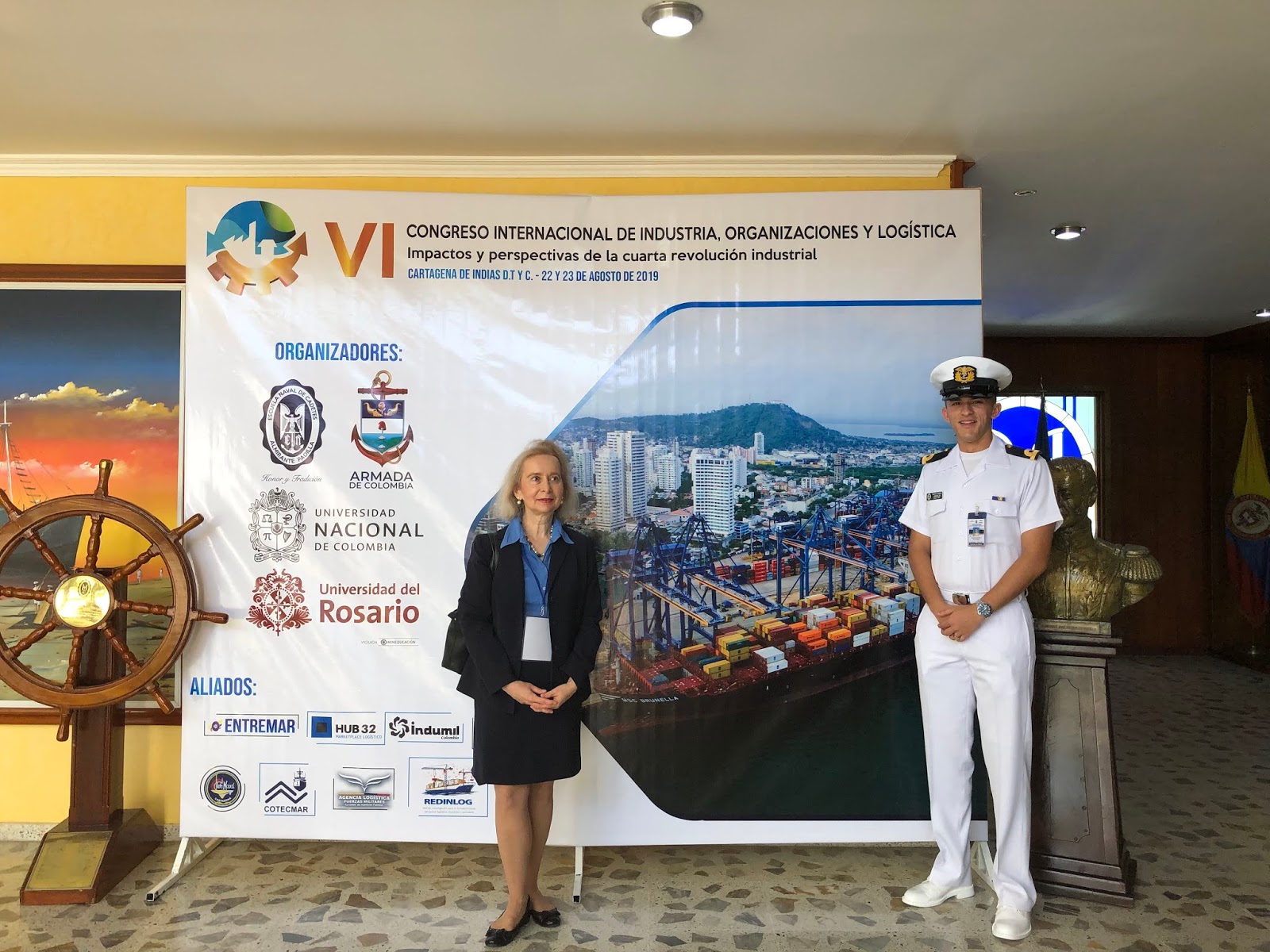
I returned early this morning, around 1AM, from Cartagena, Colombia, where I had the pleasure of being a keynote speaker at the CIIO 2019 logistics conference and also delivering a guest lecture. Both of these took place at the Naval Academy located on an island in Cartagena. I had been a keynote speaker at the same conference, but four years earlier, in Bogota, so it was a special honor to be invited back to Colombia!
The other keynote speakers at CIIO 2019 were: Professors Jahre of Norway, Schwede of Germany, and Conway of the US. We were put up in the Naval Academy officers quarters. The views were majestic from and on the island  and there was excellent security. We had nameplates on our room doors; had an officer assigned to us to assist us; met with an Admiral; were taken on a tour of the Navy Museum in the Old Town, and were treated to a lavish dinner, this past Friday, at the Naval Club.

The experience was intense and very engaging and rich.  Below I posted some photos of the beautiful vistas and some of the activities at the Naval Academy.
 
 
My talk this past Wednesday at the Naval Academy was: "Networks to Save the World: Operations Research in Action" and it can be downloaded here.
 
My keynote on Thursday, on another very timely topic, was entitled: "Tariffs and Quotas in Global Trade: What Networks, Game Theory, and Variational Inequalities Reveal" and it is also posted on the Supernetwork Center website.

The hospitality extended to the keynote speakers was extraordinary and we had numerous conversations with naval officers that were truly inspiring. Their intelligence, dedication, work ethic,  physical fitness, and stamina are remarkable. I marvel at the intensity of the experiences that we had and the honor of being there as special guests. Below are a few additional photos from the talks and very memorable experiences. Not only were there officers and cadets at the conference but also Deans of the hosting universities, numerous students that were bused in from major cities, including Bogota, and even the Minister of Trade and Commerce came for the Friday afternoon late session. We finished off the conference with a fabulous panel and discussion, which I very much enjoyed being part of.
 
Friday evening, before the dinner at the Naval Academy, there was a reception and a lovely ceremony at which the keynote speakers were recognized by Commander Baron. I was honored to receive the award below.
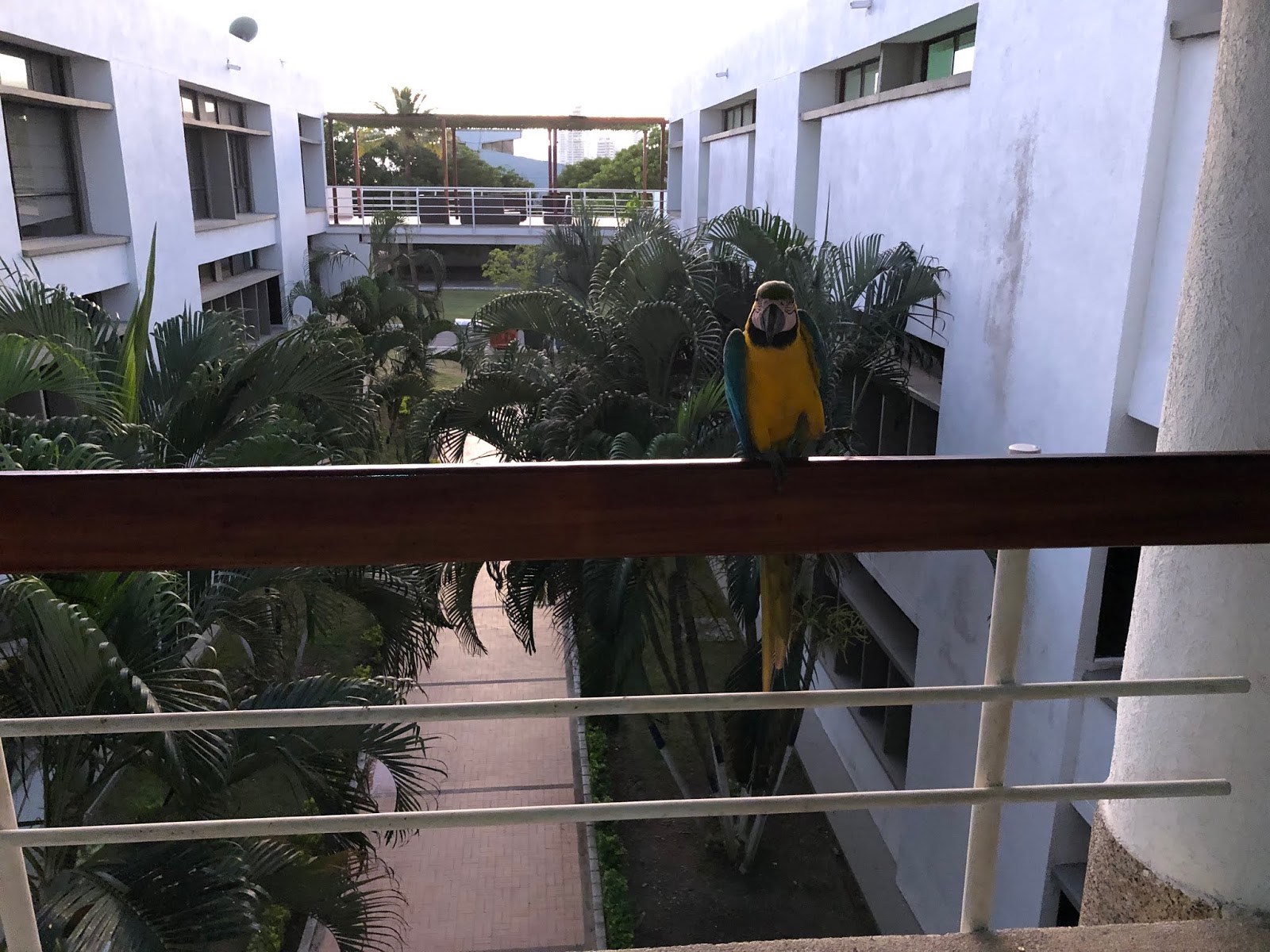
The beauty of the landscape was breathtaking and we enjoyed the chatty parrot who would visit us at the officers quarters and I learned that what I thought were mangoes where actually coconuts!
 
Colombia may be faced with challenges but, given its natural resources, geographical location, and exceptionally talented individuals that we met, I am optimistic and hopeful that it can realize its full potential.

Muchas gracias por todo!

Tuesday, August 13, 2019

Trade Wars and Game Theory: Who Wins, Who Loses?

Next week I will be in Colombia, and I am honored and delighted to be giving the opening keynote talk at the VI Congreso Internacional Industria, Organizaciones y Logıstica in Cartagena. The full program of this conference can be downloaded here.  The title of my keynote is: Tariffs and Quotas in Global Trade: What Networks, Game Theory, and Variational Inequalities Reveal.

 
And the day before my conference opening keynote, I will deliver a guest lecture at the Escuela Naval de Cadetes “Almirante Padilla.” The title of that lecture is: Networks to Save the World:
Operations Research in Action
. Having worked in technical consulting in Newport, Rhode Island, for the naval sector, I am very much looking forward to speaking at the naval academy as well!

I have been quite busy preparing both of these talks. This is my second trip to Colombia - I gave a keynote talk at this conference, back in 2015, which was in Bogota. The experience was truly magical, so I quickly accepted the invitation to speak in Colombia again. Plus, I have had several fabulous students from Colombia and we still stay in touch.

This blogpost is on what I believe is an extremely timely topic, continuing to dominate the news - that of trade wars, but with a game theory twist. Plus, tariffs and quotas are the theme of my keynote, and a topic that we have been researching very intensely. The latest research of ours has been conducted with one of my Isenberg School PhD students, Deniz Besik, and two alumnae (who were also my PhD students): Professor June Dong of SUNY Oswego and Professor Dong "Michelle" Li of Babson College, as well as the "other" Professor Nagurney - Ladimer S. Nagurney of the University of Hartford. In 2019, Deniz and I, with co-authors, published 3 papers on tariffs, quotas, and tariff-rate quotas, which are two-tiered tariffs and quite challenging to model.

Some Background


When it comes to war between nations, the weaponry is apparent - from flying missiles and bombs to stealth cyber weapons. The weapons of trade wars are, in contrast, economic, imposed by countries on products produced by other countries. Powerful trade war weapons used by governments include tariffs, quotas or combination thereof, known as tariff rate quotas. They impact not only the prices that you and I pay for our favorite foods such as avocados and cheeses, but even their quality!

Global Supply Chains

Global supply chains are the networks that enable fresh produce year round, smart phones at our fingertips, the latest fashions on demand, household appliances that we have come to depend on, and raw materials for crucial manufacturing processes. The resulting trade flows from origins to consumption are essential to the prosperity of nations and to the well-being of their citizenry.

Nevertheless, given today's economic climate and surrounding uncertainty, the International Monetary Fund expects the global GDP growth to slow from 3.6% in 2018 to 3.3% in 2019, before returning to 3.6% in 2020. Trade wars, notably, the ones between China and the US, are, in part, fueling the uncertainty.

Game Theory to the Rescue

Game theory allows us to quantify the effects of decisions of one adversary (or competitor) on others and has a long history of being applied by the military during war games; used by businesses to determine strategy, and now central to the understanding of  the effects of trade wars. Proper use of game theory can quantify a priori what the impacts of trade barriers will be on producers (both domestic and foreign), on consumers, and on governments. In addition, using game theory, embedded with algorithms, different scenarios and responses of governments, such as the tightening or loosening up of trade barriers, can be simulated. The need for such a framework is extremely relevant given the prevalence of tariffs and quotas in the news, with the coupled uncertainty. For example, the United States has imposed tariffs on steel, while the European Union has responded with quotas. Numerous tariffs were imposed by the US on products from China in 2018 including: food, toilet paper, hats, backpacks, beauty care products, sporting goods, home improvement items, and pet products, valued at $200 billion in Chinese imports. China then retaliated with their government imposing tariffs of 5% to 10% on $60 billion worth of US products. The combined tariffs apply to an amazing 5,207 items!

Producers Gain Under Protectionism and the Government May as Well


My research group has been researching trade policies and global trade for many years using game theory with applications to the dairy industry; see here and here; to fresh produce such as the very fashionable and nutritious avocados, as well as to a fundamental agricultural product - soybeans. Our studies have established that governments, by imposing a tariff or quota, may help firms in their own country garner enhanced profits. Moreover, although an appropriately calculated tariff can have the identical effect on the volume of trade flows and product prices as a quota, governments tend to favor tariffs since they then obtain additional revenue.

Our most recent study, published  in the journal, Transportation Research E,  has shown that producers, facing trade war weapons,  should expand the geographic dispersion of their production sites (which leads to new supply chain network structures) to avoid harmful tariffs and quotas. In addition, producers should actively expand and grow their demand markets in countries not under the trade policy restrictions, which can help them to achieve higher profits.


But Consumer Welfare Takes a Big Hit

Although producers in countries not under trade barriers generally benefit, that is not the case for consumers. Hence, governments imposing tariffs and quotas should beware.

Importantly, not only can trade barriers result in lower volumes of product imports, but also the quality of the product available to consumers may be negatively affected. Supply chain networks and product quality was the topic of one of our books.
And, in this book, we also analyzed a plethora of supply chain network topologies and even created a measure identifying the importance of different suppliers, components, to firms and their supply chain networks as well as to the supply chain network economy.


In our Transportation Research E study,  we constructed a measure of consumer welfare. This measure allows us to quantify the impact on consumers of trade barriers used in trade wars and includes the quality of the product being traded. We also conducted a case study, focusing on soybeans, assuming the trade war between China and the United States escalates, and the Chinese government, in retaliation, imposes a quota or equivalent tariff on the soybeans exported from the United States. Soybeans were discovered and domesticated in China over 3000 years ago; however, the United States is a leader in producing, consuming, and exporting soybeans globally.  In 2018, soybean production in the US reached 5.11 billion bushels with 40% of it exported. China, in turn, is the largest importer of soybeans due to its rapidly increasing population size. The consumption of soybeans in China, in 2017, was reported to be 112.18 million tons, but the domestic production volume was only about a tenth of that amount. Due to this huge gap, China has to rely heavily on soybeans imported from foreign countries, including the US, Brazil, and Argentina.

From the consumer's perspective, our results consistently and unanimously show that consumer welfare declines for consumers when their country imposes a strict quota or tariff on an imported product. This is the case regardless whether  China or the US imposes the trade barrier.

Governments must recognize that the imposition of tariffs or quotas always adversely affects consumers and, thus, they are not just instruments to protect producers. In war, as in peace, strategy matters and game theory is key to identifying winners and losers.

Thursday, August 8, 2019

An Ode to My Chevy

Good-bye, Chevy, my car of almost 20 years! They (the local public radio station) are coming to pick you up tomorrow to take you away. The photos have been taken, you have been cleaned, and the mourning has begun.
Growing up in Yonkers, New York, I thought that I could always be like Barbara Walters or Robert Moses and get away without getting a driver's license. I loved the busses, the subways, walking everywhere of interest and, later, flying when I was invited to give talks as an academic. And, I almost succeeded without getting a driver's license but life interfered. Nevertheless, stubbornly, I did everything in reverse: first, becoming a Full Professor at the Isenberg School of Management in bucolic Amherst, Massachusetts. (Ironically, my expertise and specialty are transportation and logistics but I figured I could be more objective by not knowing how to drive.) Then, after having a child, and, after 3 drivers' road tests with the last one with a female state police officer straight out of the academy and in a uniform, to boot, success! This "talent" seems to run in my family - it took my father 13 attempts to get his license and my mother never learned how to drive. I survived unofficial driver's ed lessons on Sundays with my daughter napping and with one of my Finance colleagues giving me instructions, complete with a cushion for the car seat (I am short) in a mall parking lot, and he on the ready with his blue exam books to grade my driving in. The reward for him was breakfast at the local Burger King - my treat, of course.

I waited as long as I could to buy a car and when my daughter was about to embark to kindergarten I got my Chevy Venture. Why a Chevy, you may ask?! It had to be a General Motors car since I had recently been appointed the John F. Smith Memorial Professor, a chaired professorship endowed by the then CEO and Chairman of the Board of General Motors, and named after his father, also an alum of my university. The vehicle gave me "lift," a terrific view driving to and from my daughter's school and provided me with some respite, when I tried to catch up on The New York Times while waiting for her through elementary school, and, afterwards, most of her high school, until she got her license. My Chevy  served as a neighborhood fort for children, a place that kids, including my own, would chatter in the back, fortified with snacks that I provided. Through its windows we saw the seasons, listened to music, car pooled for sports and other activities, and even had a few vacation drives.

For the past few years, you aging grand dame, my Chevy, have had no heat or air conditioning - sometimes my wet hair would freeze even on the short commute to teach my 8:30AM classes in the winter. You rarely did not start, though, and when I received an award from UMass with the coveted UMass park "any time, anywhere" parking pass, I would leave you in my favorite parking lot for days and nights on end, when I commuted on a weekly basis by bus and then subway to Harvard (the Radcliffe Institute for Advanced Study) where I was on sabbatical as a Science Fellow. Even this past spring, when you, my dear Chevy, developed an oil leak, I, gently, nursed you along, with help from our neighborly mechanic.

Tomorrow, as you get towed away, Chevy, and a new vehicle takes your place in the garage, the glow from your headlights will linger; whatever parts you ultimately get disassembled into, remember, it was you that kept us company on the journey that is life. As you await disassembly and your final fate, remember the giggling girls that you ferried over time and space, who are now studying for their PhDs! It is the beginning of a new era - thank you for being you!

As much as I had hoped that my Chevy would have lasted 2 more years, it was not to be. But the memories will always be with us.