Showing posts with label supply chain networks. Show all posts

Sunday, August 25, 2019

Fascinating Experiences at the Logistics Conference and Naval Academy in Cartagena, Colombia

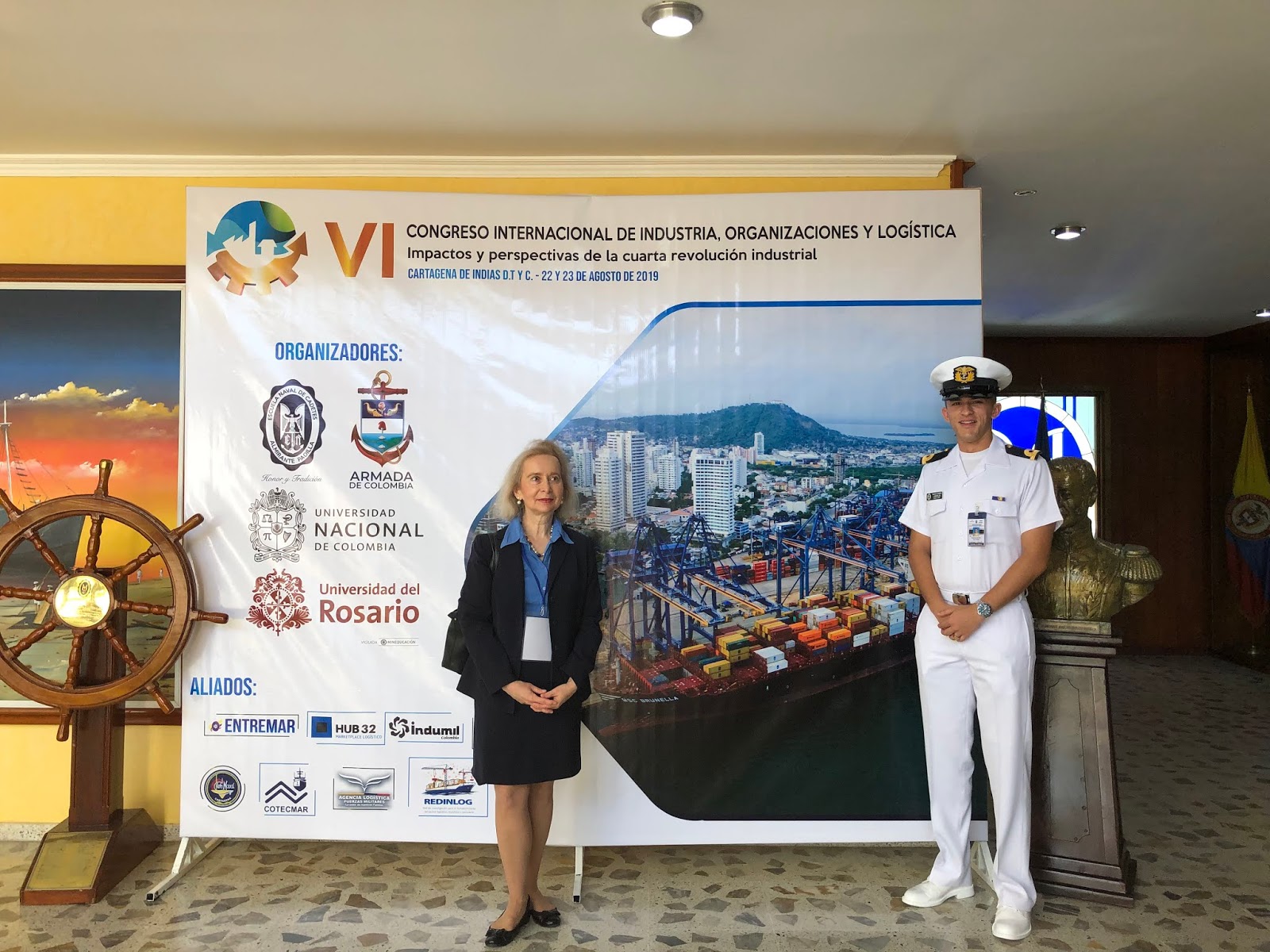
I returned early this morning, around 1AM, from Cartagena, Colombia, where I had the pleasure of being a keynote speaker at the CIIO 2019 logistics conference and also delivering a guest lecture. Both of these took place at the Naval Academy located on an island in Cartagena. I had been a keynote speaker at the same conference, but four years earlier, in Bogota, so it was a special honor to be invited back to Colombia!
The other keynote speakers at CIIO 2019 were: Professors Jahre of Norway, Schwede of Germany, and Conway of the US. We were put up in the Naval Academy officers quarters. The views were majestic from and on the island  and there was excellent security. We had nameplates on our room doors; had an officer assigned to us to assist us; met with an Admiral; were taken on a tour of the Navy Museum in the Old Town, and were treated to a lavish dinner, this past Friday, at the Naval Club.

The experience was intense and very engaging and rich.  Below I posted some photos of the beautiful vistas and some of the activities at the Naval Academy.
 
 
My talk this past Wednesday at the Naval Academy was: "Networks to Save the World: Operations Research in Action" and it can be downloaded here.
 
My keynote on Thursday, on another very timely topic, was entitled: "Tariffs and Quotas in Global Trade: What Networks, Game Theory, and Variational Inequalities Reveal" and it is also posted on the Supernetwork Center website.

The hospitality extended to the keynote speakers was extraordinary and we had numerous conversations with naval officers that were truly inspiring. Their intelligence, dedication, work ethic,  physical fitness, and stamina are remarkable. I marvel at the intensity of the experiences that we had and the honor of being there as special guests. Below are a few additional photos from the talks and very memorable experiences. Not only were there officers and cadets at the conference but also Deans of the hosting universities, numerous students that were bused in from major cities, including Bogota, and even the Minister of Trade and Commerce came for the Friday afternoon late session. We finished off the conference with a fabulous panel and discussion, which I very much enjoyed being part of.
 
Friday evening, before the dinner at the Naval Academy, there was a reception and a lovely ceremony at which the keynote speakers were recognized by Commander Baron. I was honored to receive the award below.
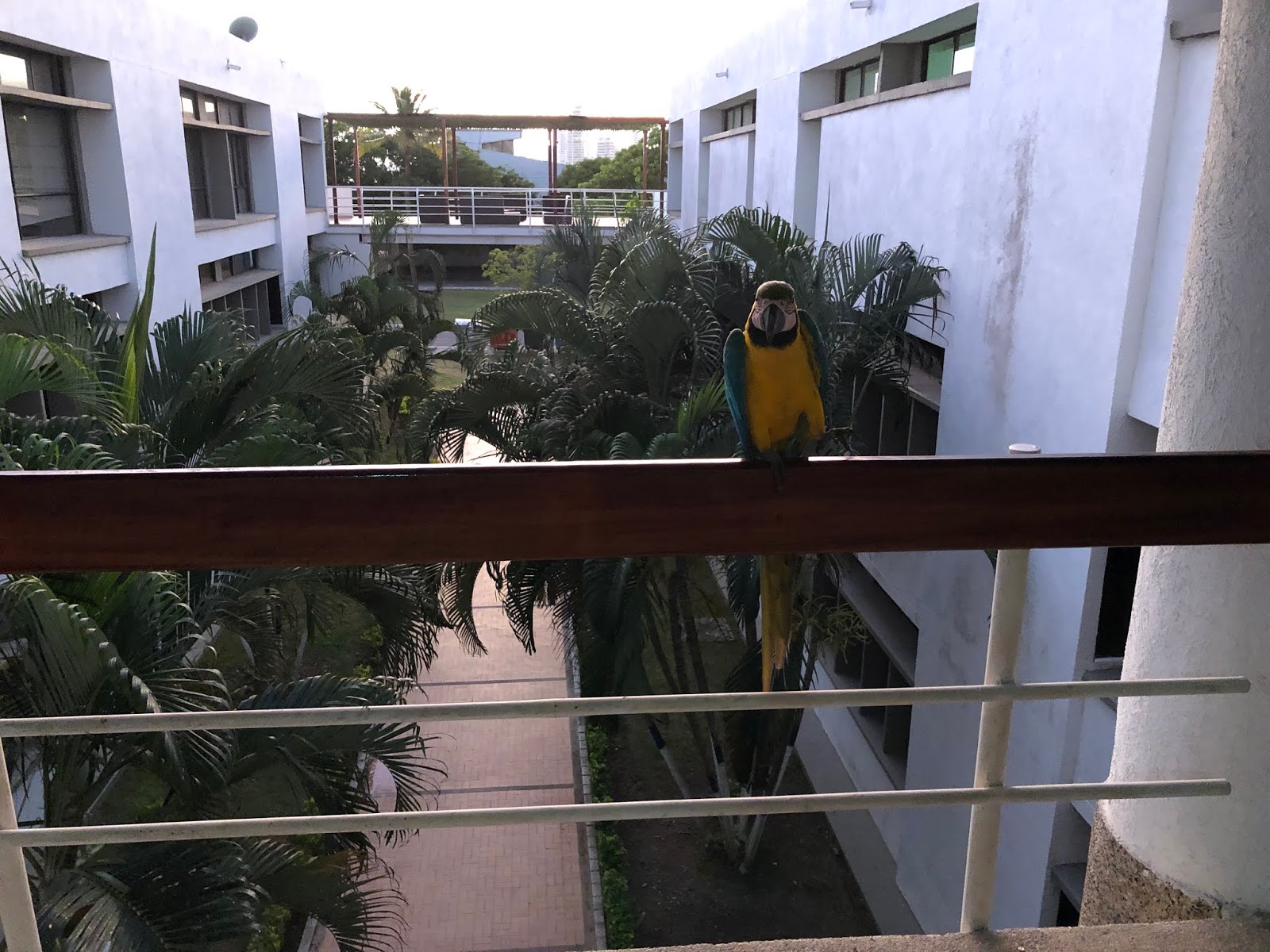
The beauty of the landscape was breathtaking and we enjoyed the chatty parrot who would visit us at the officers quarters and I learned that what I thought were mangoes where actually coconuts!
 
Colombia may be faced with challenges but, given its natural resources, geographical location, and exceptionally talented individuals that we met, I am optimistic and hopeful that it can realize its full potential.

Muchas gracias por todo!

Saturday, May 12, 2018

A PhD Graduation to Treasure - that of My 20th PhD Student

This is truly an exceptional time of the year in academia - filled with college graduations and celebrations. Tomorrow is also Mother's Day and although I am flying to Switzerland to give a plenary talk and have not yet even started to pack (but my talk is done) I had to write this blogpost.

The special celebrations began on Thursday evening. The Isenberg School PhD Program Director, Dr. George Milne, 3 years ago started a robing ceremony in which PhD advisors get to speak about their PhD student(s) that are graduating and get to "robe" them. The Isenberg School graciously purchases the lovely maroon robes for our PhD graduates.

This year eight PhD recipients took part in the robing ceremony with the program below.
The ceremony took place in the Flavin auditorium at the Isenberg School. I was there to robe my 20th PhD student, Dr. Shivani Shukla, who had traveled from California, where she is now an Assistant Professor of Business Analytics at the University of San Francisco and absolutely loves teaching and conducting research there.

My present doctoral students came to support her and Dr. Milne began the evening with opening remarks and was a fabulous master of ceremonies!
As part of the ceremony, each PhD graduate's dissertation advisor gets an opportunity to give a speech about the graduate. It was a pleasure to speak about Shivani (Dr. Shukla), who excelled in all dimensions of research, teaching, and service as a doctoral student and is now thriving as an academic. She not only was elected President of the award-winning UMass Amherst INFORMS Student Chapter, and her thesis: Game Theory for Security Investments in Cyber and Supply Chain Networks, has resulted in multiple top journal publications and a book chapter, but, in 2016, she was recognized for her exceptional teaching, over multiple semesters, of the required undergraduate statistics course for all business majors at the Isenberg School, with the Outstanding Doctoral Student Teaching Award.
We took a few group photos and then proceeded to the Integrated Learning Center where there was a fabulous and very delicious reception for all the Isenberg grads who were receiving graduate degrees!
I enjoyed taking the photo below of Dr. Shivani Shukla and we sampled the exquisite desserts.
The next morning it was time for the UMass Amherst gala graduation at the Mullins Center in which PhD students get "hooded" by their PhD advisors.
Close to 200 received their PhDs and there were over 1,000 Master's degree recipients.
UMass Amherst took the above very special photo, which is a very special remembrance and for which I am very grateful.

After the graduation ceremonies, there was a reception, at which we saw many friends and their PhD advisors.
In the photo above are: Professor Ana Muriel, Rodrigo Mercado, Dr. Shivani Shukla, Deniz Besik, Pritha Dutta, Dr. Michael Prokle (Professor Muriel's student), and yours truly. Dr. Prokle was also a former President of the UMass Amherst INFORMS Student Chapter. Deniz was this year's President and Pritha, the year before.

And, as we continued to enjoy the refreshments and conversations, we saw more friends and graduates, including Katerina Delaili, who received her Master's in Engineering. Coincidentally, all the students below have taken my Humanitarian Logistics and Healthcare class and all have been outstanding contributors to the UMass Amherst INFORMS Student Chapter, which I have served as a Faculty Advisor now for 14 years.
And, in an extraordinary gesture of kindness and thoughtfulness, I received a letter from Dr. Shukla's parents in India, with words of exceptional gratitude that I hope that I can continue to live up to.

Congratulations to all the graduates, including the Isenberg School undergraduate class of 2018, the ceremony for which I attended this morning, again in a jam-packed Mullins Center!

So honored and grateful to be a professor and to have students, who make a difference, and who continue the lineage of education and research.

Tuesday, May 5, 2015

My 18th PhD Student - Another Successful Dissertation Defense

Yesterday, was a very happy day since my 18th PhD student, Dong "Michelle" Li successfully defended her doctoral dissertation in Management Science at the Isenberg School of Management.

The title of her dissertation, which was nearly 250 pages long, was: Quality Competition in Supply Chain Networks with Applications to Information Asymmetry, Product Differentiation, Outsourcing, and Supplier Selection.

Michelle did a great job presenting, although we had to do some disruption management since in her scheduled room there was a final exam taking place and then an hour into her presentation in another room, another group of students entered for their final exams.

Michelle's full presentation can be downloaded here and it is stunning and her delivery was great, too.


Special thanks to the great committee members: Professor Adam Steven of my very own Operations and Information Management Department, Professor Hari Balasubramaian of the Department of Mechanical and Industrial Engineering, and Professor Christian Rojas of the Resource Economics Department for all their valuable inputs and also for helping Michelle in her academic job search process. She has had more on-campus interview invitations and visits than any of my former students but I expect, given her offers, that she will soon reach closure.

Michelle has an outstanding record of publications in such journals as the Annals of Operations Research, the International Transactions in Operational Research, Computational Economics, Computational Management Science, Netnomics, and the International Journal of Sustainable Transportation, with a series of other articles in review in other journals.

She has worked very hard as an Officer of the award-winning UMass Amherst INFORMS Student Chapter and even taught 3 sections of our required Operations Management undergraduate course at the Isenberg School. Both of her parents are academics in China and she told me that 18 is a lucky number in China.

Great to see my academic offspring genealogy tree growing.

Interestingly, my 17th PhD student, Dr. Amir H. Masoumi, told me that 17 was always his favorite number.

Tuesday, November 13, 2012

Supply Chain Networks with Global Outsourcing and Quick-Response Production -- Operations Research and Fast Fashion

Last Sunday's New York Times magazine had a terrific article by Suzy Hansen, "How Zara Grew Into the World's Largest Fashion Retailer,"  which I very much enjoyed reading. I do admit that,  when I live in Gothenburg, Sweden, I enjoy visiting the Zara, H&M, and TopShop stores there since I conduct research on a variety of network systems, including supply chain networks.  Along with my former doctoral student, who is now an Assistant Professor, Min Yu,  we have published two papers on what is known as fast fashion.


The first paper on the topic that we wrote is: Fashion Supply Chain Management Through Cost and Time Minimization from a Network Perspective, Anna Nagurney and Min Yu, in Fashion Supply Chain Management: Industry and Business Analysis (2011), T.M. Choi, Editor, IGI Global, Hershey, PA, pp 1-20.

The second is: Sustainable Fashion Supply Chain Management Under Oligopolistic Competition and Brand Differentiation, Anna Nagurney and Min Yu, International Journal of Production Economics, Special Section on Green Manufacturing and Distribution in the Fashion and Apparel Industries 135: (2012) pp 532-540.

In The New York Times article,  Hansen writes about the company Inditex, which owns the Zara brand and series of stores. She writes:  More than half of Inditex’s manufacturing takes place either in the factories it owns or within proximity to company headquarters, which is to say in Europe or Northern Africa. Inditex owns factories in Spain and outsources production to factories in Portugal, Morocco and Turkey — considered costly labor markets, typically. The rest of its clothes are produced in China, Bangladesh, Vietnam and Brazil, among other countries. The trendiest items are made closest to home, however, so that the production process, from start to finish, takes only two to three weeks. Inditex’s higher labor costs are offset by greater flexibility — no extra inventory lying around — and on faster turnaround speed. 

The article also has some very nice quotes from Professor Fraiman of Columbia University that got me excited because of the language and terminology. Fraiman, in commenting on Inditex's  ideas on expanding in China stated that: “Their factories in La Coruña have a finite capacity to respond quickly. You open more and more stores, and you don’t have flexibility of the last-minute response. Once they have a big thrust in China, then what happens is that they will have to take the whole model” — the processing of customer reactions, the quick-turnaround design teams, the logistics platform — “and replicate it in China.” But the bigger Inditex gets, he says, the more it will lose control over quality and efficiency. 

In a recent paper of ours, Supply Chain Networks with Global Outsourcing and Quick-Response Production Under Demand and Cost Uncertainty, Zugang Liu and Anna Nagurney, which is in press in a special issue of the Annals of Operations Research, we use Zara, as well as toy production, as some of the motivating examples. The paper is also interesting from a methodological perspective since we integrate stochastic programming, game theory, and variational inequality theory, as well as real options from finance.

Specifically, in our paper, which my co-author presented at the INFORMS conference in Phoenix and will also be presenting at the DSI conference in San Francisco next week, we developed a modeling and computational framework for supply chain networks with global outsourcing and quick-response production under demand and cost uncertainty. The  model considers multiple off-shore suppliers, multiple manufacturers, and multiple demand markets. Using variational inequality theory, we were able to formulate the governing equilibrium conditions of the competing decision-makers (the manufacturers) who are faced with two-stage stochastic programming problems but who also have to cooperate with the other decision makers (the off-shore suppliers). Our theoretical and analytical results shed light on the value of outsourcing from novel real option perspectives. In addition, our simulation studies reveal important managerial insights regarding how demand and cost uncertainty affects the profits, the risks, as well as the global outsourcing and quick-production decisions of supply chain firms under competition.

 The paper will appear in a special issue dedicated to the memory of Professor Cyrus Derman, who passed away last April at age 85. According to Columbia University, Professor Emeritus Cyrus Derman, was considered the driving force behind the success of Columbia Engineering's Department of Industrial Engineering and Operations Research (IEOR). He had also served as the doctoral dissertation advisor of well-known colleagues in Operations Research, including Professor Michael Katehakis, one of the co-editors of the special memorial volume, Peter Kolesar, and Art Veinott, Jr.

The theme of the special issue is
Optimization under Uncertainty Costs, Risks and Revenues.

Thursday, September 27, 2012

Back in Sweden and Loving It with New Paper Published and More

I suspect that I must have some Viking blood in me.

Although my heritage (and first language) is Ukrainian, there is something about Sweden that makes me feel very welcome and "at home."

I arrived yesterday, having flown from Boston Logan through Amsterdam Schiphol, and, amazingly, on the leg over the Atlantic I stretched out over 4 middle seats (felt as though I was flying first class).

This morning, I was already greeted by -- "you are back!"  by my favorite clerk at my neighborhood 711 in Gothenburg and by hugs from my colleagues at the School of Business, Economics and Law. This is my third extended time in Gothenburg, Sweden in 2012. I was here for two weeks in March and for the entire month of June.

The weather now is cool and wet (some say that it comes from London) but I can attest to the warmth of the people and the great coffee and food plus all the cultural activities and the fabulous ambience!

For lunch today at our school cafeteria there was the famous Swedish pea soup, a salad bar with beets, and lamb and pork sausage with sweet potato puree. Plus, I cannot resist the dark chocolate here.

Yesterday evening, the barista at my favorite (French) cafe treated me to an extra chocolate macaron.

No problems with jet lag -- my secret is to walk for hours and I did just that after arriving yesterday.

Plus, my first paper that acknowledges the School of Business, Economics and Law at the University of Gothenburg, where I am now a Visiting Professor, has just been published in the International Journal of Production Economics. The paper is on the design of medical nuclear supply chains.

I have blogged about the challenges of this highly complex supply chain, of relevance not only to healthcare but also to issues of security.

It feels great to have this paper published and how fitting to get the news on my first day back in Gothenburg!


Tuesday, September 25, 2012

Competing with Quality

In a recent blogpost, I wrote about time-based competition, and how supply chain network firms could gain a competitive advantage through quantifying the time associated with their supply chain network activities from production through delivery to their customers and how they could compete with time.

Quality is another dimension that is essential to excellence whether in the product or the services domain.

Just last weekend, my husband and I drove through the countryside to one of our favorite breakfast places, located in Ashfield, Massachusetts, close to a beautiful lake, where we purchase the best baguettes outside of Paris. We had been there several times before but this time when it took almost an hour to get our eggs and toast, it was clear that something had happened to the quality of service.

I watched the waitress, who,  rather than bringing a full order to a table, walked back and forth to just deliver a single cup of coffee at a time. Was this a work slowdown that we were experiencing  or some interesting work dynamics? As someone who works on optimizing business and other processes and really cares about efficiency, this was painful to watch and our stomaches were growling. I, finally, went up to the waiter, who was responsible for the customers in the other room,  and put in our order.

The displeasure was notable and once the order finally arrived the manager came by and said that we would not be charged for our breakfast. Indeed, the quality of the experience was so low, that the only fair price was ZERO! Of course, we tipped the waiter and the manager saw this.

We have been doing a lot of research on supply chain network competition and that was the major theme in the Supply Chain Network Economics book that I wrote while I was a Radcliffe Institute for Advanced Study Fellow at Harvard University on my previous sabbatical.

How firms compete not only on the differentiated products that they produce but also on the quality of their products and how the underlying network economics of the competition evolves and leads to prices, quality levels, and product flows, is a topic that has fascinated me and my students lately.

Indeed, quality is emerging as an important feature/characteristic in numerous products, ranging from food to pharmaceuticals  to durable manufactured products such as automobiles to high tech products, including microprocessors and even services associated with the Internet. It has been argued that firms, in reality, do not differentiate their products to make them different, or to give consumers more variety but, rather, to make them better so that consumers purchase the firm’s product. Moreover, although the differentiated product may even cost more to produce, it may result in higher profits since consumers may be drawn to such products. Hence, quality is implicit in product differentiation.

In a recent paper, "A Dynamic Network Oligopoly Model with Transportation Costs, Product Differentiation, and Quality Competition," Anna Nagurney and Dong Li, which we will be presenting at the upcoming INFORMS conference in Phoenix, Arizona, and at the North American Regional Science Association Conference on Ottawa, Canada, we developed a supply chain network oligopoly model with differentiated products and quality levels. The framework is that of Cournot-Nash competition in which the firms compete by determining their optimal product shipments as well as the quality levels of their particular products. In addition to the model development, we obtained stability analysis results, and also proposed a discrete-time algorithm for the dynamic tracking of the continuous-time trajectories of the firms’ product shipments and quality levels over time.

The static and dynamic network models that we constructed in this paper generalize former models in several
significant ways, while retaining the spatial component in that:

(1). We consider product differentiation;
(2). We incorporate quality levels associated with the individual firms’ products, as strategic variables, along with the product shipments, and we include the associated total costs as well as appropriate demand price functions at the demand markets, and
(3). We capture the critical transportation costs associated with linking the production side with the demand markets via a network.

In addition, we provided both qualitative analysis as well as an algorithmic scheme, along with numerical examples, which is made possible through projected dynamical systems theory, which can handle constraints and the associated discontinuities, unlike classical dynamical systems theory. Projected dynamical systems was the topic of the book that I wrote with Dr. Ding Zhang. It was the second volume in the International Series in Operations Research & Management Science.

Thursday, September 6, 2012

Supply Chain Network Theory and Operations Management

When I received an invitation to contribute to a PhD course being offered this term at the School of Business, Economics and Law at the University of Gothenburg in Sweden, I was intrigued.

The title of the course is: Theoretical Perspectives in Contemporary Business Administration Research.

Of course, I accepted, and look forward to being back soon as a Visiting Professor of Operations Management at the University of Gothenburg in the gorgeous city that has become my second home.

For the past three weeks or so, I have been reading a lot of material on theory in operations management and in supply chain management and selected the title: "Operations Management and Supply Chain Network Theory," for my contribution to the course.

I was also asked to prepare a reading list for the doctoral students, which I have done and which includes both a recent invited handbook chapter that I wrote on "Supply Chains and Transportation Networks" and a tutorial that I co-authored with Dr.  Qiang "Patrick" Qiang  that was published in the International Transactions in Operational Research, which has been been available for download for free.

In addition, in order to emphasize how the theory can be applied in practice, I will be using the article, A. Nagurney and M. Yu (2012),  ``Sustainable Fashion Supply Chain Management Under Oligopolistic Competition and Brand Differentiation," International Journal of Production Economics 135, Special Issue on  Green Manufacturing and Distribution in the Fashion and Apparel Industries, pp 532-540.

The syllabus for the course is now available.

What a wonderful way in which to begin my sabbatical -- by teaching on a topic that I care deeply about in a country that I love -- Sweden.

In my intensive lectures I will be giving the students an introduction to operations management, since they come with different backgrounds and represent different specialties.  I will overview networks of relevance to supply chains and will discuss supply chain network theory and applications, with our case study on sustainability and fashion, which is quite appropriate since I will be teaching in the land of H&M! I also plan on covering  other issues that have been explored using supply chain network theory from mergers and acquisitions to supply chain network performance and vulnerability analysis and even the role of supply chains in disaster relief.


Thursday, February 25, 2010

Transportation Network and Supply Chain Design Talks are Now Online!

Talks, in pdf format, on transportation network design and supply chain network design, given at the Symposium on Transportation Network Design and Economics, at Northwestern University last month, in honor of the visit of Professor Martin Beckmann, are now online.

Professor Hani S. Mahmassani, the Director of the Transportation Center at Northwestern University, and Professor David E. Boyce organized this symposium, which was very successful and generated numerous discussions and research ideas.

The below presentations, given at the Symposium, are available for download from the Transportation Center's site:
Professor Ouyang's talk and my talk focused on supply chain network design. My presentation was based on the paper with the same name as my presentation, which was just published in 2010 in the journal, Transportation Research E.

Professor Boyce gave a fascinating historical perspective on road network design with applications to the Chicago area (and beyond).

Professor McDonald spoke on different means of traffic mitigation, whereas Professor Nie discussed pricing and refunding in transportation networks (both very hot topics now).

Professor Kim discussed, from his unique, international perspective, how ICT (information, communication, and transportation) technologies can assist in the problems that cities are facing.

Professor Brockmann gave a physicist's perspective on human mobility and complex network theory (a topic also of great interest to me).

Professor Klabjan spoke on the work that he is interested in regarding modeling the carbon footprint in logistics and the challenges faced by the trucking industry in determining what part of the load contributes what amount to emissions (and who, hence, should pay).

Many thanks to the symposium organizers for putting up these presentations so that anyone interested may benefit from them!

Friday, February 13, 2009

Dallas, INFORMS Lecture, and Making it Just-in-Time

The phone call from USAir came at 4AM yesterday morning -- my 9:30AM flight to DC was cancelled and I was rebooked on the 11:30AM flight to Dallas through Philly with a scheduled arrival time in Dallas at 5:09PM. This was cutting it unnervingly close for my talk which was scheduled for 7PM at Southern Methodist University (SMU), which, for those of you who may have noticed, would be 8PM, my body time. My talk at SMU was being hosted by the Dallas / Fort Worth INFORMS Chapter. The President of the Chapter is Dr. Tim Jacobs of American Airlines and the Vice President is Dr. Patricia Neri, who also handled the arrangements for me. With an audience of professionals from the Dallas area in banking, airlines, etc., and faculty and students from SMU and area colleges and universities I very much wanted to give my talk, "Synergies and Vulnerabilities of Supply Chain Networks in a Global Economy." The first leg of the journey went well and then we sat on the tarmac in Philly for a good 45 minutes and I had the feeling that I would not make it on time for my lecture. Luckily, I had a wonderful companion next to me, a female medical doctor, so some of the time could be spent in very enjoyable conversation.

Amazingly, we arrived in Dallas only 5 minutes late. I grabbed a Whopper from Burger King, something I had not eaten since my daughter was very young, and it was good! After a quick change into a professional suit in the ladies room I ran to catch a cab and had a delightful driver with an accent I could not identify who also had no idea as to where the Trigg Center, the venue for my talk, at SMU was located. Experiencing riding in the HOV lane was fun and the taxi moved smoothly past hundreds of cars, each with only a single driver. The infrastructure was quite good in Dallas and no potholes were experienced. We made it to the SMU campus at about 6:45 and after asking 4 students, found one who knew where the Trigg Center was. I got dropped off, and marched to my speaking venue with my talk on a pendrive. Luckily, two graduate students helped me to set up and the talk went on at about 7:10PM only to finish at about 8:40PM. The discussion afterwards was great and there was even a faculty member in the audience who had gone to Brown University, my alma mater, and had majored in Applied Math and had had my thesis advisor, Professor Stella Dafermos.

We made it back to the hotel at almost 11PM Dallas time. The flights this morning on USAir from Dallas to Bradley (Springfield/Hartford) through Charlotte were both early, which was great, although the shock of 30 degree temps versus almost 70 degrees in Dallas, was eye-opening. My seat-mate this time around was a financial advisor who was a fan of OSU basketball, and their coach is now Travis Ford, who left UMass last year.

I'd like to thank my hosts in Dallas for a very pleasant experience! The Radisson hotel there was also terrific and so quiet!

Friday, February 6, 2009

Upcoming Travel and Hosting Speakers

As the new semester is gearing up, it is exciting to be able to both travel to give talks as well as to host speakers. Next week, I will be flying to Dallas, Texas, to give a talk, "Synergies and Vulnerabilities of Supply Chain Networks in a Global Economy." I will be hosted by the Dallas/Forth Worth Chapter of INFORMS (The Institute for Operations Research and the Management Sciences). My gracious host will be Dr. Patricia Neri, who works for Southwest Airlines. The talk will take place at Southern Methodist University.

The following week, we will begin our Spring 2009 Speaker Series in Operations Research / Management Science at the Isenberg School of Management at UMass Amherst. Our first speaker, on Friday, February 20, 2009, will be Professor Ellis Johnson of Georgia Tech, who will be talking about Operations Research and Air Traffic Problems. We are delighted that Professor Johnson, who is a member of the National Academy of Engineering, will be inaugurating out Spring Series! UMass Amherst has issued a press release for the series. This will be the tenth semester of this Speaker Series which is organized by the UMass Amherst INFORMS Student Chapter. I serve as the chapter's Faculty Advisor and it is so rewarding to see the enthusiasm of the students in this endeavor. The series adds so much to the intellectual life of the school and university and the students can hardly wait for it to start!