I have been back from England less than four days, having returned from the fabulous OR60 Conference at Lancaster University late last Wednesday.
This very special diamond anniversary Operational Research (OR) Conference was one I could not miss, having been invited by OR ambassador extraordinaire - Graham Rand and The OR Society to deliver the opening plenary talk, which kicked off the conference on September 11, 2018. As I had written about in my previous blogpost, I also had been invited to speak at the inaugural Early Career Researcher Workshop held at the same university, September 9 and 10. So, after teaching my classes the first week of the new academic year at the Isenberg School of Management at UMass Amherst I was off to England!
It was a big honor to give a plenary at this conference and I did a lot of research in preparing it. I delivered it at what was, in effect, about 4:30AM my body time, but since I am an early bird, this worked for me.
My plenary talk has now been posted, due to numerous requests that I received. There were over 400 conferees at my hour presentation and I thoroughly enjoyed presenting and addressing the very interesting and thoughtful questions that followed. Throughout the day I had the pleasure of meeting both doctoral students and senior researchers not only from England but throughout the world. I was delighted to even see my UMass Boston colleague, Professor Michael Johnson, who is a leader in Community OR, arrive and I enjoyed his presentation very much.
We were not the only faculty from Massachusetts (New England) at OR60. I also met female colleagues from Bentley University and WPI.
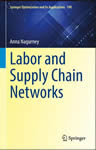
It was quite special to have support provided for my plenary from the publisher Springer and I enjoyed meeting the Editor and seeing three of my books on exhibit there! A shout out to my co-authors: Professors Amir H. Masoumi, Min Yu, Dong "Michelle" Li, and Ladimer S. Nagurney as well as to my co-editors: Professors Ilias S. Kotsireas and Panos M. Pardalos!
It was a pleasure to have the photo below taken with Graham Rand, resplendent in an OR tie, and two fabulous STORi doctoral students, Emma and Lucy. The student volunteers in their bright red t-shirts were tremendously helpful.
Lunches and snacks were provided and there was even a boat cruise and dinner and dancing (which I missed because I had a lot of travel early the morning after back to the US).
I enjoyed meeting new colleagues in OR and thank everyone for their appreciation and kind words regarding my plenary talk.
It was a special thrill to meet several colleagues that I had only "met" through Twitter previously!
I would like to take this opportunity to thank my wonderful hosts as well as Hilary Wilkes and Charlene Timewell of The OR Society for making my travel and stay so smooth and comfortable.
A special thanks to the staff at Lancaster House for the excellent and very cozy accommodations and the delicious British breakfasts, which kept me well-fortified.
Operational Research (or Operations Research, as we say in the US) is in fabulous shape and OR60 will be one for the record books is terms of excellent organization, hospitality, friendliness, and attention to detail and I am eternally grateful to have had the opportunity to be a part of it.
Showing posts with label Lancaster University. Show all posts
Sunday, September 16, 2018
Friday, September 14, 2018
An Outstanding Early Career Researcher Workshop in OR in England
When the invitation arrived from Distinguished University Professor Kevin Glazebrook of the School of Management at Lancaster University in England I was delighted and quickly accepted. I was asked to present a plenary talk at the inaugural Early Career Researcher (ECR) Workshop at his university, September 8-9, 2018. This workshop, which was sponsored by The OR Society, was organized for advanced doctoral students, postdocs, and junior faculty, and was to take place immediately before the diamond anniversary OR60 Conference (at which I was to give the opening plenary talk and had graciously been invited by Graham Rand, also of Lancaster University).
There was some juggling, since the new academic year began on September 4 at UMass Amherst and, hence, I would have to make sure that the class that I would miss teaching would be covered (and it was, thanks to two of my doctoral students).
This was going to be my third trip to Lancaster University. I had spoken there when I was a Visiting Fellow at All Souls College at Oxford University in 2016 and I also taught a Master Class there on Network Equilibrium in March 2018, during spring break at UMass Amherst.
Luckily, although my trip was whirlwind, with me leaving on September 7 and returning on September 12, since Aer Lingus now has a flight from our local airport, Bradley, to Dublin, it was quite manageable. I flew to Dublin, then onwards to Manchester, and was picked up on the last leg (and driven via taxi) to Lancaster. While in Lancaster, I always stay at the Lancaster House, which is one of my favorite hotels, and I even have a favorite room there! Lugging my suitcase up the stairs in the rain to the regional plane in Dublin and then down in the rain in Manchester was not quite pleasant, but a small price to pay for a fabulous time professionally and personally. Below is a photo of the entrance to Lancaster House.
The workshop was held in the hotel, which made everything very convenient.
Professor Kevin Glazebrook gave the opening plenary and set the stage for the workshop. I was thrilled to see that there were workshop participants from throughout Great Britain and even from as far as Thailand, Nigeria, and Saudi Arabia!
Special thanks to Charlene Timewell of The OR Society for handling the logistics of my stay and for such a warm welcome (it was chilly weatherwise my entire time in Lancaster but a break from the heatwaves in Massachusetts).
The workshop included 5 minute presentations by each early career researcher and it was a pleasure to listen to their research and near term plans.
My plenary was entitled: Network Journeys: For the Love of Operational Research.
In the US, OR stands for Operations Research and, in Britain, for Operational Research, but we are part of the same professional discipline and community. I was asked by Professor Glazebrook to include autobiographical material in my plenary talk so I did and my presentation is now posted. It contains a lot of useful advice that I have accumulated and acquired over the years. I thoroughly enjoyed preparing this plenary and also in giving it.
The first evening we had a delicious workshop banquet and chatted and exchanged experiences with a lot of laughter. The menu was fabulous.
Also assisting and taking part in the workshop, in addition to the early career researchers, were: Professors Christine Currie, Paul Harper, and Arne Strauss, with Professor Edmund Burke giving an extremely useful presentation on: "How to Write a Great Proposal." Also offering advice were: Dr. Alain Zemkoho and Dr. Stephen Maher. The early career researchers had a homework assignment before the workshop to evaluate a series of actual proposals and to rank them (with thanks to the senior researchers who shared the proposals for such an educational purpose). There was also an excellent presentation by a representative from Taylor & Francis on "How to get Published."
The full workshop program is provided below.
The atmosphere was very congenial with an easy exchange of ideas and experiences and very worthwhile for all in attendance! The workshop, if I may, was also a lot of fun.
Special thanks to the energetic and inspiring early career researchers - the future of our profession is in wonderful hands! It was very special to meet you and I wish you the fulfillment of all of your dreams.
There was some juggling, since the new academic year began on September 4 at UMass Amherst and, hence, I would have to make sure that the class that I would miss teaching would be covered (and it was, thanks to two of my doctoral students).
This was going to be my third trip to Lancaster University. I had spoken there when I was a Visiting Fellow at All Souls College at Oxford University in 2016 and I also taught a Master Class there on Network Equilibrium in March 2018, during spring break at UMass Amherst.
Luckily, although my trip was whirlwind, with me leaving on September 7 and returning on September 12, since Aer Lingus now has a flight from our local airport, Bradley, to Dublin, it was quite manageable. I flew to Dublin, then onwards to Manchester, and was picked up on the last leg (and driven via taxi) to Lancaster. While in Lancaster, I always stay at the Lancaster House, which is one of my favorite hotels, and I even have a favorite room there! Lugging my suitcase up the stairs in the rain to the regional plane in Dublin and then down in the rain in Manchester was not quite pleasant, but a small price to pay for a fabulous time professionally and personally. Below is a photo of the entrance to Lancaster House.
The workshop was held in the hotel, which made everything very convenient.
Professor Kevin Glazebrook gave the opening plenary and set the stage for the workshop. I was thrilled to see that there were workshop participants from throughout Great Britain and even from as far as Thailand, Nigeria, and Saudi Arabia!
Special thanks to Charlene Timewell of The OR Society for handling the logistics of my stay and for such a warm welcome (it was chilly weatherwise my entire time in Lancaster but a break from the heatwaves in Massachusetts).
The workshop included 5 minute presentations by each early career researcher and it was a pleasure to listen to their research and near term plans.
My plenary was entitled: Network Journeys: For the Love of Operational Research.
In the US, OR stands for Operations Research and, in Britain, for Operational Research, but we are part of the same professional discipline and community. I was asked by Professor Glazebrook to include autobiographical material in my plenary talk so I did and my presentation is now posted. It contains a lot of useful advice that I have accumulated and acquired over the years. I thoroughly enjoyed preparing this plenary and also in giving it.
The first evening we had a delicious workshop banquet and chatted and exchanged experiences with a lot of laughter. The menu was fabulous.
Also assisting and taking part in the workshop, in addition to the early career researchers, were: Professors Christine Currie, Paul Harper, and Arne Strauss, with Professor Edmund Burke giving an extremely useful presentation on: "How to Write a Great Proposal." Also offering advice were: Dr. Alain Zemkoho and Dr. Stephen Maher. The early career researchers had a homework assignment before the workshop to evaluate a series of actual proposals and to rank them (with thanks to the senior researchers who shared the proposals for such an educational purpose). There was also an excellent presentation by a representative from Taylor & Francis on "How to get Published."
The full workshop program is provided below.
Special thanks to the energetic and inspiring early career researchers - the future of our profession is in wonderful hands! It was very special to meet you and I wish you the fulfillment of all of your dreams.
Monday, September 3, 2018
Celebrating Operations Research (OR) Through Plenary Talks in England
It has been a while since I blogged with my most recent post being a thank you to the Radcliffe Institute for Advanced Study at Harvard University where I spent the major part of this summer.
In the month of August I was busy finishing up a paper on disaster relief, doing galleys, serving as the Chair of the INFORMS Computing Society (ICS) Student Paper Award Committee (with 36 paper submissions), serving on the INFORMS Service Award Committee (thanks to our fabulous volunteers), and getting ready for the new academic year. A big shoutout and thanks to my ICS committee members: Professor Sergiy Butenko of Texas A&M and Professor Frank E. Curtis of Lehigh University for their great work!
Plus, I have been preparing two plenary talks that I will be giving in a few days in England. The very special events that I will be speaking at are the Early Career Researcher (ECR) Workshop and OR60 - the diamond anniversary conference of The Operational Research (OR) Society! Both are conveniently timed back to back and located at Lancaster University. I gave a Master Class there on Network Equilibrium last March to the STORi PhD students and enjoyed the experience tremendously. The Operations Research faculty at Lancaster are extraordinary and Lancaster University was the first university in England to have a Chair in OR, right at its founding in 1964!
I am very honored to be a plenary speaker at both of these events and have thoroughly enjoyed preparing my plenary talks. Special thanks to Professors Kevin Glazebrook and Graham Rand and to The OR Society as well as to the publisher, Springer, for the invitations and sponsorship!
I have completed my talks and, in preparing them, I did a lot of research into the history of Operations Research (Operational Research in England). Both Professor Rand as well as Dr. Will Thomas (who also serves with me on the INFORMS History and Traditions Committee) were very helpful in answering a few questions that I had. My talks will be informative and I hope very inspirational. In my OR60 plenary I will also envision what the OR100 conference in 40 years will be like - looking into the future of our discipline and its impact. I can hardly wait!
Looking forward to celebrating OR through my plenary talks and interactions with students and colleagues in England soon. After I return from England I will make my talks available to the public.
In the month of August I was busy finishing up a paper on disaster relief, doing galleys, serving as the Chair of the INFORMS Computing Society (ICS) Student Paper Award Committee (with 36 paper submissions), serving on the INFORMS Service Award Committee (thanks to our fabulous volunteers), and getting ready for the new academic year. A big shoutout and thanks to my ICS committee members: Professor Sergiy Butenko of Texas A&M and Professor Frank E. Curtis of Lehigh University for their great work!
Plus, I have been preparing two plenary talks that I will be giving in a few days in England. The very special events that I will be speaking at are the Early Career Researcher (ECR) Workshop and OR60 - the diamond anniversary conference of The Operational Research (OR) Society! Both are conveniently timed back to back and located at Lancaster University. I gave a Master Class there on Network Equilibrium last March to the STORi PhD students and enjoyed the experience tremendously. The Operations Research faculty at Lancaster are extraordinary and Lancaster University was the first university in England to have a Chair in OR, right at its founding in 1964!
I am very honored to be a plenary speaker at both of these events and have thoroughly enjoyed preparing my plenary talks. Special thanks to Professors Kevin Glazebrook and Graham Rand and to The OR Society as well as to the publisher, Springer, for the invitations and sponsorship!
I have completed my talks and, in preparing them, I did a lot of research into the history of Operations Research (Operational Research in England). Both Professor Rand as well as Dr. Will Thomas (who also serves with me on the INFORMS History and Traditions Committee) were very helpful in answering a few questions that I had. My talks will be informative and I hope very inspirational. In my OR60 plenary I will also envision what the OR100 conference in 40 years will be like - looking into the future of our discipline and its impact. I can hardly wait!
Looking forward to celebrating OR through my plenary talks and interactions with students and colleagues in England soon. After I return from England I will make my talks available to the public.
Saturday, March 17, 2018
A BIG Thanks to Operations Researchers at Lancaster University in England for the Outstanding Hospitality
I am back in Amherst, Massachusetts, after being in Europe for 10 days, traveling first to southern Italy where I gave a keynote talk at a conference in a castle and also blogged about it, followed by a fabulous day in London, and then several days in Lancaster, where I taught a Masterclass on Network Equilibrium at Lancaster University. There I was hosted by STOR-i, which is a Center devoted to doctoral training in statistics and operational research (or, as we say in the US, operations research). I had been invited to teach the Masterclass last summer, and, since I had given a talk at Lancaster, when I was a Visiting Fellow at All Souls College at Oxford University in the spring/summer of 2016, and enjoyed the experience very much, I accepted the invitation. The colleagues in operations research/management science at Lancaster are extraordinary so I was looking forward to seeing them again and also to meeting students that would be taking my Masterclass. This past week was spring break at the University of Massachusetts Amherst so instead of teaching at the Isenberg School of Management I would be teaching at Lancaster University.
On March 11, 2018, I took the Virgin train from Euston Station in London to Lancaster and was delighted to see that the station was promoting the University.
A short taxi ride brought me to the Lancaster House Hotel, which was my domicile for the duration of my stay and the view from my hotel was perfect with seagulls often chirping.
My Masterclass consisted of 4 two hour lectures:
My first evening in Lancaster, I had the great pleasure of having dinner with Professor Graham Rand, who is an extraordinary ambassador for both INFORMS and IFORS, and I have lost track as to the number of conferences I have enjoyed seeing Professor Rand at.
Meeting the students was a delight and I very much appreciated their insightful comments and questions.
Special thanks to Lucy and Luke, two STOR-i doctoral students, who accompanied me to one of the lunches.
It was also wonderful to be able to see Professor Matthias Ehrgott and Professor Judith Wang of Leeds University, for a lunch. I have dined with them even in Auckland, New Zealand, where they were faculty before coming to the UK. Professor Ehrgott has served as the Chair of the Management Science Department at Lancaster, the largest department of its kind in England!
A special thank you to Ms. Rosemary Hindley, who made the arrangements for me and the hospitality extended was exceptional and which I so much appreciated!
Other highlights (yes, I did a lot of lecturing (8 hours worth) but also a lot of eating, which kept my energy level high) included dinner at a Thai restaurant with Professor Pavlidis and his doctoral student, and dinner with two Distinguished University Professors: INFORMS Fellow Professor Kevin Glazebrook, the Director of STOR-i, and Professor Konstantinos Zografos, whom I have known for many years (and he received his PhD at the University of Connecticut and has been recognized with, among his awards, an engineering alumnus award). Professor Glazebrook drove us to the restaurant through the countryside, The Lunesdale Arms in Tunstall, where I had one of the most delicious meals in my life! A huge congratulations to Professor Glazebrook and his team for developing an exceptional doctoral training programme in operational research, which engages students with academics and industrial partners and practitioners.
I will be back in Lancaster, England in September and am truly honored to be giving a plenary talk then at the OR60 Conference!
And, one of the best rewards of teaching, is inspiring students and I was so pleased to see that Alan F. Wise wrote an excellent blogpost on the Braess Paradox, after my Masterclass! Coincidentally, I had had a very lovely communication with Professor Dietrich Braess himself, while I was in Europe. And, also, while in Europe, I heard from the renowned physicist, Professor Adilson Motter of Northwestern University, about the publication if his latest paper, which also discusses the Braess (and other related) paradoxes. This paper I thoroughly enjoyed reading after my return.
A big thank you also to all the airlines that carried me on 7 flights over 11 days: British Airways, Alitalia, and Aer Lingus.
On March 11, 2018, I took the Virgin train from Euston Station in London to Lancaster and was delighted to see that the station was promoting the University.
A short taxi ride brought me to the Lancaster House Hotel, which was my domicile for the duration of my stay and the view from my hotel was perfect with seagulls often chirping.
My Masterclass consisted of 4 two hour lectures:
My first evening in Lancaster, I had the great pleasure of having dinner with Professor Graham Rand, who is an extraordinary ambassador for both INFORMS and IFORS, and I have lost track as to the number of conferences I have enjoyed seeing Professor Rand at.
Meeting the students was a delight and I very much appreciated their insightful comments and questions.
Special thanks to Lucy and Luke, two STOR-i doctoral students, who accompanied me to one of the lunches.
It was also wonderful to be able to see Professor Matthias Ehrgott and Professor Judith Wang of Leeds University, for a lunch. I have dined with them even in Auckland, New Zealand, where they were faculty before coming to the UK. Professor Ehrgott has served as the Chair of the Management Science Department at Lancaster, the largest department of its kind in England!
A special thank you to Ms. Rosemary Hindley, who made the arrangements for me and the hospitality extended was exceptional and which I so much appreciated!
Other highlights (yes, I did a lot of lecturing (8 hours worth) but also a lot of eating, which kept my energy level high) included dinner at a Thai restaurant with Professor Pavlidis and his doctoral student, and dinner with two Distinguished University Professors: INFORMS Fellow Professor Kevin Glazebrook, the Director of STOR-i, and Professor Konstantinos Zografos, whom I have known for many years (and he received his PhD at the University of Connecticut and has been recognized with, among his awards, an engineering alumnus award). Professor Glazebrook drove us to the restaurant through the countryside, The Lunesdale Arms in Tunstall, where I had one of the most delicious meals in my life! A huge congratulations to Professor Glazebrook and his team for developing an exceptional doctoral training programme in operational research, which engages students with academics and industrial partners and practitioners.
I will be back in Lancaster, England in September and am truly honored to be giving a plenary talk then at the OR60 Conference!
And, one of the best rewards of teaching, is inspiring students and I was so pleased to see that Alan F. Wise wrote an excellent blogpost on the Braess Paradox, after my Masterclass! Coincidentally, I had had a very lovely communication with Professor Dietrich Braess himself, while I was in Europe. And, also, while in Europe, I heard from the renowned physicist, Professor Adilson Motter of Northwestern University, about the publication if his latest paper, which also discusses the Braess (and other related) paradoxes. This paper I thoroughly enjoyed reading after my return.
A big thank you also to all the airlines that carried me on 7 flights over 11 days: British Airways, Alitalia, and Aer Lingus.
Thursday, June 30, 2016
Great Time Speaking on Disaster Relief in the Management Science Department at Lancaster University in England
Tuesday evening, we returned from Lancaster, England, an hour late because there was a broken down train on our line in Lancaster and we had to wait for it to be repaired.
We had traveled to Lancaster the day before from Oxford by train, with a change in Birmingham.
I had been invited by Professor Graham Rand, very well-known in Operations Research internationally, several months ago to speak in the Management Science Department at Lancaster University. He had become aware that I would be a Visiting Fellow at All Souls College at Oxford University during the Trinity term so he had cordially extended the invitation, which I could not refuse.
Lancaster University's Management Science Department is the largest MS department in the United Kingdom with about 45 faculty focusing on Operations Research, Operations Management, and Information Systems. It is housed in the university's School of Management, which is located in proximity to the Lancaster House Hotel, where I overnighted, and which was very comfortable and very convenient.
Lancaster University is only about 50 years old and it has an excellent reputation in STEM (Science, Technology, Engineering, and Mathematics) as well as in Management. The School of Management will be getting a new building soon but the existing one I found to be spacious with many windows. The university is close to the beautiful lake region and to the sea and is surrounded by green spaces so the air quality is great there. Given that Oxford University dates to 1231, I found it very interesting to see a relatively new university in England.
I had presented Graham with a list of topics that I could speak on and, after canvassing his colleagues, the topic of disaster relief was selected, so my presentation was on Disaster Relief Supply Chains: Network Models, Algorithm, and Case Studies.
A nice announcement was prepared for my presentation, which I am very grateful for, and even though the date for my talk was June 28, 2016 and in the US it would be tough to find faculty and students to fill up an audience, I had a great attendance. My full presentation can be downloaded here.
After arriving (my husband had accompanied me since he loves train travel), we took a walk around the campus and then it was time to meet Professor Konstantinos Zografos for dinner. Professor Zografos received his PhD from our UMass Amherst neighbor, the University of Connecticut, and I have known him since my days at MIT as a Visiting Scholar and Professor. He was recently inducted into UConn's Distinguished Academy of Engineers with a nice photo of him and other inductees with their medals on the UConn website. Professor Zografos is an academic powerhouse with major contributions to different areas of transportation and the recipient of millions of dollars/pounds in research grants. He has been at Lancaster for about 3 years and has previously been at the University of Miami and also in Greece. He has just been appointed the new Associate Dean of Research at Lancaster's School of Management, a fantastic choice, I must say.
We had a great time at dinner, which lasted almost 4 hours and felt like 5 minutes. When we left, we heard that England got eliminated from the Euro 2016 soccer competition, as it got beaten by the lowest ranked team and the underdog, Iceland. It has been a very tough week for Britain with Brexit and now the soccer game loss.
Professor Graham Rand organized a terrific schedule for me. Prior to my seminar at noon, I met with a postdoc and a Visiting Scholar and the postdoc had been interviewed at Oxford University on June 22 (the day of our Encaenia which I had blogged about) and had received an offer for another postdoc at the Environmental Institute there. I had an excellent conversation with him on network vulnerability, one of his research themes.
The questions after my talk were interesting and I have had requests for the presentation and so it has been posted. The talk had three parts to it: work on network performance assessment and vulnerability, a mean variance integrated disaster relief optimization model, and our latest work, which is a Generalized Nash Equilibrium model for disaster relief. There are very few game theory models in humanitarian operations so we are very excited about this work.
After my talk, it was time for lunch, and joining me were Professor Rand and the Head of the Department, Professor Matthias Ehrgott, who I last saw at a multicriteria decision-making conference that he was involved in organizing in Auckland, New Zealand, and I was an invited speaker. he has been at Lancaster for 3 years. We have many mutual interests in reseaarch so it was wonderful to see him and chat.
After the lunch I got to meet with the university's cybersecurity experts since we have been also doing a lot of research in this area and we spoke for over an hour on topics as diverse as the Desmond storm that resulted in a power outage last Fall that closed the university for almost a week to ransomware!
While I was busy, my husband had a chance to tour the downtown and to see the castle. Supposedly where the jurors meet is the room where a long time ago people would be hanged.
Then it was time to leave and we enjoyed, because of the delay, speaking to others at the Lancaster train station who were affected by the broken down train. Nevertheless, our train eventually arrived and since we had extra time in Birmingham before our connection to Oxford, I marvelled at the Birmingham train station, which resembles an airport!
I enjoyed reading the latest edition of the elegant, informative, and glossy IMPACT magazine that Professor Graham Rand gave me. The impact that operations research / management science has had and continues to have in areas of transportation, healthcare, manufacturing, and security is tremendous. So glad to be part of such a wonderful professional community where you find friends and colleagues wherever you may go.
I will see Professor Graham Rand next week at the EURO 2016 conference in Poland, where he told me that he will be having breakfast with Professor Mike Trick of Carnegie Mellon University, the new IFORS (International Federation of Operational Research Societies) President and is very much looking forward to it and to the conference, of course.
We had traveled to Lancaster the day before from Oxford by train, with a change in Birmingham.
I had been invited by Professor Graham Rand, very well-known in Operations Research internationally, several months ago to speak in the Management Science Department at Lancaster University. He had become aware that I would be a Visiting Fellow at All Souls College at Oxford University during the Trinity term so he had cordially extended the invitation, which I could not refuse.
Lancaster University's Management Science Department is the largest MS department in the United Kingdom with about 45 faculty focusing on Operations Research, Operations Management, and Information Systems. It is housed in the university's School of Management, which is located in proximity to the Lancaster House Hotel, where I overnighted, and which was very comfortable and very convenient.
Lancaster University is only about 50 years old and it has an excellent reputation in STEM (Science, Technology, Engineering, and Mathematics) as well as in Management. The School of Management will be getting a new building soon but the existing one I found to be spacious with many windows. The university is close to the beautiful lake region and to the sea and is surrounded by green spaces so the air quality is great there. Given that Oxford University dates to 1231, I found it very interesting to see a relatively new university in England.
I had presented Graham with a list of topics that I could speak on and, after canvassing his colleagues, the topic of disaster relief was selected, so my presentation was on Disaster Relief Supply Chains: Network Models, Algorithm, and Case Studies.
A nice announcement was prepared for my presentation, which I am very grateful for, and even though the date for my talk was June 28, 2016 and in the US it would be tough to find faculty and students to fill up an audience, I had a great attendance. My full presentation can be downloaded here.
After arriving (my husband had accompanied me since he loves train travel), we took a walk around the campus and then it was time to meet Professor Konstantinos Zografos for dinner. Professor Zografos received his PhD from our UMass Amherst neighbor, the University of Connecticut, and I have known him since my days at MIT as a Visiting Scholar and Professor. He was recently inducted into UConn's Distinguished Academy of Engineers with a nice photo of him and other inductees with their medals on the UConn website. Professor Zografos is an academic powerhouse with major contributions to different areas of transportation and the recipient of millions of dollars/pounds in research grants. He has been at Lancaster for about 3 years and has previously been at the University of Miami and also in Greece. He has just been appointed the new Associate Dean of Research at Lancaster's School of Management, a fantastic choice, I must say.
We had a great time at dinner, which lasted almost 4 hours and felt like 5 minutes. When we left, we heard that England got eliminated from the Euro 2016 soccer competition, as it got beaten by the lowest ranked team and the underdog, Iceland. It has been a very tough week for Britain with Brexit and now the soccer game loss.
Professor Graham Rand organized a terrific schedule for me. Prior to my seminar at noon, I met with a postdoc and a Visiting Scholar and the postdoc had been interviewed at Oxford University on June 22 (the day of our Encaenia which I had blogged about) and had received an offer for another postdoc at the Environmental Institute there. I had an excellent conversation with him on network vulnerability, one of his research themes.
The questions after my talk were interesting and I have had requests for the presentation and so it has been posted. The talk had three parts to it: work on network performance assessment and vulnerability, a mean variance integrated disaster relief optimization model, and our latest work, which is a Generalized Nash Equilibrium model for disaster relief. There are very few game theory models in humanitarian operations so we are very excited about this work.
After my talk, it was time for lunch, and joining me were Professor Rand and the Head of the Department, Professor Matthias Ehrgott, who I last saw at a multicriteria decision-making conference that he was involved in organizing in Auckland, New Zealand, and I was an invited speaker. he has been at Lancaster for 3 years. We have many mutual interests in reseaarch so it was wonderful to see him and chat.
After the lunch I got to meet with the university's cybersecurity experts since we have been also doing a lot of research in this area and we spoke for over an hour on topics as diverse as the Desmond storm that resulted in a power outage last Fall that closed the university for almost a week to ransomware!
While I was busy, my husband had a chance to tour the downtown and to see the castle. Supposedly where the jurors meet is the room where a long time ago people would be hanged.
Then it was time to leave and we enjoyed, because of the delay, speaking to others at the Lancaster train station who were affected by the broken down train. Nevertheless, our train eventually arrived and since we had extra time in Birmingham before our connection to Oxford, I marvelled at the Birmingham train station, which resembles an airport!
I enjoyed reading the latest edition of the elegant, informative, and glossy IMPACT magazine that Professor Graham Rand gave me. The impact that operations research / management science has had and continues to have in areas of transportation, healthcare, manufacturing, and security is tremendous. So glad to be part of such a wonderful professional community where you find friends and colleagues wherever you may go.
I will see Professor Graham Rand next week at the EURO 2016 conference in Poland, where he told me that he will be having breakfast with Professor Mike Trick of Carnegie Mellon University, the new IFORS (International Federation of Operational Research Societies) President and is very much looking forward to it and to the conference, of course.
Subscribe to:
Posts (Atom)