Showing posts with label methodologies. Show all posts

Sunday, November 6, 2016

Game Theory for Security Conference in NYC Attracts Speakers from Around the Globe

We returned yesterday evening from NYC from the fabulous Decision and Game Theory for Security Conference, GameSec2016, which took place November 2-4 at the New York University (NYU) Tandon School of Engineering,  located in Brooklyn. The view below is from our hotel room on the 18th floor of the Marriott. Since the venue was close to one of my absolutely favorite structures, the Brooklyn Bridge, I had to walk it.

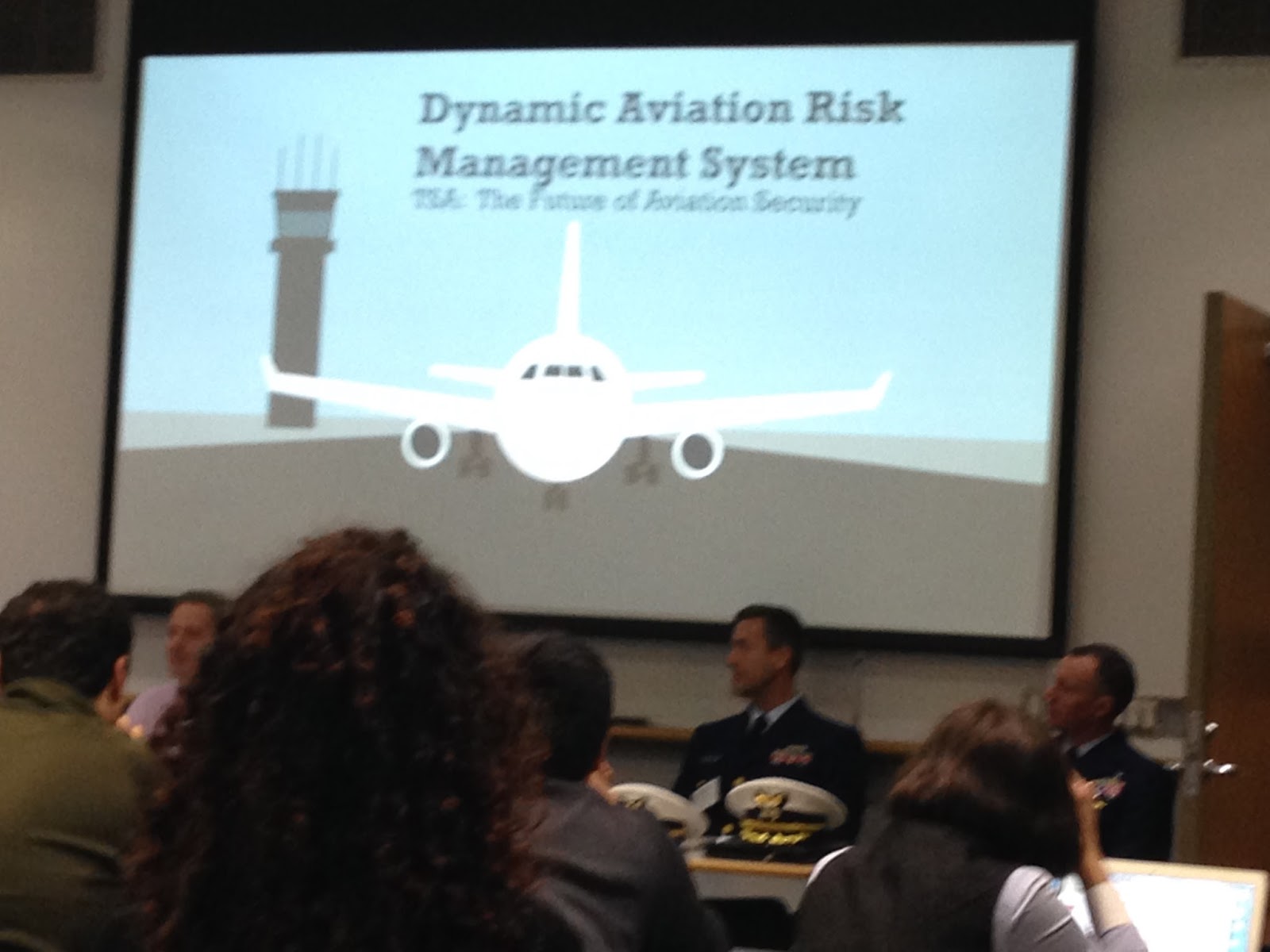
The General Chair of the conference was Quanyan Zhu of NYU and he deserves a big congratulations on the success of the conference as do the steering board and all the organizers. This focused conference, with the elegantly produced conference proceedings, had a single stream of presentations,  a panel with experts from the Coast Guard, the Transportation Security Agency, industry and academic reps, and two plenary talks given by George Cybenko of Dartmouth and me.

The special session on validating models and the panel were alone worth coming to the conference!
 Panel Discussion - Panelists Include:

  • Capt. Tom Morkan (US Coast Guard)
  • CDR Brian Murphy (US Coast Guard)
  • Nathaniel Gleicer (Illumio; Former Director for Cybersecurity Policy for the National Security Council)
  • Dr. Pratyusa Manhadatta (HP Labs)
  • Ron Sartini (Transportation Security Administration) 


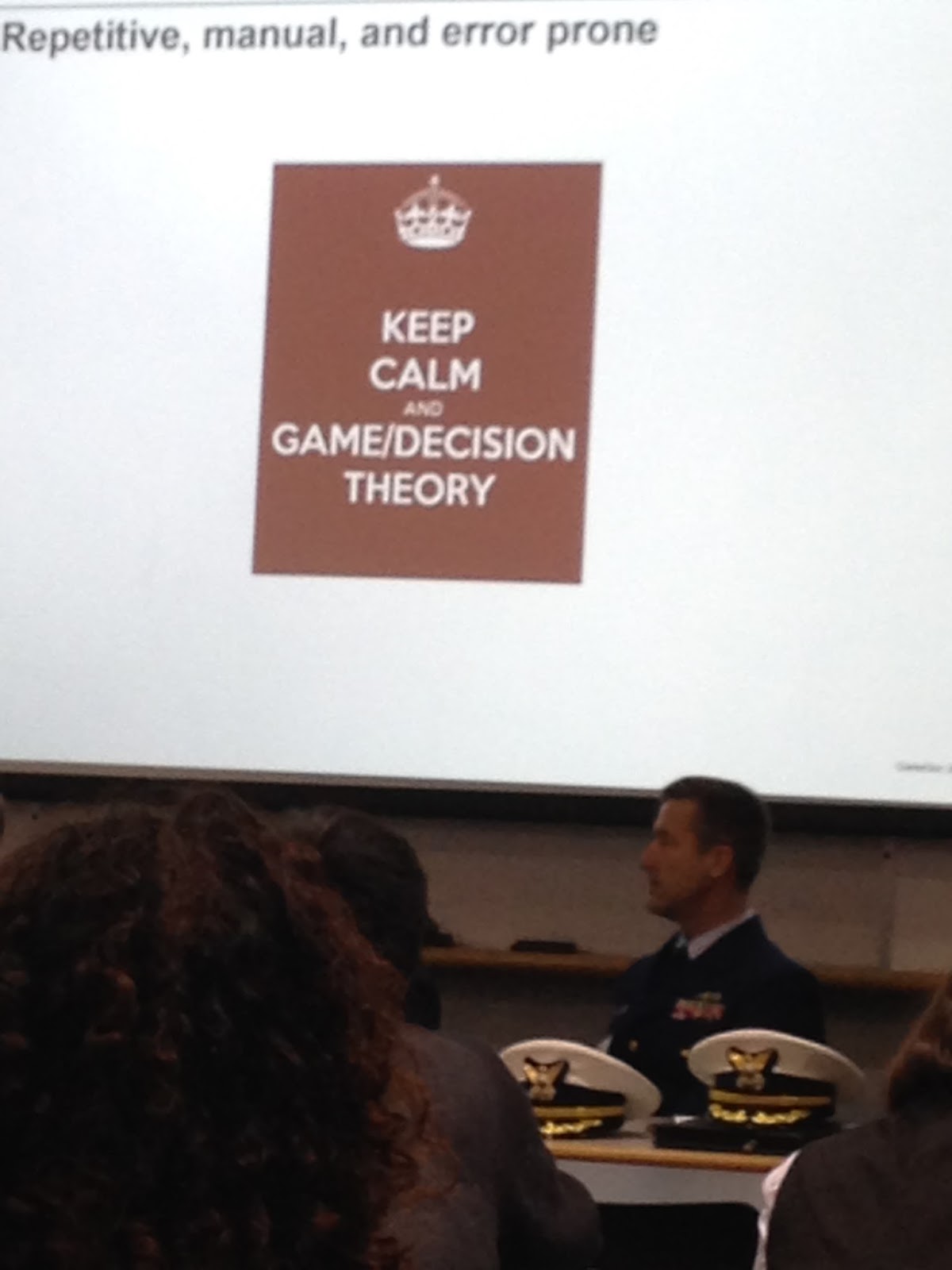
It was outstanding to hear from the expert panelists how game theory is essential to their decision-making in practice and that includes such major tasks as protecting the Port Authority of New York & New Jersey and the port of Boston. Hearing how research that one engages in can make a difference is very inspiring, motivating, and energizing, and I will be sharing some of the insights when I teach my class on Tuesday at the Isenberg School of Management! 

Below are additional photos taken at the conference.


Lunches were provided, as well as snacks during the conference breaks.
On Thursday evening we were treated to a sumptious banquet at NYU's Torch Club in Manhattan.  It was great fun to travel together on the NY subway.

 
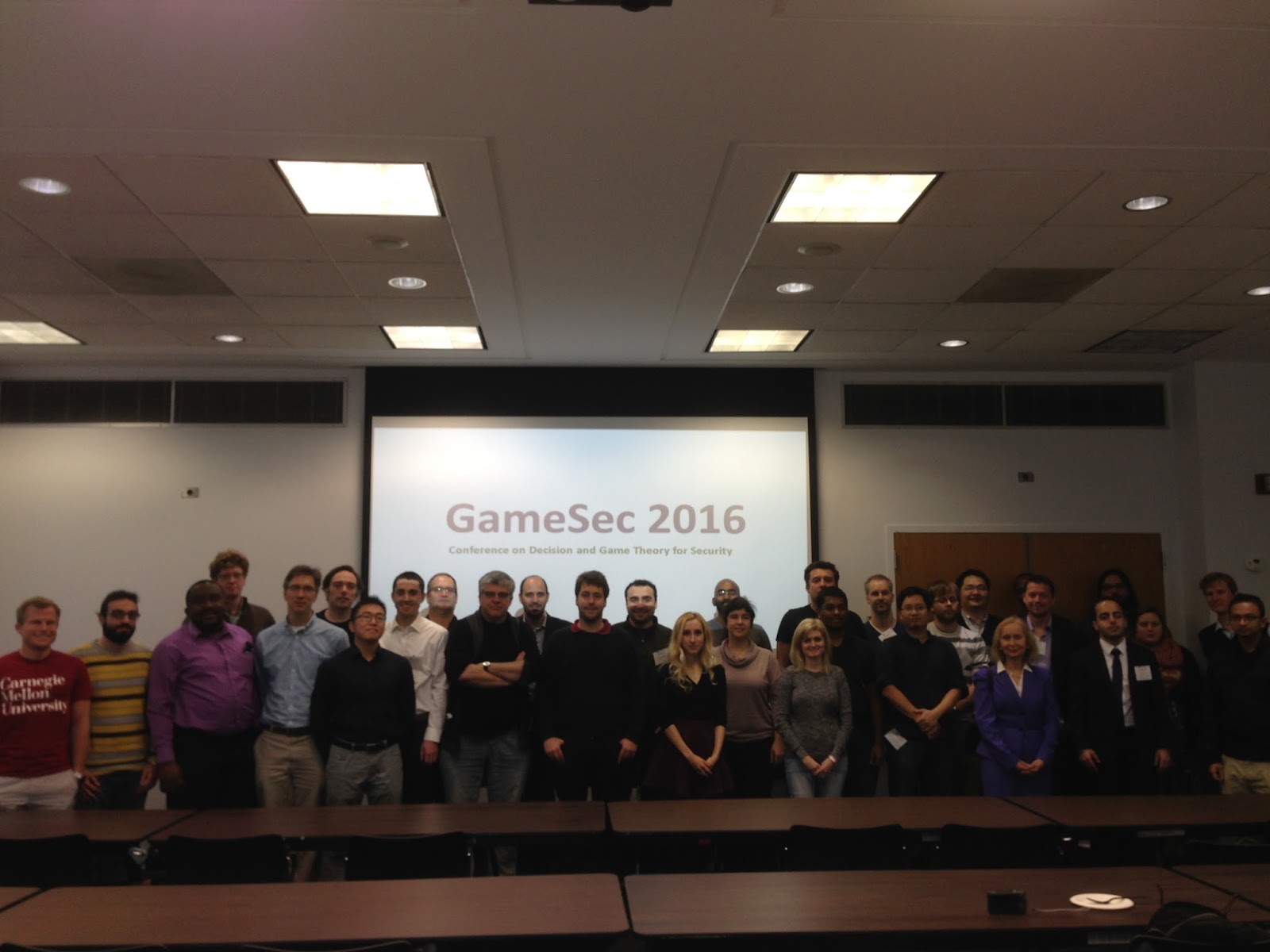
Below is a group photo of many of the participants, which was taken on Friday.
As can be seen from the conference program, the talks described many creative theoretical frameworks that add to our understanding of the strengths of game theory in a wide range of security settings, including: cybercrime and cybersecurity, cyber-physical systems, auditing elections, Internet of Things (IoT), denial of service attacks, strategic cybersecurity investments, voting systems, compliance, denial of service attacks (DOS), and more! I know that I will be reading the proceedings edited by Quanyan Zhu, Tansu Alpcan, Emmanouil Panaousis, Milind Tambe, and William Casey, from cover to cover, and will be citing the papers in this very valuable volume.
What very much impressed me about the participants and their talks and this speaks to the caliber of this conference, which was started in 2010, was the global participation, with speakers from, besides the US (including California), France, Austria, England, Australia,  Greece, Poland, Czechoslovakia, Switzerland, and other countries. The quality of the research and science was inspiring and the conversations and discussions throughout the conference made for very enjoyable networking as well  as scientific exchanges.

I was so honored to be introduced by Tamer Basar of the University of Illinois, whom I last saw at the great NETGCOOP conference in Paris, France. Professor Basar is a member of the National Academy of Engineering and his work on game theory and security is truly innovative and, if I may say, beautiful.

My friend, Rae Zimmerman of NYU also stopped by to say hello before flying out to speak at a conference in Portland. Below is a photo of Quanyan Zhu with Rae and me after my plenary talk. My plenary talk slides can be downloaded here.

Another highlight was to see the Springer booth with books on security, including a book in which my husband, my doctoral student, Shivani Shukla, and I have a book chapter: A Supply Chain Game Theory Framework for Cybersecurity Investments Under Network Vulnerability, Anna Nagurney, Ladimer S. Nagurney, and Shivani Shukla, in Computation, Cryptography, and Network Security, N.J. Daras and M.T. Rassias, Editors, Springer International Publishing Switzerland (2015) pp 381-398.

 And, on Friday, several of us, coincidentally, just happened to be wearing the NYU school color of purple, so I had to have the photos below taken as mementos.
To add to the excitement of the conference was that the NYC marathon is taking place today, November 6, 2016, so we also saw the planning for this mega race with about 50,000 participants taking part and with the finish line in Central Park and with a mini international race taking place in NYC in Manhattan yesterday morning. Since my fist language is Ukrainian I was delighted to see the Ukrainian flag in Central Park.

Thanks to Quanyan Zhu and the conference organizers for such a memorable, exciting, and very informative conference!

Wednesday, September 28, 2016

INFORMS History and Traditions -- Why Operations Research Is Fascinating

I was honored to be appointed to the INFORMS (Institute for Operations Research and the Management Sciences) History and Traditions Committee and will be serving on this committee through 2018.

The committee is a wonderful group of Operations Research /Management Science scholars and includes also a historian of science, Dr. Will Thomas. We had hosted Will at the Isenberg School of Management back in 2005 in our UMass Amherst INFORMS Speaker Series, when he was a doctoral student at Harvard University. He is the author of a recent book,published by MIT Press. Also, on the committee is Dr. Irv Lustig, who was an undergraduate in Applied Math at Brown University when I was a PhD student there and I was his TA for a course taught by my dissertation advisor, Professor Stella Dafermos. Irv went on to get his PhD at Stanford University and his dissertation advisor was none other than a giant of Operations Research, Professor George Dantzig, whose research and mentorship and friendship helped to build the great community of INFORMS, as well as its predecessors, ORSA and TIMS.  Irv spoke in our Speaker Series in the Spring of 2006. That year I was a Fellow at the Radcliffe Institute for Advanced Study at Harvard and still managed to help the students organize the Speaker Series and to come back on Fridays to support them. Dantzig passed away in May 2005 at age 90. There is a memorial site in his honor.

Dr. Mark Eisner of Cornell University has chaired this committee for the past three years and his energy and ideas as well as leadership is making a log of exciting things happen in preserving our history and also providing exceptional resource and educational materials about our field. Also, and this I find to be something quite special, Mark knew Stella when she was a postdoc at Cornell University, after receiving her PhD from Johns Hopkins in Operations Research, and before coming to Brown University.

Also on the committee are luminaries of Operations Research who are household names: Dr. Arjang Assad, Dr. Art Geoffrion, Dr. John D.C. Little, and Dr. Shaler Stidham Jr.

When I teach my classes I always include stories of individuals who have been instrumental in the development of the various topics and even include photos of the personages in my lecture slides. I think that it is very important that students know and can visualize who made the scientific discoveries, whether in terms of a methodology, an algorithm, or a very cool application. I have been lucky that through our professional societies that I have been able to meet many of the shining stars, starting when I was a graduate student. I think that meeting people whose work inspires you brings a humanity to the research and also motivates you. Plus, you can learn so much from such people in terms of professional development, if you just ask.

A wonderful contribution to the INFORMS History and Tradition webpages are the compilations of the oral histories. I have been enjoying viewing and learning from them immensely. Listening to the words of wisdom is making history of our field come alive and it also helps to preserve it. Right now all the interviews are with males so I am doing my best to get more female operations researchers featured. I know that several additional interviews are planned even for the INFORMS Conference in Nashville this coming November.

And speaking of leadership in Operations Research, I urge you to visit the Miser-Harris Presidential Portrait Gallery, where the Presidents of ORSA, TIMS, and, INFORMS are featured a long with links to their biographies. The gallery is named after Professors Hugh Miser and Carl Harris and Hugh was a Professor at UMass Amherst for several years but before I joined the faculty. All the Presidents of TIMS were male. There was only one female President of ORSA and that was Dr. Judith Liebman, who was a contemporary doctoral student of Stella  Dafermos' at Johns Hopkins. Several of my doctoral students have received the Judith Liebman Award from INFORMS for their activities with our award-winning UMass Amherst INFORMS Student Chapter. I am delighted that there have been 7 female Presidents of INFORMS, which is fabulous. Dr. Robin Keller, the President before Dr. Ed Kaplan, has also been taking part in our committee teleconferences, as well as Melissa Moore, the Executive Director of  INFORMS and Mary Magrogan, INFORMS Director of Membership, Subdivisions & International Activities.

I urge you to visit the INFORMS History and Traditions pages. I find the personal memoirs also very informative and inspiring. More information on the committee and its activities can be found in the article written by Assad and Eisner. A guided tour of the website is provided in an article written by Mark that appeared in OR/MS Today.

The biographical profiles of those who have made significant contributions to our field and were born before the end of World War II are also very interesting to read. And, of course, the list of Nobel Laureates in Economic Sciences with OR affiliations and contributions is also very worthwhile to peruse and among those listed I note that dozens of my papers have cited the work of John Nash.

INFORMS will be redesigning its website and I hope that we can feature the information associated with the History and Traditions more directly and prominently. Also, INFORMS is looking for a part-time student website intern to assist in the enhancement of the web site devoted to the history of Operations Research. The intern would work from his or her home location via email at the direction of members of the History and Traditions Committee of INFORMS, the Institute for Operations Research and the Management Sciences. If you may be interested or know of someone who may be, please let me or any of the committee members know. Thanks!
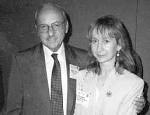
Actually, visiting the site and serving on this committee is sometimes like a walk down Memory Lane and I conclude this blogpost with a photo taken of me and Professor George Dantzig, way back when, at an ORSA conference in San Francisco.