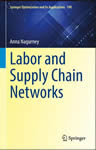
The New York Times is reporting on the Sustainable Apparel Coalition, which is planning to announce its formation in a press release today. The article, Clothes Makers Join to Set 'Green Score,' describes how this new coalition, consisting of apparel companies and even a university, is developing a comprehensive database of the environmental impact of every manufacturer, component and process in apparel production, with the aim of using that information to eventually give every garment a sustainability score.
According to The New York Times article: Americans spent roughly $340 billion on clothing and shoes last year, which is about 25 percent of the global market, and virtually all of it — 99 percent for footwear and 98 percent for clothes — came from somewhere else, according to the American Apparel and Footwear Association. And the various pieces and parts of any single garment — a jacket, say, or pair of pants — often come from such a diverse multinational chain of fabric mills, dye operations and assembly plants that quantifying the environmental impact of a single item is nearly impossible.
Interestingly, fashion and apparel supply chain management and even sustainable fashion supply chain management, have been the topic of some exciting recent research and publications. For example, the book, edited by Professor T.-M. Choi, entitled,
Fashion Supply Chain Management: Business and Industry Analysis, will be published next month by IGI Global, and our paper, "Fashion Supply Chain Management Through Cost and Risk Minimization from a Network Perspective," is the lead chapter in this volume, which I am sure will be a much sought after reference.
Also, the International Journal of Production Economics has a special issue now in press with a focus on Green Manufacturing and Distribution in the Fashion and Apparel Industries, and my doctoral student, Min Yu, and I also have a paper in press for that special issue, entitled, "Sustainable Fashion Supply Chain Management Under Oligopolistic Competition and Brand Differentiation."
Interestingly, The Times article mentions such companies as Patagonia and Timberland and, propitiously, our inaugural speaker in our "Meet the Executive" series at the Isenberg School was Mr. Marc Schneider of PVH, who had been an executive previously at Timberland.
Let's say we are ahead of the curve and it is very exciting for students to see their research being relevant in practice and so timely!
Showing posts with label oligopolistic competition. Show all posts
Showing posts with label oligopolistic competition. Show all posts
Tuesday, March 1, 2011
Thursday, October 7, 2010
Sustainable Fashion Supply Chain Management Under Competition and Brand Differentiation
In an earlier blogpost, I wrote about our recent work in fashion supply chain management and in sustainable supply chain network design.
I am pleased to announce that one of my doctoral students, Min Yu, and I have completed a study of sustainable fashion supply chain management. In the study, which is documented in our research paper, we developed a modeling framework that captures competition in fashion supply chains in the case of differentiated products with the inclusion of environmental concerns. The model assumes that each fashion firm's product is distinct by brand.
Each fashion firm seeks to maximize its profits and to minimize the emissions that it generates throughout its supply chain as it engages in its activities of manufacturing, storage, and distribution, with a weight associated with the latter criterion. The model allows for alternative modes of transportation from manufacturing sites to distribution centers and from distribution centers to the demand markets, since different modes of transportation are known to emit different amounts of emissions.
The competitive supply chain network model advances the state-of-the-art of fashion supply chain modeling in several ways:
1. it captures competition through brand differentiation, which is an important feature of the fashion industry;
2. it allows for each firm to individually weight its concern for the environment in its decision-making, and
3. through a general network framework, alternatives such as multiple modes of transportation can be investigated.
In our paper, we also presented a case study, in which, through a series of numerical examples, we demonstrated the effects of changes on the demand price functions; the total cost and total emission functions, as well as the weights associated with the environmental criterion on the equilibrium product demands, the product prices, profits, and utilities. We noted that the environmental weights could also be interpreted as taxes and, thus, in exploring different values an authority such as the government could assess a priori the effects on the firms' emissions and profits.
The case study also demonstrated that consumers can have a major impact, through their environmental consciousness, on the level of profits of firms in their favoring of firms that adopt environmental pollution-abatement technologies for their supply chain activities.
I am pleased to announce that one of my doctoral students, Min Yu, and I have completed a study of sustainable fashion supply chain management. In the study, which is documented in our research paper, we developed a modeling framework that captures competition in fashion supply chains in the case of differentiated products with the inclusion of environmental concerns. The model assumes that each fashion firm's product is distinct by brand.
Each fashion firm seeks to maximize its profits and to minimize the emissions that it generates throughout its supply chain as it engages in its activities of manufacturing, storage, and distribution, with a weight associated with the latter criterion. The model allows for alternative modes of transportation from manufacturing sites to distribution centers and from distribution centers to the demand markets, since different modes of transportation are known to emit different amounts of emissions.
The competitive supply chain network model advances the state-of-the-art of fashion supply chain modeling in several ways:
1. it captures competition through brand differentiation, which is an important feature of the fashion industry;
2. it allows for each firm to individually weight its concern for the environment in its decision-making, and
3. through a general network framework, alternatives such as multiple modes of transportation can be investigated.
In our paper, we also presented a case study, in which, through a series of numerical examples, we demonstrated the effects of changes on the demand price functions; the total cost and total emission functions, as well as the weights associated with the environmental criterion on the equilibrium product demands, the product prices, profits, and utilities. We noted that the environmental weights could also be interpreted as taxes and, thus, in exploring different values an authority such as the government could assess a priori the effects on the firms' emissions and profits.
The case study also demonstrated that consumers can have a major impact, through their environmental consciousness, on the level of profits of firms in their favoring of firms that adopt environmental pollution-abatement technologies for their supply chain activities.


Wednesday, February 17, 2010
Supply Chain Network Design
My paper, Supply Chain Network Design Under Profit Maximization and Oligopolistic Competition, has now been officially published and it appears as the lead article in volume 46, number 3, of the journal Transportation Research E, pages 281-294.
The mathematical model that I developed in this paper can be applied to the design of supply chain networks where there is oligopolistic competition as in such industries as: freight carriers, airlines, certain beverage (including beer) manufacturers, oil companies, and wireless carriers, among others. The competitive formalism that I utilize is that of Nash equilibrium and I show that the governing equilibrium conditions can be formulated as a variational inequality. The algorithm that I propose and apply to compute the equilibrium product flows, along with the capacities on the various links, yields closed form expressions (very elegant and easy and fun to implement). For those who are interested, you can read up on this methodology in my Network Economics: A Variational Inequality Approach book.
I presented this work late last month at the Symposium on Transportation Network Design and Economics at Northwestern University, and the presentations given at this symposium have now been posted on the above link. My presentation is also available here.
This symposium was organized by the Transportation Center at Northwestern in honor of the visit of Professor Martin Beckmann and I blogged in an earlier posting on the great success of this symposium. Professor Hani S. Mahmassani is the Director of this Transportation Center and he, along with Professor David E. Boyce, were instrumental in getting this symposium organized and much of the success of it is due to them.
In the meantime, I received a lovely note from Professor Beckmann who wrote how much he enjoyed my fine paper. Needless to say, the fact that he took the time to write such a personal note is very meaningful to me.
The mathematical model that I developed in this paper can be applied to the design of supply chain networks where there is oligopolistic competition as in such industries as: freight carriers, airlines, certain beverage (including beer) manufacturers, oil companies, and wireless carriers, among others. The competitive formalism that I utilize is that of Nash equilibrium and I show that the governing equilibrium conditions can be formulated as a variational inequality. The algorithm that I propose and apply to compute the equilibrium product flows, along with the capacities on the various links, yields closed form expressions (very elegant and easy and fun to implement). For those who are interested, you can read up on this methodology in my Network Economics: A Variational Inequality Approach book.
I presented this work late last month at the Symposium on Transportation Network Design and Economics at Northwestern University, and the presentations given at this symposium have now been posted on the above link. My presentation is also available here.
This symposium was organized by the Transportation Center at Northwestern in honor of the visit of Professor Martin Beckmann and I blogged in an earlier posting on the great success of this symposium. Professor Hani S. Mahmassani is the Director of this Transportation Center and he, along with Professor David E. Boyce, were instrumental in getting this symposium organized and much of the success of it is due to them.
In the meantime, I received a lovely note from Professor Beckmann who wrote how much he enjoyed my fine paper. Needless to say, the fact that he took the time to write such a personal note is very meaningful to me.
Subscribe to:
Posts (Atom)

 Posts
Posts