Showing posts with label emergency preparedness. Show all posts

Sunday, July 16, 2023

Thanks to ALL Who Took Part in Our International Conference on Dynamics of Disasters in Greece

It has been an incredibly busy, yet energizing, several few weeks with two international conferences on different continents and different seasons (summer and winter).

I'd like to take the opportunity to thank all those who took part in the 6th International Conference on Dynamics of Disasters, which took place in Piraeus, Greece, July 3-6, 2023.

The below collage was constructed to capture a few of the highlights.

The venue of the conference was the Historical Library of the Aikaterini Laskaridis Foundation in Piraeus.

We had the pleasure of hearing from outstanding plenary speakers, both practitioners and academics.

It was inspiring to see conferees representing many different countries including: Austria, Germany, Nepal, Japan, Canada, Greece,  Italy, Turkey, the UK, and the US.

In a period in history with compounding disasters, the exchange of knowledge and best practices and working together to address the great challenges that we are faced with are needed more than ever.

Information about the conference, including the presenters and their talk titles can be found on the conference website.

I had the pleasure of presenting work done with my PhD student at the Isenberg School of Management Dana Hassani and colleagues at the Kyiv School of Economics: Professor Oleg Nivievskyi and Dr. Pavlo Martyshev. The link to the slidedeck of the presentation can be accessed here.

Not everyone could join us because of visa and other extenuating circumstances. Sadly, in April, Professor Urmila Pyakurel of Nepal passed away. She was an avid participant in our previous Dynamics of Disasters conference. We paid a tribute to her in Piraeus. A PhD student of hers presented on their joint work. Urmila lost her life to cancer, which she had battled for many years. She was also a Humboldtian. You can read about some aspects of her amazing life here.

And, while I was at the IFORS conference in Santiago, Chile, July 10-14, 2023, at which I gave a keynote, we heard from Springer Nature that we are getting a contract to edit the volume: "Dynamics of Disasters: From Natural Phenomena to Human Activity." My fellow Co-Editors on this project are: Professors Ilias S. Kotsireas, Panos M. Pardalos, Stefan Pickl, and Chrys Vogiatzis. It was a pleasure to work with them on the organization of this very timely conference.

Saturday, March 6, 2021

A Big Thanks to Dr. George Karagiannis for His Brilliant Guest Lecture in My Humanitarian Logistics and Healthcare Class

This past week, we had the honor and pleasure of hosting Dr. George Karagiannis in my Humanitarian Logistics and Healthcare class, which, this year, is being taught remotely because of the COVID-19 pandemic.

An integral part of this course is having guest lecturers who are expert practitioners. Hearing from such experts reinforces the course material and provides for a rich educational experience for the students.

Now, for some background on Dr. Karagiannis, whom I met back in 2015, when I co-organized the Dynamics of Disasters conference in Kalamata, Greece, with Professors Ilias S. Kotsireas and Panos M. Pardalos, and Dr. Karagiannis was a speaker. We also hosted him for a seminar at the University of Massachusetts Amherst in the Fall of 2015.

Dr. George Karagiannis is Greece's Deputy Secretary-General for Civil Protection, the US equivalent of Deputy FEMA Administrator. From 2016 to 2019, he was a Technical Officer at the European Commission Joint Research Center, where his area of expertise revolved around emergency management, critical infrastructure protection and hybrid threats. Prior to joining the Joint Research Center, he was a Disaster Management Consultant. He has worked in four countries, developed two strategic national risk assessments, organized over 60 exercises, led the development of a dozen emergency operations plans and responded to disasters in the field. He also was a Research Scientist at the Technical University of Crete in Greece, where he his interdisciplinary research lay at the intersection of systems engineering and disaster resilience. George earned his Doctorate in Environmental Science and Engineering from Saint-Etienne School of Mines in France. He also holds degrees in Civil Engineering and in Disaster Management and Business Administration, and is a Certified Emergency Manager by the International Association of Emergency Managers.

Dr. Karagiannis's presentation title in my course was, "Humanitarian Needs Assessment & Information Management." He zoomed in from Athens, Greece, which was lovely since the students in this class are physically located not only in Massachusetts but across the US, with a student even enrolled, who is now in Turkey.


Due to multiple inquiries and requests, Dr. Karagiannis has given me permission to post the slide deck of his excellent presentation.

So many excellent insights and recommendation are contained in his presentation, which I urge you to study. Some of the takeaways that very much resonated with me and also reinforced the material that we have been covering in the class and will be addressing in subsequent weeks are the following:

1. Help flows were there are cameras. This statement demonstrates the importance of media in getting the news out but also emphasizes that, at times, people who are victims of disasters may not get the help that they need.
2. Goods may be donated and delivered that do not help the victims - such as fur coats from Greece following the Israel-Hezbollah war in 2006! The wrong goods create extra stressors (even if they are donated in good faith) since they require human resources to offload and also take up valuable storage space. In the case of the furs, they ultimately created a health hazard. I recall tuxedos being delivered to victims of Hurricane Katrina, and there are many other such incredible stories of the wrong goods.
3. When do you stop gathering data? How much data is "good enough" for needs assessment?
4. The recognition of the importance of time is paramount. If it takes a time t for needs assessment, it will take a time of 2t for making a decision.
5. One must distinguish primary data from secondary data.
6. Comparison over time is also essential in terms of the number of people displaced by the disaster.
7. One of the greatest challenges is learning to make decisions with only incomplete information when everything is at stake!
8. There is a shift of Emergency Management now in addressing infrastructure, which makes tremendous sense due to the negative impacts of climate change on infrastructure.

I very much like that he noted the UN Cluster Approach to support sector emergency functions, which we had emphasized in the course just a few days prior.

We also had a great discussion on how well Greece mitigated the spread of the coronavirus, starting their preparations already in early January! The country was very agile and reacted quickly.

The students were prepared with questions for the speaker. Dr. Karagiannis was so generous with his time - staying way past the class time window to answer questions.

And we honored him with a Professor for a Day certificate recognizing that his contributions.


Thursday, February 13, 2020

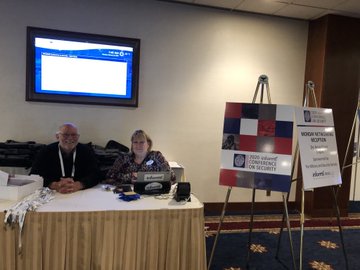
Outstanding Inaugural INFORMS Security Conference in Beautiful Monterey, California

I arrived back in Amherst at 1AM this morning, having flown from Monterey, California to Denver, Colorado and then to my "local" airport - Bradley.

I had been in beautiful Monterey to take part in INFORMS' inaugural Conference on Security and it was outstanding.  The official dates of the conference were February 9-11, 2020.  Luckily, I am on sabbatical this semester, so this was manageable for me and I was very much looking forward to presenting at this conference. It was also quite nostalgic, since the first talk I ever gave at a conference was at the Naval Postgraduate School in Monterey (which was also heavily involved in this conference) at an MIT/ONR conference organized by Professor Michael Athans of MIT. I was then working in the defense sector, focusing on the navy, in Newport, Rhode Island, while pursuing my Master's at Brown University. I was the only female presenter at that conference.

First, I would like to congratulate the organizers of the INFORMS Security Conference: Mr. Harrison Schramm, Captain Brian Morgan, and Dr. Paul Nicholson, on its success! The format was excellent - 50 minute presentations (8 or so parallel sessions), with lunch and coffee provided, and ample time for discussion. Everyone was very gracious and friendly.  One "marker of the success" of this conference was the number of INFORMS Fellows in attendance, including: Gerry Brown, Stephen Robinson, Vicki Bier, Michael Fu, Sheldon Jacobson, and me :) If I missed someone, do let me know! Attendance was about 100 (I was told) and consisted of faculty, military, practitioners from various companies, government, and even some students that I met.

The plenary talks were great as well as a risk analysis panel conducted by Gerry Brown and Sam Savage. 
Image

It was thrilling to even see Stefan Pickl, who traveled all the way from Germany for the conference. He had been a participant in the latest Dynamics of Disasters conference that I co-organized with Panos M. Pardalos and Ilias S. Kotsireas, and which took place last summer in Kalamata, Greece. We are now co-editing a new volume, to be published by Springer.
Image
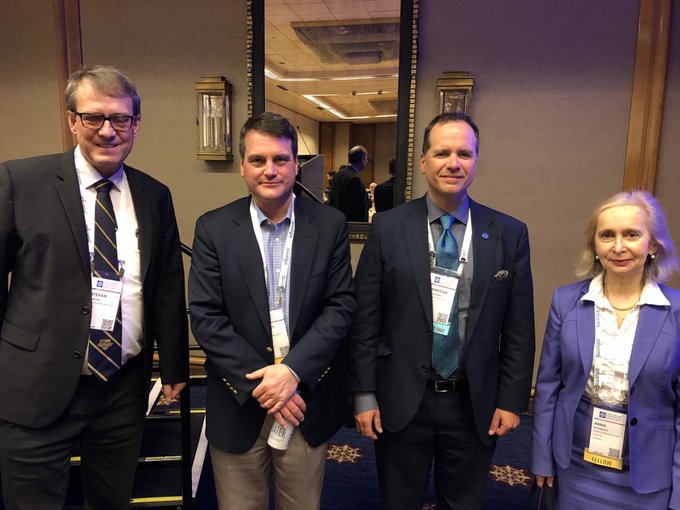
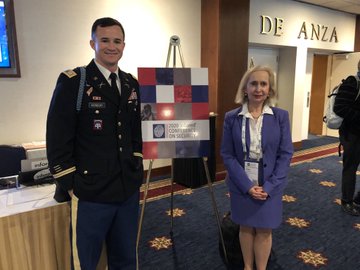
In the above photo I am standing with Stefan Pickl, Rob Dell, who gave one of the plenary talks, and Conference Chair Harrison Schramm.

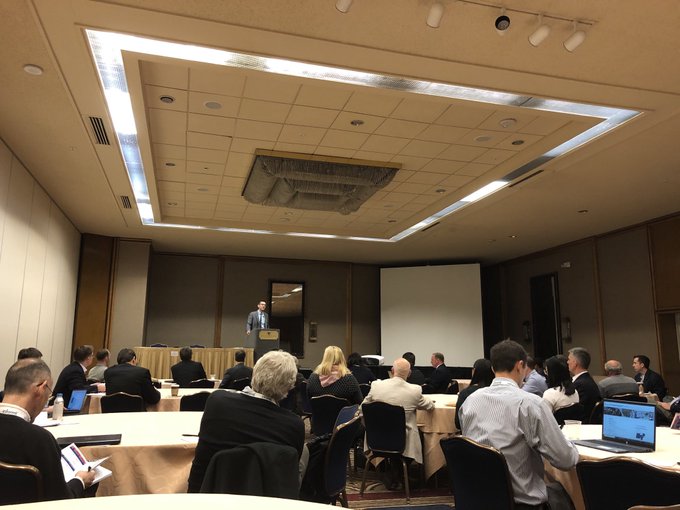
I had the pleasure of presenting Monday morning on Game Theory Network Models for Disaster Relief. Special thanks to Nathaniel Bastian for being an outstanding stream chair of our stream: Interdisciplinary Applications - Frontiers. He had all of our presentations ready for projecting on his laptop.
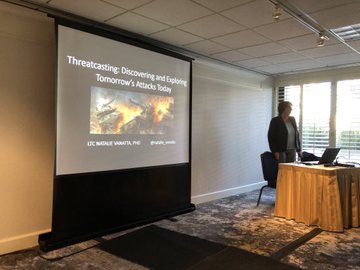
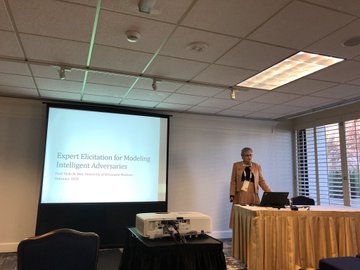
Below are some photos from the delivered talks and of one of the great lunches! Many thanks for the wonderful presenters. Special to also hear from Jun Zhang and James Minas.
Image

Image
Image
Image
Image
Image
Image
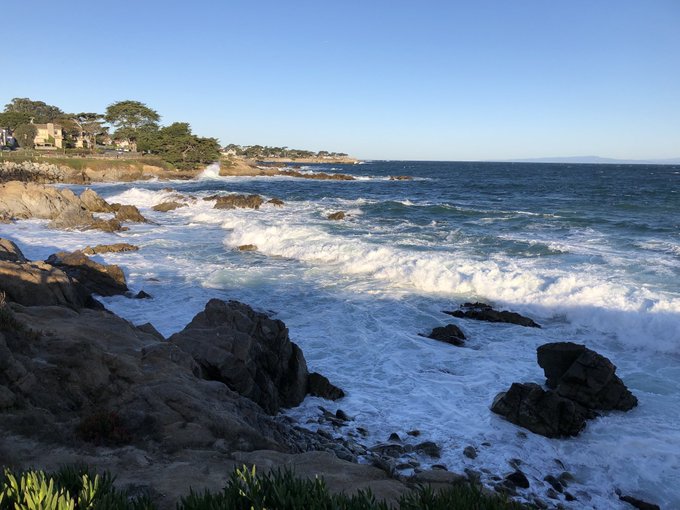
The venue was extraordinary - the hotel is located in downtown Monterey with hiking/biking trails in proximity and views of the Pacific.

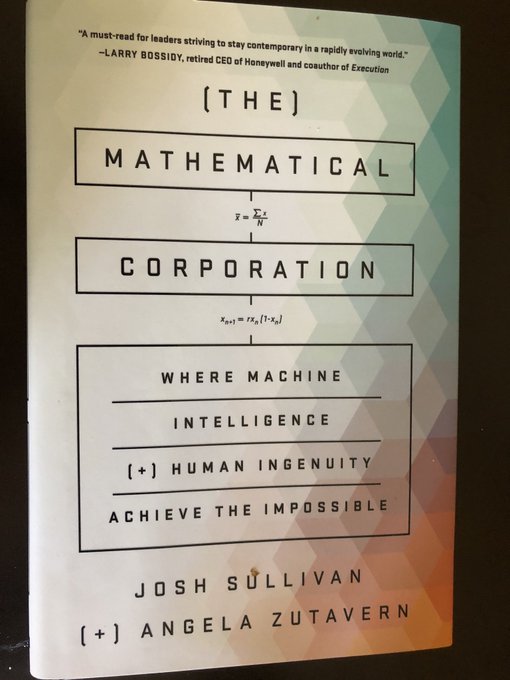
And, at its best, a conference generates new research ideas, new collaborations, reconnecting with colleagues, and growing your network. The INFORMS Conference on Security delivered on all counts and at a location that would be hard to improve upon.  I was even presented with a book by Booz Allen Hamilton consultants. Interestingly, I had had an offer from this company when I was finishing up my PhD.
Image
Image
Below I have posted a few photos of the beauty of the natural environment of Monterey.
Image
Image
Image
Image
I am looking forward to the next INFORMS Conference on Security but, in the mean time, there is a lot of important research to be done by our community!

Saturday, March 23, 2019

Fabulous Guest Lecture by a MEMA Expert on the Boston Marathon - Public Safety and Security Experience

Having expert practitioners speak to students in my Humanitarian Logistics and Healthcare class provides outstanding educational experiences that stay with students even after they graduate. The logistics of scheduling experts can, in itself, be challenging, but the risks reap great rewards.

This past Tuesday, we had the honor of hosting Ms. Sara Zalieckas, who is an All Hazards Planner with MEMA (Massachusetts Emergency Management Agency) and is based in Framingham, Massachusetts (about a two hour drive to UMass Amherst). She arrived in time for the early morning class, which meets from 8:30AM-9:45AM and, although I was waiting for her in the original atrium to escort her to the classroom, and she was in the new $62million addition to the Isenberg School,  we connected in time!

Ms Zalieckas is a Canadian, which made me extra excited since I was also born in Canada, and, in fact, had been to Halifax last summer to present at the CORS (Canadian Operations Research Society) conference, where she is from! She has worked for MEMA since 2012 and, hence, was employed by MEMA, when the bombing at the Boston Marathon took place on April 15, 2013.
The title of her guest lecture was: The Boston Marathon - Public Safety and Security Experience.

This year's Boston Marathon is taking place on April 15, 2019.

Ms. Zalieckas informed us of the extensive planning involved among multiple organizations to ensure the safety and security of runners, volunteers, supporters, and spectators alike in this major sports event, which covers over 26 miles (I have run several Ocean State marathons in RI, so I understand the energy and athleticism involved). It is considered the most challenging sports event to secure in the country. The Super Bowl is in one location, in contrast, for example. In 2013, there were 27,000 registered runners and the weather was ideal. In 2019, 60,000 runners are expected.

Rather than detailing the horrific attacks at the 2013 Boston Marathon, I will refer you to a blogpost I wrote following the guest lecture of Dr. Pierre Rouzier, who is a sports medicine physician, based at UMass Amherst, and who was working in a triage tent at that Marathon.

Post 2013, the focus  has been on lessons learned, and on assessing vulnerabilities and threats. Ms. Zalieckas brought to our attention, the 2013 Boston Marathon after action report, which can be accessed here.

Previously, jurisdictions had been working in silos, which was understandable since the marathon course covers a distance of over 26 miles.  Now there is a Unified Coordination Plan, with plans for evacuations, should the need arise, along the course in multiple locations, with even alternative routes to shelters along the Boston Marathon route identified, along with transportation options, such as buses staged. This I found truly fascinating. Now there is a joint information center and system, so that rumors, which are unsubstantiated, do not propagate, along with misinformation. There are also station "blocking" vehicles along the course.

The level of detail and the organizations involved to ensure public safety and security is extraordinary. More intense planning has been taking place since January 2019 to test out communications, to run tabletop exercises and training, to conduct intelligence and investigations (with appropriate federal partners), and to also address how to respond to mass casualty events. I also found it very impressive that MEMA, along with partners, has structured coordination of decision making and there is now a Unified Coordination Center. You may know that the MEMA headquarters in Framingham is actually an underground bunker built during the Cold War and our President at that time, John F. Kennedy, was to inaugurate its opening, but he was assassinated.

It is also so impressive that there is!a drone response plan is in place for the Boston Marathon and, of course, GIS is also utilized to monitor congestion along the route.

Ms. Sara Zaieckas' guest lecture was mesmerizing. I also was very pleased that we had a female speaker this term (and will be having another one next month).

We took a group photo after her guest lecture.

In appreciation, we presented Ms. Zalieckas with a gift from the Isenberg School of Management, and I followed up with several photos and a formal thank you letter, which I also copied to the new Director of MEMA, Ms. Samantha Phillips, which was recently appointed to this important most by Governor Charlie Baker. Quite exciting to have a female at the helm of MEMA!

I wish all the runners, the volunteers, supporters, and spectators, as well as the emergency management folks and their liaisons, a wonderful and safe 2019 Boston Marathon! We will be watching and cheering from near and far!

Thursday, March 29, 2018

Hospital Emergency Preparedness - An Outstanding Lecture by a Security Expert

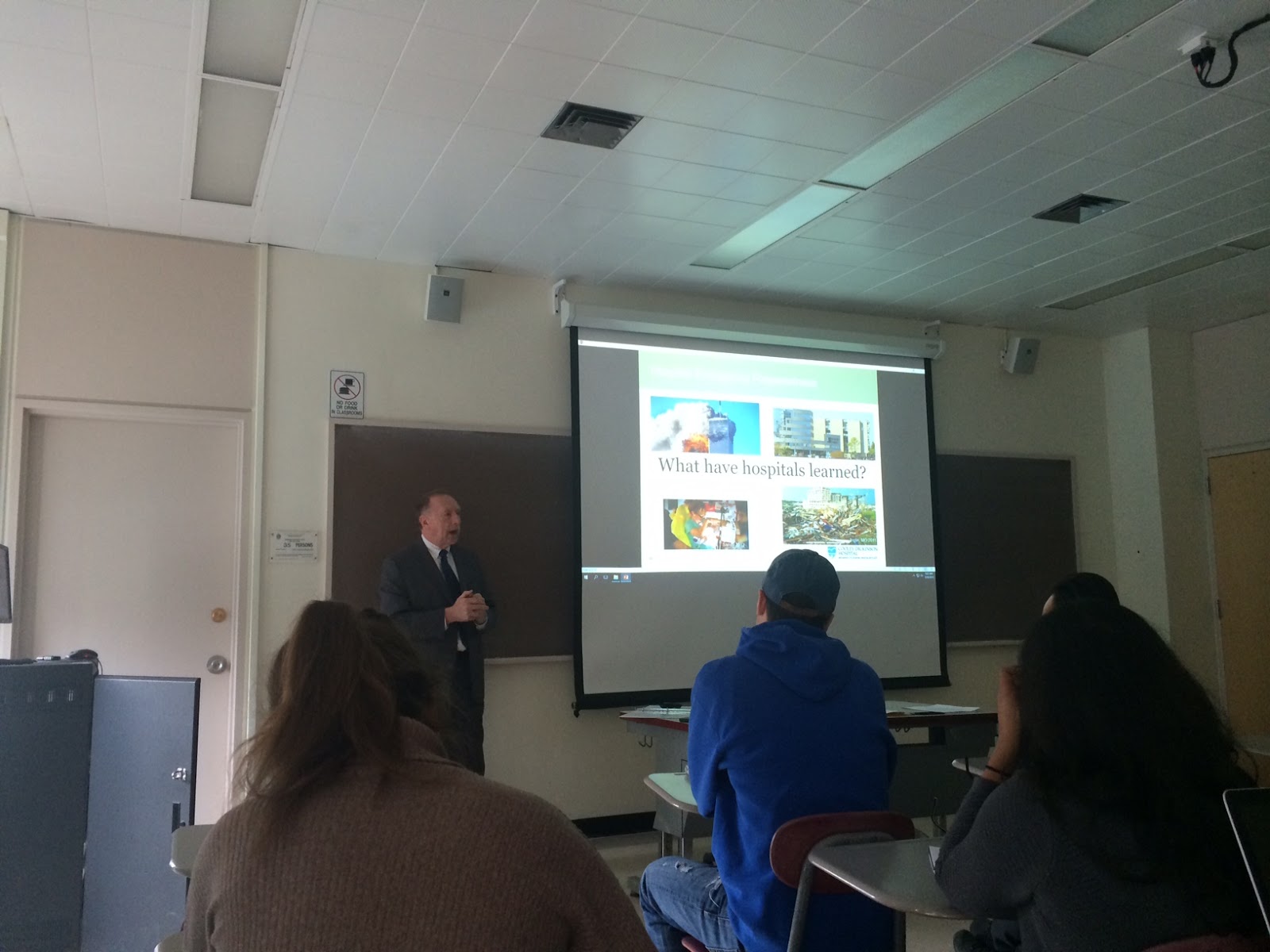
Today, the students in my Humanitarian Logistics and Healthcare class and I had the true honor and pleasure of hearing Mr. Brian Rust, who is the Manager of Security and Emergency Preparedness at Cooley Dickinson Hospital in Massachusetts, deliver a guest lecture on Hospital Emergency Preparedness at the Isenberg School of Management. Cooley Dickinson Hospital is a 140 bed acute care community hospital, providing primary care 24/7 for Hampshire County residents and neighboring communities. It is part of the Partners Healthcare Network and is now owned by Mass General Hospital in Boston, one of the world's leading hospitals. Cooley Dickinson aims to provide the best healthcare in the most appropriate setting.

Mr. Rust has 11 years of experience at Cooley Dickinson Hospital and previously also worked in the police department and at Smith College.

Mr. Rust's guest lecture was fascinating and provided us with a wealth of information on emergency preparedness in the very important hospital healthcare setting.

At the beginning of his lecture, Mr. Rust told us that hospital emergency preparedness lies somewhere between preparing for emergencies and preparing for disasters since every day a hospital is involved in life or death decisions. He noted that it is important to identify: What are we preparing for? since preparing for anything, anytime, is much too general.
He noted that the hospital prepares for "any incident that has the potential to have a negative effect on normal operations of the hospital." The Joint Commission is the regulatory body that also accredits hospitals and it emphasizes communications, resource and asset management, the importance of the functioning of utilities (he mentioned the huge impact that a water main break would have on hospital operations, for example), as well as patient clinical support. Events, originating with 9/11, and including natural disasters such as Hurricane Katrina, have stimulated the growth in and emphasis of hospital/healthcare emergency preparedness. I was delighted that he mentioned so many issues and events that we had been talking about in the course so far (and even had other guest speakers on) from the Ebola outbreak in western Africa (that Cooley Dickinson even prepared for and learned lessons from) to the Boston Marathon bombing.

He also spoke about the ASPR (Assistant Secretary for Preparedness and Response) and that hospitals have realized that one needs a system-wide perspective, even if hospitals, which are non-profits, compete with one another for patients, since although they are non-profits, they are still businesses. Means of cooperation include: fatality management, information sharing, dealing with medical surges, and even volunteer management, along with emergency operations coordination. Cooley Dickinson Hospital is part of a health and medical coordinating coalition. Members include hospitals, public health facilities, long-term care facilities, community health centers, and EMSs. He also emphasized - as several of the guest lecturers this semester have - that relationships between these various entities have to be built before emergencies and disasters occur. Despite numerous documents and plans, when an emergency happens, the training and experience kick in, and no time should be wasted in response.

Mr. Rust also reinforced the importance of practice drills and mentioned a recent exercise that his hospital was involved in which simulated a norovirus outbreak post a wedding with twenty patents arriving in the emergency room in twenty minutes. He also spoke on the scheduling of hospital staff, and the replenishment of supplies and medicines, and the fact that older hospitals do not have much (if any) space for warehousing. He talked about the maximization of existing resources (great reference to operations research) and the strengthening of community health resources and emphasized that it is humans that play the most important roles.

In speaking about the different regulations (and associated organizations) he mentioned CMS (Center for Medical Services) and how it identified such key essentials in hospital emergency preparedness as: safeguarding human resources, maintaining business continuity, and protecting physical resources. A hospital is supposed to be operational and self-sufficient for 72 hours following a disaster. Towards that end, he noted how Cooley Dickinson has alternative fuel sources and also mentioned how generators on low levels of healthcare institutions flooded both during Hurricane Katrina as well as Superstorm Sandy (something I had also mentioned to the class).

One of my favorite takeaways and quotes from today's fabulous lecture, during which I took copious notes, was that "hospitals are a team sport."

He spoke about the hospital incident command center and how incident command centers evolved from battling fires (I had shown the students a video of the response to San Diego's fires of a while ago which illustrated precisely such an incident response system, so the analogy, although not perfect, was great for the students to hear).

More precisely, what are the challenges for hospital emergency preparedness (EP)? Mr. Rust identified the following challenges, reminding us, again, that hospitals are non-profits:

  • hospitals compete with other hospitals
  • EP can be complex and confusing
  • it is costly to stock supplies and equipment that may be needed in emergencies
  • it is labor-intensive to prepare 
  • there is a low probability of high-impact large events
  • "apathy" - it won't happen here
  • defining triggers - when does it become an emergency, given that hospitals are involved in life or death decisions each and every day
  • "storm of century" media hype.
And what have hospitals learned from the various events and experiences? They now have procedures and policies and understand the value of working in concert plus "in a disaster, we all have to be together as one."

After the class and so many very interesting questions from the students, we took the group photo below.
We are truly grateful to Mr. Brian Rust for taking the time out of his very busy professional schedule to share his very valuable insights and expertise on hospital emergency preparedness with us. This is a guest lecture that we will never forget. He was an amazing Professor for a Day at the Isenberg School!

Monday, February 6, 2017

When A Speaker Cancels Practice Disruption Management

There is a lot to be gained and learned from guest speakers, whether in a class or in a more open setting -- no wonder the popularity of TED talks, for example.

Another aspect of hosting a guest speaker, who is an expert on a topic, is the networking opportunities and, frankly, the creation of memories and even friendships.

I have a lot of experience hosting speakers, starting back in 2004, when we began our UMass Amherst INFORMS Student Chapter (which just launched its new website), along with its Speaker Series. Through that series alone, we have hosted over 100 speakers and the list is a Who's Who in Operations Research and the Management Sciences with also speakers who are intellectuals and visionaries but not necessarily academics or practitioners taking part - I would put Tom Vanderbilt in that category - the author of Traffic.

The students do a tremendous job helping me with the speakers. This is essential since a lot of work goes into organizing a Speaker Series and carrying out not only the marketing for the talks but also the logistics behind them. One of my most popular blogposts continues to be: Tips on Organizing a Successful Speaker Series.

The same holds for hosting speakers within a class which I do in my Humanitarian Logistics and Healthcare class, which I am now teaching at the Isenberg School of Management, and have taught in the spring term for the past several years.

However, despite the best laid out plans, things happen. Although in our public speaker series I just recall one cancellation, which is truly amazing and lucky, although there were times when I was waiting at the door for a speaker traveling from out of state with only 5 minutes to spare for the scheduled talk to begin and there was even a camera and news crew waiting -  anxiety-provoking, but so worth it when they deliver and the audience is so grateful and appreciative (and so am I).

Part of my Humanitarian Logistics class focuses on emergency preparedness and business continuity, which is rather fitting, since we get to practice disruption management.

Two years ago, in this course, we had some real life drama. I received the email message at 5:30AM that the speaker was cancelling for my 8:30AM class (always be prepared is my motto and I had a great lecture ready, in any case).  The week prior, the guest speaker, Mr. Brian Rust of Cooley Dickinson Hospital,  had to contend with multiple emergencies, beginning with a computer failure on Monday, which was fixed by a Cisco switch brought in from eastern MA, followed by  complete communication failure on Wednesday (supposedly not related to the Monday one)  with no Internet or phone lines available. Hence, medical records could not be accessed, and CAT scans and X-rays could not be read. Back to documentation on paper, which he said the older healthcare providers were comfortable with since they had used such basic approaches earlier in their careers, in contrast to the more recently trained healthcare workers, which are so dependent on computers. Appointments had to be cancelled. This major disruption was fixed on Wednesday but then Wednesday afternoon a sprinkler pipe burst and flooded the back of the Emergency Room with thousands of gallons of water pouting in. The water pouring in was dark and the texture of oil, he said.  There is a new cancer facility being constructed above the Emergency Room area and it seems that the pipe was not properly insulated and it was one of the coldest winters on record in Massachusetts. With facility experts on hand (luckily, he said, not everything had been outsourced), in a few hours the area was cleaned up and disinfected. During that period, however, ambulances had to be diverted to other hospitals, which can be "expensive" in terms of additional time needed for delivering the patient and in that Cooley Dickinson loses any financial compensation since it did not serve those patients. He noted that 4 ambulances were diverted.

The students and I were disappointed, although quite understanding,  that he could not speak on that Thursday but when he did give his guest talk at the next class, it was gripping, to say the least.

And, last Thursday, the guest speaker in my class was to have been Mr. Jeff Hescock, who is the Director of Emergency Management and Business Continuity at UMass Amherst. He has done extraordinary things at UMass and is a fabulous speaker. He notified me late last Wednesday that he would have to postpone his talk because of issues surrounding the Executive Order (EO) that President Trump had signed regarding immigration and refugees. Yes, the EO had affected some UMass students and even faculty who could not return back to the US and an emergency meeting was called in Boston for Thursday!


I was disappointed that he cancelled last Thursday, as were the students, but we hope to host him tomorrow and are looking forward to it. The students have prepared some fascinating questions for him.

Plus, my very first Humanitarian Logistics class was cancelled this semester because of inclement weather (Mr. Hescock is part of the group that makes such decision), so I predict no snow tomorrow. 

Saturday, November 26, 2016

Our Dynamics of Disasters Book is Published!

The good news arrived Thanksgiving Day in the evening.

The book that I had co-edited with Professor Ilias S. Kotsireas of Wilfrid Laurier University in Canada and Professor Panos M. Pardalos of the University of Florida had been published and was available already also in electronic format.
The book, Dynamics of Disasters: Key Insights, Models, Algorithms, and Insights, published by Springer International Publishing Switzerland, is an outgrowth of a conference that we had co-organized in the summer of 2015, which had been held in Kalamata, Greece. The book contains 18 refereed book chapters as well as a preface written by the co-editors and the Table of Contents, Preface, and all contributors can be downloaded in pdf format. 

In addition, to submissions from conference participants and speakers a call also went out for paper submissions. Since we have been working in this area for a while and since I also each spring teach a course on Humanitarian Logistics and Healthcare at the Isenberg School of Management excellent contributions were received, including several from practitioners, and contributors from the United Nations.
 
Working on this book was a true labor of love and I could not have asked for more generous and wonderful co-editors, and the same goes to all of the reviewers, who will remain anonymous, but whose careful reading of the submitted papers and constructive suggestions were very much appreciated.

In the photo below, taken in Kalamata, Greece, I am standing with from left to right Dr. Fuad Aleskerov, Dr. Panos M. Pardalos, Dr. Ilias S. Kotsireas, and Dr. Burcu Balcik.
Aleskerov, Pardalos, Kotsireas, and I are co-organizing the next Dynamics of Disasters conference, which will be held July 5-9, 2017, also in Kalamata, Greece.  The program committee consists of outstanding scientists from around the globe.

The chapters in our Dynamics of Disasters book and the names of the contributors are below.


Chapters
Authors
Preface, Contents, Authors Illias S. Kotsireas, Anna Nagurney, and Panos M. Pardalos, Editors
1 An Assessment of the Impact of Natural and Technological Disasters Using a DEA Approach Fuad Aleskerov, Sergey Demin
2 Selective Routing for Post-Disaster Needs Assessment Burcu Balcik
3 Bridging the Gap: Preparing for Long-Term Infrastructure Disruptions Rasmus Dahlberg
4 Multi-Hazard Scenarios and Impact Mapping for a Protected Built Area in Bucharest, as a Base for Emergency Planning Emil-Sever Georgescu, Cristian Iosif Moscu, Claudiu Sorin Dragomir, Daniela Dobre
5 Lean Thinking and UN Field Operations: A Successful Co-existence? Sulejman Halilagic, Dimitris Folinas
6 Collaborative Incident Planning and the Common Operational Picture Georgios Marios Karagiannis, Costas E. Synolakis
7 Metaheuristic Optimization for Logistics in Natural Disasters Thomai Korkou, Dimitris Souravlias, Konstantinos Parsopoulos, Konstantina Skouri
8 Tsunami of the Meteoric Origin Andrey Kozelkov, Efim Pelinovsky
9 The Donation Collections Routing Problem Emmett J. Lodree, Derek Carter, Emily Barbee
10 Network Criticality and Network Complexity Indicators for the Assessment of Critical Infrastructures During Disasters Evangelos Mitsakis, Josep Maria Salanova, Iraklis Stamos, Emmanouil Chaniotakis
11 Freight Service Provision for Disaster Relief: A Competitive Network Model with Computations Anna Nagurney
12 A Mean-Variance Disaster Relief Supply Chain Network Model for Risk Reduction with Stochastic Link Costs, Time Targets, and Demand Uncertainty Anna Nagurney, Ladimer S. Nagurney
13 A Review of Current Earthquake and Fire Preparedness Campaigns: What Works? Gabriela Perez-Fuentes, Enrica Verrucci, Helene Joffe
14 The Impact of the Syria Crisis on Lebanon Denise Sumpf, Vladimir Isaila, Kristine Najjar
15 Absenteeism Impact on Local Economy During a Pandemic via Hybrid SIR Dynamics E. W. Thommes, M. G. Cojocaru, Safia Athar
16 Tornado Detection with Kernel-Based Classifiers from WSR-88D Radar Data Theodore B. Trafalis, Budi Santosa, Michael B. Richman
17 Evacuation Modeling and Betweenness Centrality Chrysafis Vogiatzis, Panos M. Pardalos
18 Ode to the Humanitarian Logistician: Humanistic Logistics Through a Nurse’s Eye Deborah Wilson


The network that we are building in humanitarian logistics, emergency preparedness, and disaster relief is truly special.

For example, just a few days ago, it was special to be able to introduce my doctoral student, Deniz Besik, to Professor Burcu Balcik, at, appropriately, the WORMS (Women in Operations Research and the Management Sciences) Awards lunch at the INFORMS Annual Meeting in Nashville, Tennessee.

Last year, I had the pleasure of co-hosting, along with the Transportation Center, Dr. George Karagiannis' visit and talk at the University of Massachusetts Amherst, which I also blogged about. He has conducted several risk assessments of nations including one for Malta, a country I have always wanted to visit.
Also, Rasmus Dahlberg, a speaker at our conference and a contributor to our book, gave two talks last spring at the Isenberg School of Management, and I sponsored his visit, in part. He is an amazing emergency expert, with a focus on the arctic, as well as a novelist and a radio TV personality in Denmark. The students in my Humanitarian Logistic and Healthcare class and I wished that he could have stayed longer!
In the Spring 2015, I had hosted Debbie Wilson, who spoke in my class, and she is one of the bravest women I have ever had the privilege of meeting. She spoke to my students about her work battling Ebola in Liberia with Doctors Without Borders during the immense healthcare crisis in the Fall of 2014 and, suitably, our Dynamics of Disasters volume ends with her terrific contribution.
Also, in our book is a chapter by Dr. Denise Sumpf and colleagues from the United Nations, on the Syrian crisis and ramifications for Lebanon. We hosted Dr. Sumpf in Spring 2008,  as part of our UMass Amherst INFORMS Speaker Series, which the great UMass Amherst INFORMS Student Chapter helps me to organize. What an amazing list of speakers we had that spring, including INFORMS Fellow and National Academy of Engineering member, Dr. John Birge!

Finally, we are delighted that Dr. Emmett Lodree, also has a co-authored paper in our book. Lodree was one of the speakers in the Humanitarian Logistics: Networks for Africa conference that I organized at the Rockefeller Foundations' Bellagio Center on Lake Como in Italy in May 2008. Dr.  Panos M. Pardalos was also one of the speakers and the full program and speaker presentation slides can be accessed from the Supernetwork Center website.

Thanks to all those who made our Dynamics of Disasters: Key Insights, Models, Algorithms, and Insights, possible and let the discussions and research with implementation in practice continue!

Sunday, April 26, 2015

Learning from Experts on Disaster Management


When it comes to learning and education there is nothing like hearing from front-line expert practitioners. When the topics to be covered include emergency preparedness and disaster response some of the top experts who have played a role in responding to emergencies both local and global are right here in the Pioneer Valley in western Massachusetts. This is a public thank you acknowledging their contributions and willingness to share their wealth of experiences with students in a course on Humanitarian Logistics and Healthcare that I taught this semester at the Isenberg School of Management.

The course, which has students from the Isenberg School, the College of Engineering, and the School of Public Health at UMass Amherst, covers all phases of disaster management from preparedness and mitigation to response and recovery. Those of us in western Massachusetts will never forget such recent “natural” disasters as the Springfield tornado on June 1, 2011, the once in a 500 year flood in Deerfield and surrounding areas due to Hurricane Irene in late August 2011, followed by the snowstorm in late October, 2011, which resulted in massive power outages, and Superstorm Sandy, which hit landfall in the U.S. on October 29, 2012, and is the second most costly natural disaster in the U.S. after Hurricane Katrina. And, of course, we will always remember the shocking Boston Marathon bombing of April 15, 2013, the suffering of the victims, and the heroism of responders.

On February 4, 2015, Ms. Debbie Wilson, a registered nurse from Lenox, MA, who is also a student at UMass Amherst, spoke on her experiences, over a 6 week period last Fall in Liberia, working with Doctors without Borders in battling the biggest outbreak of Ebola in history. She talked about helping to set up an Ebola treatment facility for 120 patients, the importance of medical supplies and equipment, which would have to be delivered from Geneva, Switzerland. She spoke about her personal experiences donning the special protective gear with hygienists who would then spray the chlorine on her after which she could carefully disrobe. She dealt with temperatures of 100 degrees, horrible rains, insufficient food for the staff - essentially making do with bread and mayonnaise with some ketchup for many meals. She described how they got rid of the medical waste by burning it in a pit. She emphasized the importance of logisticians, known as “logs” and her travel there, in itself, was a logistical feat. Ms. Wilson traveled by plane, truck, and canoe. Through her efforts and those of her fellow healthcare workers, the survival rate of Ebola patients was increased. She asks now that we not forget western African countries since the healthcare infrastructure there has been decimated since so many doctors and nurses died battling Ebola.

On February 11, 2015, Mr. Jeffrey Hescock, the Director for Emergency Management and Business Continuity at UMass Amherst since September 2013, spoke about protecting education, research, and the reputation of the university and how careful planning for sports events and other events on campus and periphery can enhance community building and minimize negative outcomes. In his previous position as the Emergency Management and Business Continuity Manager for the UMass President’s Office, Mr. Hescock was responsible for safely evacuating students and staff from UMass Dartmouth during the search for one of the Boston marathon bombers there. He described the shelters that were set up so that students, most of who are commuters, could reconnect with family members and friends. He also described the challenges of dealing with the immense media response to the events. Of course, given that we have had two university closings on Mondays this semester, due to major snowfalls, the students were also very interested in finding out who makes the decision to close the university. The emergency notification system, in particular, works very well. UMass has an excellent organization structure consisting of an emergency operations team as well as a business continuity and recovery committee and conducts not only table-top exercises but also field exercises such as the emergency sheltering exercise last spring at the Mullins Center, which also involved the town of Amherst.

Ms. Kim Goulette, the new Executive Director of the Pioneer Valley Red Cross spoke on February 23, 2015. The Red Cross provides immediate response to people in need because of disasters. Whether it is food, blankets, drinks, or even teddy bears for children in the near term, or shelter, food, and resources during the recovery phase, Red Cross volunteers are there to help. Ms. Goulette spoke about the big fire in Amherst last summer in an apartment complex at which she assisted after only about 1 week on the job. She described the role of the Red Cross in feeding the National Guardsmen who were deployed to eastern MA because of the multiple immense snowfalls this winter that disrupted lives, transportation, and other infrastructure. The Red Cross, which consists of 97% volunteers, provided soup, peanut butter & jelly sandwiches, coffee and hot chocolate to the Guardsmen. A group of volunteers began their journey from the new Springfield headquarters with all the red cross activities now consolidated under one rook at 2AM to delivery nourishment.

On February 25, 2015, Mr. Brian Rust, the Director of Security Services at Cooley Dickinson Hospital spoke. He had originally been scheduled to speak the week before, but had to deal with emergencies at the hospital, and they were not patient emergencies! Nothing like some real-life practice in disruption management. Cooley Dickinson Hospital, which was recently acquired by Mass General Hospital, is one of our community hospitals, serving about 200,000 people. It seeks to provide the best possible healthcare in an appropriate setting. He noted that the population always assumes that hospitals will be available, when needed. He emphasized how a hospital is supposed to be prepared to be self-sufficient post a disaster for 96 hours. This, of course, entails backup power generators, the stockpiling of essential supplies, which is challenging given a model of just-in-time daily deliveries of medicines, and possible needs for additional food. Hazard analyses are conducted each year to prepare for possible natural disasters, human hazards, and technological ones. He emphasized the importance of communications and building strong relationships with other hospitals, first responders, etc.

During the snowstorms this past winter, 70 staff slept at the hospital to make sure that there was appropriate patient coverage, since a storm could affect transportation. And, the week prior to his lecture at the Isenberg School, Mr. Rust had to deal with multiple emergencies, beginning with a computer failure on Monday, followed by complete communication failure on Wednesday (not related to the Monday one) with no Internet or phone lines available. Hence, medical records could not be accessed electronically, and X-rays could not be read. Back to documentation on paper. This major disruption was fixed on Wednesday but then Wednesday afternoon a sprinkler pipe burst and flooded the back of the Emergency Room with thousands of gallons of water pouring in. There is a new cancer facility being constructed above the Emergency Room area and it seems that the pipe was not properly insulated. With facility experts on hand (luckily, he said, not everything has been outsourced) in a few hours the area was cleaned up and disinfected. During that period, however, 4 ambulances had to be diverted to other hospitals.

On March 25, 2015, we had the pleasure of hearing Mr. Jeff Meyer, the CEO of Blood Services for the Red Cross in Massachusetts and Connecticut, who told us how he had been a consultant for the Red Cross and was offered a job with this organization the day before 9/11. After the terrorist attacks that horrific day, he decided that he wanted to help communities and accepted the job offer from the Red Cross. With an outstanding background in operations, including an MBA, he has helped the Red Cross in balancing supply and demand of this life-saving product that is also highly perishable and has dealt with many challenges in the changing economic landscape of blood supply chains.

On April 8, 2015, the students got to hear from SMSgt Thomas Orifice of the 104th Fighter Wing of the Air National Guard in Westfield. He came dressed in fatigues and had the students at the edge of their seats as he spoke about the response to Superstorm Sandy. Because NOAA had forecasted Superstorm Sandy one week before landing, major planning could be done in a timely manner and, within 24 hours, the Air National Guard had mobilized and delivered water, food, and fuel, which was direly needed since, with the loss of electricity, the gas pumps were not functioning and public transportation in NYC was at a standstill. Mr. Orifice has had an over thirty year career with the National Guard and has served in France Italy, Germany, and Kyrgyztan, and also took part in the liberation of Bosnia and Iraq Operation Freedom. 

And, on April 22, 2015, last,  but not least, the "other" Professor Nagurney (my husband), Dr. Ladimer S. Nagurney, who is a Professor of Electric and Computer Engineering and Biomedical Engineering, at the University of Hartford, spoke to the class on Disaster Communications, including the challenges of technology in this important domain, along with FirstNet.

Many thanks to the above Hometown Heroes, who took time out of their very busy schedules to share experiences with students – we are very lucky to have you in our midst.

Also, given that the number of disasters is growing, as well as the number of people affected by them, I have made the lectures, as well as many of the guest lecture presentations, available online.

Thursday, February 26, 2015

Emergency Preparedness and Recovery in a Hospital - A Great Professor for a Day!

Yesterday, we had the pleasure of hearing Mr. Brian Rust, the Director of Security Services at Cooley Dickinson Hospital, which is now owned by Mass General Hospital, speak to my Humanitarian Logistics and Healthcare class.

Mr. Rust was originally scheduled to speak the week before but he had several emergencies to contend with and I am not talking about patient emergencies, so he had to reschedule.

Mr. Rust was a terrific Professor for a Day - sharing with us the planning behind emergency preparedness in a hospital, which aims to provide "the best healthcare in an appropriate setting."
Last week he had to contend with multiple emergencies, beginning with a computer failure on Monday, which was fixed by a Cisco switch brought in from eastern MA, followed by  complete communication failure on Wednesday (supposedly not related to the Monday one)  with no Internet or phone lines available. Hence, medical records could not be accessed, and CAT scans and X-rays could not be read. Back to documentation on paper, which he said the older healthcare providers were comfortable with since they had used such basic approaches earlier in their careers, in contrast to the more recently trained healthcare workers, which are so dependent on computers. Appointments had to be cancelled. This major disruption was fixed on Wednesday but then Wednesday afternoon a sprinkler pipe burst and flooded the back of the Emergency Room with thousands of gallons of water pouting in. Moreover, the water was not clean but dark and the texture of oil, he said.  There is a new cancer facility being constructed above the Emergency Room area and it seems that the pipe was not properly insulated.  With facility experts on hand (luckily, he said, not everything has been outsourced) in a few hours the area was cleaned up and disinfected. During that period, however, ambulances had to be diverted to other hospitals, which can be "expensive" in terms of additional time needed for delivering the patient and in that Cooley Dickinson loses any financial compensation since it did not serve those patients. He noted that 4 ambulances were diverted.

His talk was fascinating and illustrated how much a community relies on a hospital as do first responders. He spoke on the importance of emergency preparedness and justifying it to highers-up and even mentioned that 70 staff members slept in the hospital during our recent snowstorm(s) since transportation may have been an issue and staff was needed. Hence, more food had to be supplied. 

There were many very interesting points that he made, sometimes in a graphical way, as when he discussed "Med-slides," which are used to move patients down stairs in case of a power failure with elevators not functioning.  He also noted that medicines, typically, arrive "just-in-time" on a daily basis so when there may be transport failures that could be an issue. He  spoke about a federal mandate that requires hospitals to be able to recover in 96 hours and maintain operations during that period.

We very much appreciate Mr. Rust sharing his wealth of expertise with us and thank Cooley Dickinson for all it does for healthcare in our community. His presentation and the discussions will keep us thinking and reflecting for a long time to come!

Tuesday, February 24, 2015

Thanks to Kim Goulette, Executive Director of the Pioneer Valley Chapter of the American Red Cross

Yesterday, the new Executive Director of the Pioneer Valley Chapter of the American Red Cross in western Massachusetts, Ms. Kim Goulette, spoke to the students in my Humanitarian Logistics and Healthcare class.

Ms. Goulette assumed this position after the retirement of Mr. Rick Lee, who had served with the Red Cross for over 3 decades and who spoke to my students in previous years on 2 separate occasions. As Kim said to the students: "She has big shoes to fill!"

She provided the class with a brief history of the Red Cross and Clara Barton, of course, and emphasized what is unique about the Red Cross as a nonprofit organization, which was very interesting. The Red Cross provides immediate response to people in need because of disasters  and, in a sense, consists of  "first responders," about 97% of whom are volunteers.  Whether it is food, blankets, drinks, or even teddy bears for children in the nearterm, or shelter, food, and resources during the recovery phase, Red Cross volunteers are there to help. I saw such teddy bears last spring when I had the honor of attending the Hometown Heroes breakfast in Springfield as a guest of Mr. Rick Lee's.

Ms. Goulette spoke about the big fire in Amherst last summer in an apartment complex at which she assisted after only about 1 week on the job.She also spoke about the role of the Red Cross in feeding the National Guardsmen who were deployed to eastern MA because of the multiple immense snowfalls this winter that disrupted lives, transportation, and other infrastructure because frozen and burst pipes and collapsed roofs.

She mentioned the gains for the community through the new Red Cross Springfield headquarters with its activities, including blood donations, under one roof. This consolidation has resulted in increased efficiencies in disaster responses.

Ms. Goulette highlighted the various activities of the Red Cross in communities that some may not be as aware of, such as the call centers for military families (Rick Lee's brilliant idea), CPR training and certification, youth programs, international programs, and volunteer training.

She shared many fascinating facts with us such as that every 9 minutes the Red Cross is responding to a disaster and it spends $360 million preparing for disasters. It is entirely dependent on donors for funding and she mentioned the challenges associated with financial donations that are earmarked for a particular disaster. In the US, there are 61,000 shelter sites, which include schools, and with the mobile kitchens, the RC is able to serve up to 1 million meals a day.  I was curious so I asked what meals the National Guardsmen were provided in the Boston area recently and she mentioned chicken soup, peanut butter and jelly sandwiches, hot chocolate, and coffee. The volunteers get woken up at 2AM and then retrieved the supplies for delivery in eastern MA.

I found the challenging new landscape of blood donations and collections very interesting since, along with two of my doctoral students, who are now professors, Amir H. Masoumi, and Min Yu, I wrote several articles on blood supply chains.  She mentioned "competition" in the blood supply chain industry, which one would not normally think of, different surgical procedures, which are resulting in less blood loss and, hence, need for transfusions, and also the emphasis on decreasing wastage. The Red Cross now supplies only about 40% of the blood in the US. We in Operations Management always care about supply meeting demand and, in this sector, there is the perishability aspect of blood, and uncertainty as to demand (for unscheduled procedures due to accidents, for example) as well as to supply (will the donors show up and, if so, how many).

There were many questions from the students and I am sure many thoughtful reflections that continue.

Thanks to Ms. Kim Goulette for the great lecture and to the American Red Cross and other Red Cross societies for great work in disaster relief and reducing human suffering!


Saturday, February 21, 2015

Resilience in a Winter of Disruptions

At the Isenberg School of Management, we pride ourselves on our students being resilient and "gritty" even.

This winter has certainly put the faculty, students, and staff to the test.

For example, WWLP.com is reporting that: Temperatures dropped to -19º at the Westover Air Reserve Base in Chicopee Saturday morning. This broke the previous record low of -6º set back in 1950. To put this cold in perspective, -19º is the coldest low we’ve ever had in the lower Pioneer Valley in February.

This February,  we have had 2 cancellations of classes at UMass Amherst on a Monday (I teach Mondays) due to big snowfalls, and  a burst pipe that flooded our Isenberg School atrium and a computer lab below. I am not even acknowledging the later start times because the parking lots and roads and walkways needed clearing.

Because of the frigid weather and snowstorms, I have also had to reschedule 2 guest speakers in my Humanitarian Logistics class and I so much appreciate the speakers' flexibility! The most recent speaker had to deal not only with a loss of communications (computer and phone) in his healthcare organization but also with a flood in one of the principal rooms because of a burst sprinkler pipe! He told me that he will have many stories to share with my students later this week.

And, yesterday, I heard from one of my former doctoral students, who is now an Assistant Professor and lives in eastern MA. In the middle of the night last weekend (after Valentine's Day) his living room and basement were flooded when the sprinkler went off. He and his wife and young child now have to relocate to a hotel for a month so that the walls in the flooded rooms can be torn down and replaced because of all the water damage.

Somehow in western MA, our mobility, despite the horrid February, has not been drastically affected. (I will not share with you the multiple schedules that had to be updated for prospective faculty interview candidates because of flight cancellations. The search is now over and our offer has been accepted so we will have a great new colleague in the Fall).

The situation is even worse in Boston and Cambridge in eastern MA!  The winter of 2015 with 7 feet of snow already having fallen in eastern MA (and topping records in Buffalo)  has had a tremendous negative effect on public transportation with suffering commuters having to contend with complete shutdowns of the MBTA for days on end, major delays, and with serious disruptions to businesses and individuals. Police even had to transport certain healthcare professionals to work!

I was contacted by a journalist last week to offer suggestions on how to remove the snow so offered ideas on the use of freight trains to transport the snow out to warmer climes and, posisbly, drier ones, as well.

Last week,  I was telling my students (we were discussing risk management and emergency preparedness) about  Jane Garvey, who used to live in Amherst and was head of the FAA during 9/11 and responsible for managing air traffic control that horrific day.  I had the great honor of receiving an award named after her, the Jane Garvey Transportation Leadership Award,  which I treasure. Last night, on the evening news, because of the MBTA issues this winter, Governor Charlie Baker (who has been contending with water leaks in his home as well), appointed a panel to review the MBTA and Jane Garvey is one of the seven members of the panel with the charge to find long-term solutions for the MBTA's financial and operational woes.

In today's Daily Hampshire Gazette, Jane Garvey is quoted as saying about the MBTA transit sytem:
" It's a system that is so critical to the economy and so critical to the state and the region. We all have I think an interest in seeing it run well." I completely agree with Garvey. (I wrote a post on her a while back.) I had the pleasure of meeting her at a dinner party hosted by a senior colleague of mine, Professor Joe Balintfy, who has since passed away. He was a neighbor of hers on Blue Hills Road in Amherst.

I have spent 3 years living in Cambridge - the first two when I was a Visiting Scholar at the Center for Transportation & Logistics at MIT (under a wonderful NSF Visiting Professorship for Women grant that I had received) and then a Visiting Scholar at the Sloan School at MIT. In 2005-2006, I was at the other institution in Cambridge, on my sabbatical, as a Science Fellow at the Radcliffe Institute for Advanced Studies at Harvard University. The MBTA Red Line was how I got around when I was not walking from place to place or taking a Peter Pan bus back to Amherst on some weekends and holidays. And now the Peter Pan busses, based in Springfield, are being used to shuttle commuters in eastern MA because of the MBTA transit fiasco!

And just to end on a positive note, yesterday, one of my colleagues and collaborators at the University of Gothenburg in Sweden, Professor Jonas Floden, emailed me the photos below which he took close to his home on the island of Donso. Yes, there are spring flowers now in Sweden!

So, just hang in there - we will make it through this winter in Massachusetts!

Thursday, February 12, 2015

University Emergency Management

Yesterday, we had the pleasure of hearing Mr. Jeff Hescock, the Director of Emergency Management and Business Continuity at UMass Amherst,  speak in my Humanitarian Logistics and Healthcare class at the Isenberg School of Management.

Jeff has been at UMass Amherst since the Fall of 2013 and, previoously, had worked in a similar capacity at the UMass President's Office. He has also worked for the Massachusetts Emergency Management Agency (MEMA) and in the private sector, so he was a perfect guest speaker and a great Professor for a Day!

We had to do some disruption management, since his talk was originally scheduled for this past Monday, which coincided with the second major snowstorm and with the university closing, again. I had seen the forecast last week and Mr. Hescock was able to reschedule - thank you very much!

Mr. Hescock made the importance of emergency management, especially in a university setting, come alive. He has graciously allowed us to post his lecture slides, which you can download here. 


He spoke about the Clery Act, the massacre at Virgina Tech in 2007 in which 32 people lost their lives, and how these impacted colleges and universities,  UMass Amherst is, in a sense, its own "city," and the legislature considers it as such. With 28,000 students, there are always challenges and, hence, emergency preparedness is so important!

Mr. Hescock discussed the vision of UMass Amherst as a Disaster Resilient University, which I liked very much, and spoke about the risk, business continuity, and emergency operations campus structure, the roles of the UMass Amherst Emergency Support Functions (ESP), plus his role after the Boston Marathon bombings and the emergency response at UMass Dartmouth when you worked at
the UMass President's Office.  He spoke how the UMass Dartmouth campus was evacuated and the Dartmouth High School was a staging area to reunite those evacuated with families and friends.

He did a great job reinforcing what the students have learned so far in this course about the important phases of emergency management and how these affect our university and community! We
were so impressed by his emphasis also on business continuity and the criticality of academics, research, and reputation! He also shared with us many personal experiences, such as the consulting project he had after a company's toilet overflowed overnight damaging all the paper records and computers! He also spoke about the gas leak close to campus last summer, which I remember well, and also of how well the students handled themselves after the Patriots' win of the Super Bowl recently.

Mr. Hescock  emphasized the importance of public information dissemination and appropriate media attention to events (before, during,  and post). 

Of course, the students also appreciated hearing about who decides whether to call it a snowday and cancel classes - Mr. Hescock gets the phone call at 4AM to start the discussions with info from the National Weather Service, the  Physical Plant folks, etc. and the text alerts are sent out shortly after 5AM.  He spoke about most always being close to their phones for text message receipts and may not check emails as regularly. He also spoke about the UMass Amherst homepage being updated in case of closings and other important information.

The workers did a great job cleaning the parking roads and walkways after the last snowstorm and Hescock noted that some of them actually "shelter in place" and sleep on campus.

Very impressive is how the organization and vice chancellors, in charge, meet regularly to identify lessons learned," post events - whether natural or man-made ones.

Everyone who was at Mr. Hescock's guest lecture today benefited from your exceptional expertise and practical know-how and your willingness to answer the students' numerous questions. We are very lucky to have him at UMass.


\

Friday, February 6, 2015

Co-Organizing Dynamics of Disasters Conference

Together with great colleagues, Distinguished University Professor Panos M. Pardalos of the University of Florida, Gainesville, and Professor Ilias S. Kotsireas of Wilfrid Laurier University in Ontario, Canada, I am co-organizing the International Conference on Dynamics of Disasters.

The poster for the conference is displayed below.


The conference will take place June 30-July 2, 2015 in Kalamata, Greece.

The program committee has representatives from numerous countries.

Information on paper submissions and deadline is available here.

Below are the conference themes:

Conference Themes

  • Disaster communications and social networks
  • Healthcare issues and disaster relief
  • Disaster team coordination, integration, and synergies
  • Humanitarian logistics and relief supply chains
  • Advances in methodological tools for emergency preparedness, response, and risk mitigation
  • Performance metrics for disaster response
  • Critical infrastructure protection and resiliency
  • Financial funding for disaster relief
  • Learning from disasters and response
  • Cooperative game theory
  • Dynamical systems
  • Decision-making under risk and uncertainty
  • Spread of diseases and contagion
  • Modelling and mathematics of disasters.
I am presently teaching a course on Humanitarian Logistics and Healthcare so a conference such as the Dynamics of Disasters one is very synergistic.  There is a tremendous amount of work that remains to be done so I hope that some of you can join us for what should be a very stimulating and engaging plus timely conference.