Showing posts with label product quality. Show all posts

Tuesday, August 13, 2019

Trade Wars and Game Theory: Who Wins, Who Loses?

Next week I will be in Colombia, and I am honored and delighted to be giving the opening keynote talk at the VI Congreso Internacional Industria, Organizaciones y Logıstica in Cartagena. The full program of this conference can be downloaded here.  The title of my keynote is: Tariffs and Quotas in Global Trade: What Networks, Game Theory, and Variational Inequalities Reveal.

 
And the day before my conference opening keynote, I will deliver a guest lecture at the Escuela Naval de Cadetes “Almirante Padilla.” The title of that lecture is: Networks to Save the World:
Operations Research in Action
. Having worked in technical consulting in Newport, Rhode Island, for the naval sector, I am very much looking forward to speaking at the naval academy as well!

I have been quite busy preparing both of these talks. This is my second trip to Colombia - I gave a keynote talk at this conference, back in 2015, which was in Bogota. The experience was truly magical, so I quickly accepted the invitation to speak in Colombia again. Plus, I have had several fabulous students from Colombia and we still stay in touch.

This blogpost is on what I believe is an extremely timely topic, continuing to dominate the news - that of trade wars, but with a game theory twist. Plus, tariffs and quotas are the theme of my keynote, and a topic that we have been researching very intensely. The latest research of ours has been conducted with one of my Isenberg School PhD students, Deniz Besik, and two alumnae (who were also my PhD students): Professor June Dong of SUNY Oswego and Professor Dong "Michelle" Li of Babson College, as well as the "other" Professor Nagurney - Ladimer S. Nagurney of the University of Hartford. In 2019, Deniz and I, with co-authors, published 3 papers on tariffs, quotas, and tariff-rate quotas, which are two-tiered tariffs and quite challenging to model.

Some Background


When it comes to war between nations, the weaponry is apparent - from flying missiles and bombs to stealth cyber weapons. The weapons of trade wars are, in contrast, economic, imposed by countries on products produced by other countries. Powerful trade war weapons used by governments include tariffs, quotas or combination thereof, known as tariff rate quotas. They impact not only the prices that you and I pay for our favorite foods such as avocados and cheeses, but even their quality!

Global Supply Chains

Global supply chains are the networks that enable fresh produce year round, smart phones at our fingertips, the latest fashions on demand, household appliances that we have come to depend on, and raw materials for crucial manufacturing processes. The resulting trade flows from origins to consumption are essential to the prosperity of nations and to the well-being of their citizenry.

Nevertheless, given today's economic climate and surrounding uncertainty, the International Monetary Fund expects the global GDP growth to slow from 3.6% in 2018 to 3.3% in 2019, before returning to 3.6% in 2020. Trade wars, notably, the ones between China and the US, are, in part, fueling the uncertainty.

Game Theory to the Rescue

Game theory allows us to quantify the effects of decisions of one adversary (or competitor) on others and has a long history of being applied by the military during war games; used by businesses to determine strategy, and now central to the understanding of  the effects of trade wars. Proper use of game theory can quantify a priori what the impacts of trade barriers will be on producers (both domestic and foreign), on consumers, and on governments. In addition, using game theory, embedded with algorithms, different scenarios and responses of governments, such as the tightening or loosening up of trade barriers, can be simulated. The need for such a framework is extremely relevant given the prevalence of tariffs and quotas in the news, with the coupled uncertainty. For example, the United States has imposed tariffs on steel, while the European Union has responded with quotas. Numerous tariffs were imposed by the US on products from China in 2018 including: food, toilet paper, hats, backpacks, beauty care products, sporting goods, home improvement items, and pet products, valued at $200 billion in Chinese imports. China then retaliated with their government imposing tariffs of 5% to 10% on $60 billion worth of US products. The combined tariffs apply to an amazing 5,207 items!

Producers Gain Under Protectionism and the Government May as Well


My research group has been researching trade policies and global trade for many years using game theory with applications to the dairy industry; see here and here; to fresh produce such as the very fashionable and nutritious avocados, as well as to a fundamental agricultural product - soybeans. Our studies have established that governments, by imposing a tariff or quota, may help firms in their own country garner enhanced profits. Moreover, although an appropriately calculated tariff can have the identical effect on the volume of trade flows and product prices as a quota, governments tend to favor tariffs since they then obtain additional revenue.

Our most recent study, published  in the journal, Transportation Research E,  has shown that producers, facing trade war weapons,  should expand the geographic dispersion of their production sites (which leads to new supply chain network structures) to avoid harmful tariffs and quotas. In addition, producers should actively expand and grow their demand markets in countries not under the trade policy restrictions, which can help them to achieve higher profits.


But Consumer Welfare Takes a Big Hit

Although producers in countries not under trade barriers generally benefit, that is not the case for consumers. Hence, governments imposing tariffs and quotas should beware.

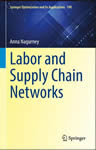
Importantly, not only can trade barriers result in lower volumes of product imports, but also the quality of the product available to consumers may be negatively affected. Supply chain networks and product quality was the topic of one of our books.
And, in this book, we also analyzed a plethora of supply chain network topologies and even created a measure identifying the importance of different suppliers, components, to firms and their supply chain networks as well as to the supply chain network economy.


In our Transportation Research E study,  we constructed a measure of consumer welfare. This measure allows us to quantify the impact on consumers of trade barriers used in trade wars and includes the quality of the product being traded. We also conducted a case study, focusing on soybeans, assuming the trade war between China and the United States escalates, and the Chinese government, in retaliation, imposes a quota or equivalent tariff on the soybeans exported from the United States. Soybeans were discovered and domesticated in China over 3000 years ago; however, the United States is a leader in producing, consuming, and exporting soybeans globally.  In 2018, soybean production in the US reached 5.11 billion bushels with 40% of it exported. China, in turn, is the largest importer of soybeans due to its rapidly increasing population size. The consumption of soybeans in China, in 2017, was reported to be 112.18 million tons, but the domestic production volume was only about a tenth of that amount. Due to this huge gap, China has to rely heavily on soybeans imported from foreign countries, including the US, Brazil, and Argentina.

From the consumer's perspective, our results consistently and unanimously show that consumer welfare declines for consumers when their country imposes a strict quota or tariff on an imported product. This is the case regardless whether  China or the US imposes the trade barrier.

Governments must recognize that the imposition of tariffs or quotas always adversely affects consumers and, thus, they are not just instruments to protect producers. In war, as in peace, strategy matters and game theory is key to identifying winners and losers.

Friday, July 15, 2016

Why We Wrote the Competing on Supply Chain Quality Book

I was thrilled when my new book, "Competing on Supply Chain Quality: A Network Economics Perspective," was published last month by Springer. The book was co-authored with my former doctoral student at the Isenberg School of Management, Dong Li, who is now an Assistant Professor at the School of Business at Arkansas State University. The book is the second book in the new Springer Series on Supply Chain Management that is edited by Distinguished University Professor Christ Tang of UCLA's Anderson School of Management.

We had conducted research on supply chain networks with a focus on quality for over half a decade.

The book was published last month, June 2016, and a box of copies arrived at the Isenberg School but I was at Oxford University as a Visiting Fellow at All Souls College for the Trinity term. Luckily, Christine Crigler of Springer was gracious to express mail two copies to me at Oxford.  Although this is my 13th book, the excitement of seeing the package and opening it up and then looking through your new book is always thrilling.
My co-author at that time was still visiting China but upon my return to Massachusetts, we were delighted to see each other and to look at the book together.

Writing the book was a passion and it was done in the US, while I was also in Sweden, as a Visiting Professor at the University of Gothenburg, and everything was finalized recently.

The study of supply chains, a critical area of both operations research and operations management has, interestingly, evolved completely separately from the literature on quality management, another much studied topic in operations management that has a long history. Moreover, there had been numerous instances of product failures that had resulted in not only such negative effects on humans as illnesses but even death. Consumers, when they purchase infant formula want to make sure that it is safe; the same holds for the cars that we drive, the food that we eat, and the high technology products that we use, to start.  Frankly, in many cases when we would read news articles, noting medicines that not only did not do the job that they were designed for but actually injured people, or airbags that would explode and injure people, or ignition switches that resulted in accidents and the death of young people, we were, frankly, furious!

As scholars and educators what we can do is do research so we began to develop supply chain network models that were realistic and that were computable. This was critical since much of the literature would consider only very small supply chains that one would never see in practice (but might be easy to solve and get some insights for). Clearly, producers in many cases would have more information about the products that they had manufactured than consumers would so we explored information asymmetry and also the impacts of minimum quality standards. An issue in our work that was fundamental was to give a precise definition of what we meant by quality. Quality sometimes has a rather qualitative flavor and we cared about quantitative measures.  W also wanted to quantify the impact on a firm's reputation if there were quality failures of is products. In contrast to much of the other literature, we also considered decentralized decision-making as opposed to centralized decision-making. Hence, we utilized network theory, optimization theory, and also, importantly, game theory to explore competition.

Our passion for product quality and the reality of globalization and outsourcing also drove us to develop supply chain network models with explicit supplier selection and make or buy decision-making and associated quality.  We were also able to develop a framework, which I am very proud of, that identifies the importance of suppliers to a firm's supply chain network and that of the supplier to the supply chain network economy. Clearly, one can then rank suppliers accordingly and, this provides decision-makers with important tools of assessment. Pay attention to those suppliers that affect you bottom line, should their production be disrupted, be it because of natural disasters  or other events.

Of course, since transportation has always been my love, along with logistics, we also explored the meaning of quality in freight. You want to make sure that Christmas trees arrive in time for the holiday, that the goods that you ordered are not damaged, and that the food does not spoil in transit!

Our research was documented in a series (many) papers since this was essential to get peer review done. After close to a dozen papers on the paper it became essential to synthesize all of our material and the book was the result.

The passion for product quality and supply chain networks continues as will the research.

Another thrill was seeing our book on display at the EURO 2016 conference in Poznan, Poland, which took place July 3-6, 2016, and which I wrote enthusiastically about in a previous blogpost. 
And, yesterday, we celebrated the publication of our book in a meaningful way and I expect there will be more celebrations.

Thanks to UMass Amherst for noting our new book by the News Office. This was a great collaboration, which continues.

Friday, August 9, 2013

Supply Chain Game Theory and Product Quality -- It's About Your Reputation

Quality of its products is the basis of a firm's reputation.

And, needs for improvements in product quality drive innovation.

Quality is what we, as consumers, seek in the food that we eat, the clothes that we wear, the toys that our children (and, perhaps, even we) play with, the latest high tech products that we crave, the life-saving and prolonging medicines that those in need take, the cars that we drive, the planes that we fly in,  the homes that we live in and the appliances that we use, and, of course,  the air that we breathe.

As supply chains have become more global the news about quality product shortcomings around the world is reaching beyond borders and is shocking from the Bangladesh disasters and fast fashion to the adulteration of milk and infant formulas   to the heparin adulteration which led to a pharmaceutical identity crisis, to the mysterious food-borne illness from lettuce served at Red Lobster and Olive Garden, to name just a few. Moreover, the manufacturing processes themselves may lead to the worsening of the quality of the air and the environment as has been well-documented, especially, most recently in China..


Many firms are identified by their products and their products are their brands. 

Game theory can illuminate not only which supplier a firm should select but also whether to outsource or to manufacture/produce the product in-house and the associated impacts on costs, revenues, and profits.

But game theory can help firms to do even more in terms of quantifiable analysis and evaluation and this is why game theory is so powerful. It enables us to  quantify the loss in a firm's reputation through a disrepute cost if the quality of the delivered product is substandard.

It is essential to capture the possible loss in reputation as we have done in two papers. In the first paper, we focused on the pharmaceutical industry, and in the second, we captured competition among firms with outsourcing options, which is applicable to many different industries. In the latter, firms compete in quality and the firms that they possibly outsource to compete in prices and quality, as well. However, it is the original firms' reputation that gets damaged if the outsourced product is lower in quality.

The first paper noted above is  Pharmaceutical Supply Chain Networks with Outsourcing Under Price and Quality Competition, Anna Nagurney, Dong Li, and Ladimer S. Nagurney, in press in the International Transactions in Operational Research. Here we assume that the original firms have perfect quality, whereas the firms that they outsource to compete on quality but they seek to maximize their profits.

The second paper is  A Supply Chain Network Game Theory Model with Product Differentiation, Outsourcing of Production and Distribution, and Quality and Price Competition, Anna Nagurney and Dong Li. In it, we propose both static and dynamic supply chain network game theory models, whose solution provides each original firm with its optimal in-house quality level as well as its optimal in-house and outsourced production and shipment quantities that minimize the total cost and the weighted cost of disrepute, associated with lower quality levels and the impact on a firm’s reputation. The algorithm that we propose and implement tracks the dynamic trajectories in discrete time of the evolution of the product flows, quality levels, and prices over space and time until the equilibrium state is achieved. We provide numerical examples that illustrate the model and computational framework.

Also, in our paper, A Dynamic Network Oligopoly Model with Transportation Costs, Product Differentiation, and Quality Competition, Anna Nagurney and Dong Li, in press  in Computational Economics, we developed a new dynamic model of Cournot-Nash oligopolistic competition that includes production and transportation costs, product differentiation, and quality levels in a network framework. The production costs capture the total quality cost, which, in turn, can also represent the R&D cost. With better R&D, firms may ensure that the consumers get the quality that they expect and deserve.

The above supply chain game theory models that we have constructed also allow for policy evaluations and the investigation of such a question as:  What if a government would impose a minimum quality standard for a type of product?

Pretty cool how game theory can illuminate so much in terms of operations in the real world!

Wednesday, June 5, 2013

A Fabulous Logistics Conference -- 25th NOFOMA in Sweden with Photos

I am enjoying tremendously the 25th NOFOMA Conference, which began on June 3 with the PhD Nordlog Symposium which I blogged about.  It is taking place in Gothenburg, Sweden.


Yesterday morning, we heard welcoming remarks and a panel on the history of NOFOMA, since this is its 25th conference. One panelist had been to the first conference back in 1989 and the moderator (a Swede) reminisced that that was the time of Pretty Woman (Julia Roberts and Richard Gere starred). Many researchers in the Nordic countries did not communicate much with those in the US, I was told, due to distance and difficulties in communicating in the pre-Internet era. I had already traveled to Sweden in 1986 to Umea and then back again when I received the Kempe Prize there, along with Jacques Thisse. But, then again, I love travel.

The panel was so interesting -- the tracing of logistics and logistics research. The panelists noted that, back in the day, academics were going to companies to learn the state of the art and now everything has flipped -- there are so many exciting advances in academia regarding supply chains and logistics and many companies have yet to learn and adapt tools and methodologies. Of course, there are companies that are leaders.  Also, major events since 1989 were highlighted by the panelists that refocused and expanded logistics and supply chain management research and practice from 9/11, which brought security and risk management to the fore, to the Haiti earthquake in 2005, which started to transform humanitarian logistics, to the growing interest and needs for sustainable supply chains because of climate change and pressing environmental concerns.
 

NOFOMA has always attracted PhD students and has been a forum for them to present their research and to obtain feedback. It has clearly expanded from participants in just the Nordic countries. At this conference -- I met not only a colleague from the Vienna University of Economics and Business where I taught a course and gave a seminar this past March, but also colleagues from South Africa, and even the University of Maryland, who congratulated my department on out latest hire, Dr. Adams Steven (yes, the plural of Adam is correct), who will be joining the Isenberg School of Management this Fall. Of course, it was also very enjoyable to hear Dr. Alex Ellinger of the School of Business at the University of Alabama speak yesterday on the journal that he edits and on the topics that he foresees as being important research areas for the future.
 
 
The Swedes certainly know how to put on a conference with style plus a lot of intellectual content.

I have been treated to sessions with papers on various aspects of supply chains and applications and have especially enjoyed the ones on food since some of my most recent work (with Dr. Min Yu) has been on competitive food supply chains published in the European Journal of Operational Research.

Here, at NOFOMA, I have learned about biosensors to track food quality, computing to capture data from sensors as fish moves through the supply chain (from Iceland to the Gothenburg fish auction) to calculate various quality metrics -- temperature days, for example, and that platinum and gold are being used to assess microbial content in food! Of course, new business models will be needed, as well.
 

I care very much about product quality, especially that in food, so I have been captivated by the talks that have combined technology with conceptual frameworks and real-life applications and blend business with engineering -- so cool! I also very much enjoyed a session on humanitarian logistics and it was nice to see Dr. Gyongi Kovacs again, who had taken part in the Humanitarian Logistics: Networks for Africa Workshop that I had organized at the Rockefeller' Foundation's Bellagio Center on Lake Como, Italy.

The Work in Progress sessions have also been wonderful with vibrant, constructive discussions.I especially enjoyed one on transport topics, in which one of my hosts at the School of Business, Economics and Law, Professor Johan Woxenius, along with two colleagues, presented their work on transport efficiency with a focus on freight KPIs in Sweden.

And, how can you not enjoy a conference in which the conference bags/totes (with Chalmers on them) on precisely in the color scheme of the outfit you select. Plus, since Swedes do it with syle, my colleagues also had to show me their colorful socks as part of their conference attire. I think that the stars and stripes were chosen to make me feel at home.


I am looking forward to aother great day at NOFOMA -- many thanks to the organizers, the presenters, and to the reviewers of the conference papers for a great event!