Showing posts with label competition. Show all posts

Friday, November 21, 2025

Our Paper on Tariffs and Labor in Global Supply Chain Networks is Accepted!

We are delighted to report that there is an update on the paper in this post. Today, on the day before Thanksgiving, it was published on the journal website: https://www.tandfonline.com/doi/full/10.1080/01605682.2025.2592758?src=

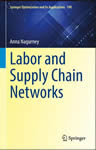
There are two streams of research that I have been heavily engaged in and they are the impacts of tariffs on both producers and consumers plus the integration of labor into supply chain networks and I have even published a book on the subject: Labor and Supply Chain Networks: 

https://supernet.isenberg.umass.edu/bookser/Labor-book.html

I have been working with my PhD student, Samira Samadi, on investigating impacts of tariffs on labor, including employment, and integrating the two streams of research.

I am delighted that, this past week, we heard from the Editor in Chief (EIC) of the Journal of the Operational Research Society (JORS), Professor Kostas Nikolopoulos of the Durham University Business School in the United Kingdom, that our paper, "Ad Valorem Tariffs in Global Supply Chain Networks and Impacts on Labor," has been accepted in this outstanding journal.

The journal now requires both an abstract and a practitioner abstract and both are below.

We very much enjoyed researching and writing this paper, which also includes a case study on soybeans, and investigates quantitatively the impacts of tariffs on major countries affected, including China and the US. The mathematical model is that of a competitive global supply chain network under oligopolistic competition and the tariffs are ad valorem ones, which are now widely applied to many products, including commodities. 

A preprint of the paper can be found on the Supernetwork Center website: https://supernet.isenberg.umass.edu/articles/TariffsandLaborinGlobalSupplyChainNetworks.pdf

We are grateful to the EIC, the Associate Editors, and to the two anonymous reviewers for the professional handling of our paper and their constructive comments and suggestions.

Thursday, March 9, 2017

Game Theory and Fresh Produce Supply Chains - It's About the Fruits and Veggies

Is there anything more delicious than a ripe peach or mango? Or, perhaps, you love biting into a sweet, crisp apple? I love my fresh fruit and veggies and, frankly, we are spoiled, in a sense, in the US, where we can savor berries and cherries even in the winter. You probably also enjoy a variety of vegetables and I am not speaking of just French fries.

At the same time, when the "fresh" produce is not so fresh, one gets quite disappointed and the wastage associated with this industry is vast. Quality of fruits and vegetables is a topic, hence, of great research and practical interest and not only for food scientists and economists,  but operations researchers as well.

The first paper that my group published on fresh produce supply chains was: Competitive Food Supply Chain Networks with Application to Fresh Produce, Min Yu and Anna Nagurney, European Journal of Operational Research 224(2): (2013) pp 273-282, a paper that is highly cited and was even recognized by the Editors of the journal in a special session last July at the fabulous EURO conference in Poznan, Poland. You can read my blogpost, which even has photos of delicious pierogies here.

In this paper, we utilized game theory to capture competition among food firms, who differentiate their products, which are perishable, and we applied the model to a case study of cantaloupes, subject also to a disruption. Indeed, there have been some major quality issues resulting in food-borne illnesses in this sector. Quality in this paper was modeled using a generalized network framework with link multipliers and it was assumed that as the fresh produce "moved" over links in the supply chain that a certain percentage would "perish" and would, hence, be discarded.

More recently, we turned to short fresh produce supply chains in the form of farmers' markets.  In the paper, Quality in Competitive Fresh Produce Supply Chains with Application to Farmers’ Markets,
Deniz Besik and Anna Nagurney, which is now in press in Socio-Economic Planning Sciences, we used kinetic formulae to model quality deterioration over time and under temperature conditions. I think that this is super cool and very much enjoy bringing scientific disciplines from chemistry to physics to operations research supply chain modeling.  We then applied the model to apple farms in western Massachusetts, and, since one of the farms was Apex Orchards (one of my favorites), below I have photos of their relatively new store in Shelburne Falls.
And I can't resist sharing the photo below of the bridge of flowers in neighboring Shelburne.
In Amherst, we have a farmers' market from May through October in downtown, which is very enjoyable and also highly social. The Farmers' Market then moves indoors for the winter and whenever we are in town we always visit and purchase produce. You know where it is coming from and when it was picked. Our paper we dedicated to Robert Colnes, who owned an orchard in New Salem and who was a fellow Brown University alumnus. Deniz had interviewed him multiple times. He passed away a few months ago at age 96 and before we could share with him the good news that our paper had been accepted for publication. He was so generous in answering questions.

Last spring/summer I spent several months as a Visiting Fellow at All Souls College at Oxford University (a simply heavenly intellectual and aesthetic experience that will be very hard to top). While at Oxford I would regularly go to the Farmers' Market in the center of Oxford and the photos below capture some of the spirit of it.
The food stalls at the Oxford Farmers' Market are fabulous and there is a wide variety of ethnic cuisines for purchase.


In the paper, Supply Chain Network Capacity Competition with Outsourcing: A Variational Equilibrium Framework, Anna Nagurney, Min Yu, and Deniz Besik, in press in the Journal of Global Optimization, we used game theory, but the governing equilibrium concept was a Generalized Nash Equilibrium (rather than a Nash Equilibrium as in the above papers), since the producers' constraints, and not just their utility functions, depended on the strategies of the other producers.  The case study was to apples in western Massachusetts. We used variational equilibrium to formulate the problem.

What I find so special about the discipline of Operations Research is that you can work on what you love and that includes food supply chains!

Sunday, May 10, 2015

From Ecolabelling in Fashion to Supply Chains and Freight Quality Competition

The POMS (Production and Operations Management Society) Conference is now taking place in Washington DC.

Although I could not go since this (as happened last year as well) is graduation season at UMass Amherst,  3 of my present doctoral students are there (Shivani Shukla, Sara Saberi,  and Dong Li, who defended her PhD dissertation just lat week) presenting our joint work and one former doctoral student, Professor Min Yu of the Pamplin School of Business at the University of Oregon, is as well.

Two of  our papers are jount with my collabortaor in Sweden, Professor Jonas Floden.

Below I have posted links to our presentations. All of the presentations are based on recently published papers of ours with links also provided below.


The full presentation can be downloaded here. The presentation is based on the paper, Fashion Supply Chain Network Competition with Ecolabelling,.Anna Nagurney, Min Yu, and Jonas Floden, Sustainable Fashion Supply Chain Management: From Sourcing to Retailing, T.-M. Choi and T.C.E. Cheng, Editors, Springer (2015) pp 61-84.


The full presentation is available here. The presentation is based on the paper:  A Supply Chain Network Game Theory Model with Product Differentiation, Outsourcing of Production and Distribution, and Quality and Price Competition,, Anna Nagurney and Dong Li, Annals of Operations Research 228(1), (2015) pp 479-503.

 The full presentation can be downloaded here., And this presentation is based on our paper:  Supply Chain Network Competition in Price and Quality with Multiple Manufacturers and Freight Service Providers, Anna Nagurney, Sara Saberi, Shivani Shukla, and Jonas Floden, Transportation Research E 77: (2015) pp 248-267.

Needless to say, I love doing research on all aspects of supply chains and am very lucky to have such great collaborators as those above.

Tuesday, March 31, 2015

Great PhD Student Research in Supply Chains, Transportation and Logistics

This week has been off to a great start and the theme is clearly that of great doctoral student research!


Yesterday morning, we heard that our paper, Supply Chain Network Competition in Price and Quality with Multiple Manufacturers and Freight Service Providers, Anna Nagurney, Sara Saberi, Shivani Shukla, and Jonas Floden, was published in the journal,  Transportation Research E 77: (2015) pp 248-267. 

Both Sara Saberi and Shivani Shukla are two of my doctoral students in Management Science at the Isenberg School. And, coincidentally, or, propitiously, Sara was discussing this very same paper in our doctoral seminar that afternoon so the work was really hot off the press! The publication of this paper is quite exciting, since it is Shivani's first refereed journal article as a doctoral student, and our collaborator is Professor Jonas Floden of the School of Business, Economics and Law at the University of Gothenburg in beautiful Sweden. Professor Floden has become a wonderful collaborator of our supernetwork team since I am also a Visiting Professor there and the Swedes are excellent in transportation, including freight transportation, in both research and practice!

And, speaking of Gothenburg, today I heard from Dr. Niklas Arvidsson, who defended his PhD dissertation last year. I was a co-supervisor of his dissertation, with my colleague there, Professor Johan Woxenius, and enjoyed Skyping in for Niklas' dissertation defense.  Niklas did a wonderful dissertation, including a chapter on the milk run paradox, that I had even blogged about, and which was published in the journal Transportation Research A.  The great news that he shared with me today is the following: He received the message:   

I am very pleased to let you know that the committee decided that you are the winner of the first NECTAR PhD Award with your thesis “Essays on operational freight transport efficiency and sustainability”. You have written an excellent thesis, of an original nature and you have published various parts in high-quality journals. Congratulations!
 
Karst Geurs
Professor of Transport Planning
Chair of NECTAR - Network on European Communications and Transport Activities Research - www.nectar-eu.org


Plus, just recently, my doctoral student, Dong "Michelle" Li, had her co-authored paper, A Supply Chain Network Game Theory Model with Product Differentiation, Outsourcing of Production and Distribution, and Quality and Price Competition, Anna Nagurney and Dong Li, appear in the  Annals of Operations Research 228(1), (2015) pp 479-503.

Michelle will be defending her doctoral dissertation proposal in early May  and Sara Saberi will be defending her  dissertation proposal in April.

So, I am a very proud academic Mom. and to make this even a more perfect week, on Friday, the great UMass Amherst INFORMS Student Chapter and I are hosting an event on the Academic Job Process. Coming back to campus will be Dr. Amir H. Masoumi, who was my doctoral student and is now an Assistant Professor at Manhattan College in NYC, and Dr. Davit Khachatryan, who took several courses from me, and is now an Assistant Professor at Babson (after several years in consulting for PriceWaterhouseCoopers). Dr. Masoumi did an outstanding (alright, I am a bit biased) dissertation on perishable product supply chains in healthcare, and, together, with two other co-authors, including my great former doctoral student, Dr. Min Yu, now of the University of Portland, we wrote the book, "Networks Against Time: Supply Chain Analytics for Perishable Products."


Tuesday, October 14, 2014

Which Suppliers Really Matter to Your Supply Chain Performance?

We have certainly experienced a long list of supplier failures, whether from natural disasters, quality shortcomings (with the automotive industry being a notable example, as well as compounding pharmacies),  or even due to the Ebola healthcare and humanitarian logistics crisis, with great demand for the timely delivery of critical needs supplies for both healthcare providers and patients being unmet, not to mention the healthcare providers themselves in the form of human supply chains.

With numerous supply chains, from high tech products, to pharmaceuticals, to even food, being increasingly complex in terms of both the network topology, the number of decision-makers,  as well as the distances involved, it is high time for performance metrics and ranking tools to enable the identification of which suppliers as well as the components that they provide matter not only to the full supply chain but also to your individual firm.

First, one has to realize that this is the Era of the Supply Chain Network Economy and tools that just handle one supplier - one manufacturer are completely out-of-date. One has to be able to capture the interrelationships among suppliers, who are profit-maximizing, as well as the firms that they supply, who in turn, compete with other firms.

In our most recent paper: Supply Chain Performance Assessment and Supplier and Component Importance Identification in a General Competitive Multitiered Supply Chain Network Model, Dong Li and Anna Nagurney, that I co-authored with one of my doctoral students, who has done great work on supply chain network competition and quality, we provide a performance assessment metric for the full supply chain, and for that of an individual firm.  The metric quantifies the efficiency of the supply chain or firm, respectively, and also allows for the identification and ranking of the importance of suppliers as well as the components of suppliers with respect to the full supply chain or individual firm. The firms are differentiated by brands and our general multitiered competitive supply chain network equilibrium model with suppliers and firms includes capacities and constraints to capture the production activities. Firms may have a certain amount of capability to produce components in-house, depending on their capacities.

The supply chain network performance measure is inspired by our work on network performance assessment in a variety of network systems ranging from transportation to the Internet (see Nagurney and Qiang (2009) and the references therein) as well as in supply chains (cf. Qiang, Nagurney, and Dong (2009), and Qiang and Nagurney (2012)) but with the addition of the supplier tier, which is the focus in our paper.

Suppliers in supply chains are even vital to cybersecurity and the above graphic taken from our paper was part of the presentation that I gave last month at the Sloan School at MIT as part of the Advanced Cyber Security Workshop that I co-organized with several Isenberg School colleagues and a College of Engineering one.

Monday, August 11, 2014

Supply Chain Network Competition: Advances in Models, Methods, and Applications

Thanks to INFORMS for already putting up the program for the San Francisco INFORMS Conference.

I was asked by Professor Vladimir Boginski to organize a session as part of the Network Optimization cluster, which I did.

The title of the session that I organized is:  Supply Chain Network Competition: Advances in Models, Methods, and Applications.

There are 4 papers in this session with the first one being: Supply Chain Network Competition with Information Asymmetry in Quality and Minimum Quality Standards. This paper is a paper that I wrote with my doctoral student, Dong "Michelle" Li, and which was just recently published in the journal Computational Management Science, but with an expanded title.


The second paper is this session will be presented by Dr. Patrick Qiang. and is entitled:  The Closed-Loop Supply Chain Network with Competition and Design for Remanufactureability  This paper was recently accepted for publication in the Journal of Cleaner Production.

The third paper will be presented by Professor Min Yu and is based on joint work  with our collaborator at the University of Gothenburg in Sweden, Professor Jonas Gloden. The title is: Supply Chain Network Sustainability Under Competition and Frequencies of Economic Activities. This paper was also recently published in Computational Management Science with an expanded title.


The last paper in this session, Supply Chain Supernetwork Model with Suppliers' Risk Diversification,  will be given by Professor June Dong in collaboration with Professor Jun Ma.

We will also be presenting our latest research  on our NSF-funded Future Internet Architecture project at this conference, but on that Wednesday.

This INFORMS conference will be a wonderful venue to reconnect with many former doctoral students, collaborators, and colleagues from around the globe. And who can resist San Francisco!

Saturday, June 7, 2014

Celebrating a Great Operations Researcher and Friend Professor Panos M. Pardalos

Very soon the conference in honor of Distinguished Professor of Industrial and Systems Engineering Panos M. Pardalos of the University of Florida, Gainesville, will take place in beautiful Chalkidiki, Greece. We will be recognizing this great operations researcher and scientist, who has been deservedly lauded with numerous awards from being elected INFORMS Fellow, class of 2006, to his receipt of the Euro Gold Medal Award in 2013, to his being appointed the first Paul and Heidi Brown Preeminent Professor in Industrial and Systems Engineering.

Panos' record of accomplishments is breath-taking from his outstanding and voluminous research in optimization and numerous applications from engineering to even medicine. At the same time, he is extremely generous and giving to his numerous doctoral students, collaborators, and colleagues from around the globe. His energy, stamina, knowledge, and vision are legendary.

And he is a very special friend and role model for multiple generations of operations researchers.

When I received an invitation from the organizers of the conference in honor of Professor Pardalos' 60th birthday, Professors Sergiy Butenko and Sakis Migdalas, I had to accept.

The conference in honor of Panos is entitled:  Conference on Optimization Control and Applications in the Information Age will take place June 15-20, 2014.

Speakers will be coming from many different countries, including my former doctoral student at the Isenberg School of Management, Dr. Dmytro Matsypura, who has tenure now at the School of Business at the stunning University of Sydney in Australia!

At the conference we will present Panos with a book, with the cover featured below. More information on the book is available from the Springer website.
 
Another former doctoral student of mine, Dr. Min Yu, of the University of Portland, and I have contributed the paper, A Supply Chain Network Game Theoretic Framework for Time-Based Competition with Transportation Costs and Product Differentiation, to this book, which is edited by  Th. M. Rassias, C. A. Floudas, and S. Butenko, Springer, New York (2014).

I will be presenting the paper, Supply Chain Network Competition in Time-Sensitive Markets, Anna Nagurney, Min Yu, Jonas Floden, and Ladimer S. Nagurney, which builds on the paper in the edited book.

The full presentation can be downloaded from the Virtual Center for Supernetworks website.

Last summer I spoke at a conference on Network Models in Economics and Finance in Athens, Greece, which Panos organized and the photo of us with some researchers is below.
We look forward to celebrating the achievements and the humanity and kindness of Professor Pardalos!

Monday, June 2, 2014

Supply Chain Network Competition in Time-Sensitive Markets

The production and delivery of products in a timely manner are essential not only to the satisfaction of consumer demands in many industries but also to a company's reputation.

During last Christmas season, we saw delays of numerous deliveries in the US and even in Sweden Christmas trees that were ordered online, in some cases, arrived past the holiday! Needless to say, there were very many disappointed (and even furious) individuals and families.
Also, there may exist major events or even features such as the top-grossing animated Disney movie, Frozen, that generate intense demand for associated products, including clothing, under immense time pressures. Some of  these are being driven by children's demands for various paraphernalia. As a consequence, and because of the time pressures, now some of the Frozen  clothing products that are produced in China, such as the garments of Princess Anna (I do like that name - thanks, Disney), are being shipped by air rather than by slow boats.
Markets in which consumers are willing to pay a higher price for lower delivery times are knows as  time-sensitive markets. Below are examples of a few products that fit into this important category of consumer goods.

Fresh produce, many medicines and vaccines, human blood, as well as certain fashion goods are all time-sensitive.

One of the major challenges of supply chains that are globally dispersed is the pressures put in the production and transportation of time-sensitive products. Brands and firms that can deliver the goods in good condition and in a timely manner can reap greater profitss.
In our latest research, Supply Chain Network Competition in Time-Sensitive Markets, Anna Nagurney, Min Yu, Jonas Floden, and Ladimer S. Nagurney,  we develop a game theory model for supply chain network competition in time-sensitive markets in which consumers respond to the average delivery time associated with the various firms' products. The firms' behavior is captured, along with the supply chain network topologies, with the governing equilibrium concept being that of Nash equilibrium. We derive the variational inequality formulation of the equilibrium conditions and provide illustrative examples. We also identify special cases for distinct applications. An algorithm is proposed, and the framework further illustrated through a case study in which we explore varying sensitivities to the average time delivery with interesting results.

We will be presenting this paper at the Mathematics for Industry conference in Taormina, Sicily, Italy, next week, upon the invitation of our colleague, and  Center Associate of the Virtual Center for Supernetworks, Professor Patrizia Daniele. Our paper will be presented in the session: Recent advances on equilibrium problems with applications to networks. One of my former PhD students, Professor Fuminori Toyasaki of York University in Toronto will also be presenting in this session.

We will also present the paper the week after at the festschrift conference in Greece in honor of our dear friend, Professor Panos M. Pardalos.

The full presentation can be downloaded from the Virtual Center for Supernetworks website here.

How appropriate that this collaboration across continents is now being disseminated at various venues.

Thursday, May 1, 2014

Supernetwork Center Associates to Present Supply Chain + Future Internet Papers at POMS Atlanta

It is the first day of May and, although the academic semester is over in terms of teaching, faculty and doctoral students are, nevertheless, very busy getting ready for a new cycle of conferences.

This is exciting!

The Production and Operations Management Society (POMS) is holding its 25th Annual Conference in Atlanta, Georgia, May 9-12, 2014.

And, although I will then be speaking at a fascinating workshop in Erice, Sicily - Italy, the work conducted by Supernetwork Center Associates will be highly visible at POMS. .

One of my doctoral students, Dong "Michelle: Li,  who recently received a 2014Outstanding Doctoral Student Researcher Award from the Isenberg School,  will be presenting our joint paper, Equilibria and Dynamics of Supply Chain Network Competition with Information Asymmetry in Quality and Minimum Quality Standards, which has been  accepted for publication in the journal Computational Management Science We have prepared this POMS presentation:


Two other supply chain papers that I co-authored with Supernetwork Center Associates, both of whom were my former doctoral students, and are now thriving as Professors, will also be presented: One is: An Integrated Disaster Relief Supply Chain Network Model with Time Targets and Demand Uncertainty, co-authored with Professors Amir H. Masoumi and Min Yu,  and the other: Competitive Food Supply Chain Networks with Application to Fresh Produce, which was published in the  European Journal of Operational Research 224(2): (2013) pp 273-282.

Center Associate Professor Patrick Qiang will be presenting his latest work on supply chains and sustainability: The Closed-loop Supply Chain Network with Competition and Design for Remanufacturability. Dr. Qiang was also my doctoral student in Management Science at the Isenberg School of Management. He has done pioneering work in network vulnerability and performance assessment.


Finally, Doctoral Student Center Associate Sara Saberi will present a paper co-authored with Professor Tilman Wolf and me on work funded by the Future Internet Architecture (FIA) program at the National Science Foundation (NSF). The title of that paper is: A Network Economic Game Theory Model of a Service -Oriented Internet with Price and Quality Competition in Both Content and Network Provision. Our POMS presentation can be downloaded from the supernetworks site.


Networks can really take you places!


Monday, February 3, 2014

Do You Know Where Your Meds and Other Products Came From - Information Asymmetry in Quality

I am excited about speaking at the upcoming  Learning and Intelligent Optimization (LION 8)  Conference in Gainesville, Florida later this month, especially since the snow is again falling in Massachusetts with more to come!

I am also excited because this will be the first time that I will be presenting the paper, "Equilibria and Dynamics of Supply Chain Network Competition with Information Asymmetry in Quality and Minimum Quality Standards," joint with one of my doctoral students, Dong "Michelle" Li.


Quality of products, especially those that one ingests, from pharmaceuticals to food and even, in a sense, human blood (and I am not talking about vampires here), is a topic of great concern and one that we have been researching for a while now.


Do you know where your medicines, for example,  are coming from?
 

As we noted in our earlier paper,  Pharmaceutical Supply Chain Networks with Outsourcing Under Price and Quality Competition, Anna Nagurney, Dong Li, and Ladimer S. Nagurney, International Transactions in Operational Research 20(6): (2013) pp 859-888, up to 40% of the drugs that Americans take are now imported, and more than 80% of the active ingredients for drugs sold in the United States are outsourced, often to countries such as India and China. The problem is that there may not be sufficient oversight and lack of quality standards.


Furthermore, the manufacturing of products, including pharmaceuticals, may take place in multiple manufacturing plants, so one may have no idea as to the place of production or the level of quaality!


In our new paper, which focuses on quality competition under information asymmetry, we were inspired by the work of the Nobel laureate George Akerlof and his classical paper 1970 paper (which got rejected 3 times by journals, before it finally got accepted and for which he earned the Nobel prize):  "The market for `lemons': Quality uncertainty and the market mechanism," Quarterly Journal of Economics, 84(3), 488-500. Akerlof shared the Nobel with Professor Joseph Stiglitz and Michael Spence.

In our paper, we construct a  supply chain network model with information asymmetry in product quality. The competing, profit-maximizing firms with, possibly,  multiple manufacturing plants, which may be located on-shore or off-shore, are aware of the quality of the product that they produce but consumers, at the demand markets, only know the average quality. Such a framework is relevant to products ranging from certain foods to pharmaceuticals. We propose both an equilibrium model and its dynamic counterpart and demonstrate how minimum quality standards can be incorporated. Qualitative results as well as an algorithm are presented, along with convergence results. The numerical examples, accompanied by sensitivity analysis, reveal interesting results and insights for firms, consumers, as well as policy-makers, who impose the minimum quality standards.

Specifically, we find from the computations the following.  Since consumers at the demand market do not differentiate between the products from different firms, and there is information asymmetry in quality between the firms (sellers) and the consumers (buyers) at the demand market, the average quality level at the demand market, as well as the price, which is determined by the quality levels of both firms, is for both firms' products. Firms  prefer a higher average quality, since, at the same demand level, a higher average quality results in a higher price of the product.

However, once a firm increases its own quality level, of course, the average quality level and, hence, the price  increases, but its total cost will also increase due to the higher quality. Furthermore, the price increase is not only for the firm's own product, but also for its competitor's product. If a firm increases its own quality, both the firm and its competitor would get the benefits of the price increase, but only the firm itself would pay for the quality improvement. Thus, a firm prefers a “free ride,” that is, it prefers that the other firm improve its product quality and, hence, the price, rather than have it increase its own quality.

Consequently, a firm may not be willing to increase its quality levels, while the other firm is, unless it is beneficial both cost-wise and profit-wise. This explains why, as the minimum quality standard of one firm increases, its competitor's quality level increases slightly or  remains the same.

When there is an enforced higher minimum quality standard imposed on a firm's plant(s), the firm is forced to achieve a higher quality level, which may bring its own profit down but raise the competitor's profit, even though the latter firm may actually  face a lower minimum quality standard. When the minimum quality standard of a firm increases to a very high value, but that of its competitor is low, the former firm will not be able to afford the high associated cost with decreasing profit, and, hence, it will produce no product for the demand market and will be forced to leave the market.

The above results and discussion indicate the same result, but in a much more general supply chain network context, as found in Ronnen (1991), who, in speaking about minimum quality standards,   noted that: ``low-quality sellers can be better off ... and high-quality sellers are worse off." Also the computational results support the statement on page 490 in Akerlof (1970) that ``good cars may be driven out of the market by lemons." Moreover, our results also show that the lower the competitor's quality level, the more harmful the competitor is to the firm with the high minimum quality standard. The implications of the sensitivity analysis for policy-makers are clear -- the imposition of a one-sided quality standard can have a negative impact on the firm in one's region (or country). Moreover, policy-makers, who are concerned about the products at particular demand markets,  should prevent firms located in regions with very low minimum quality standards from entering the market; otherwise, they may not only bring the average quality level at the demand market(s) down and hurt the consumers, but such products may also harm the profits of the other firms with much higher quality levels and even drive them out of the market.

Therefore, it would be beneficial and fair for both firms and consumers if the policy-makers at the same or different regions or even countries could impose the same or at least similar minimum quality standards on plants serving the same demand market(s). In addition, the minimum quality standards should be such that they will not negatively impact either the high quality firms' survival or the  consumers at the demand market(s).


Friday, August 9, 2013

Supply Chain Game Theory and Product Quality -- It's About Your Reputation

Quality of its products is the basis of a firm's reputation.

And, needs for improvements in product quality drive innovation.

Quality is what we, as consumers, seek in the food that we eat, the clothes that we wear, the toys that our children (and, perhaps, even we) play with, the latest high tech products that we crave, the life-saving and prolonging medicines that those in need take, the cars that we drive, the planes that we fly in,  the homes that we live in and the appliances that we use, and, of course,  the air that we breathe.

As supply chains have become more global the news about quality product shortcomings around the world is reaching beyond borders and is shocking from the Bangladesh disasters and fast fashion to the adulteration of milk and infant formulas   to the heparin adulteration which led to a pharmaceutical identity crisis, to the mysterious food-borne illness from lettuce served at Red Lobster and Olive Garden, to name just a few. Moreover, the manufacturing processes themselves may lead to the worsening of the quality of the air and the environment as has been well-documented, especially, most recently in China..


Many firms are identified by their products and their products are their brands. 

Game theory can illuminate not only which supplier a firm should select but also whether to outsource or to manufacture/produce the product in-house and the associated impacts on costs, revenues, and profits.

But game theory can help firms to do even more in terms of quantifiable analysis and evaluation and this is why game theory is so powerful. It enables us to  quantify the loss in a firm's reputation through a disrepute cost if the quality of the delivered product is substandard.

It is essential to capture the possible loss in reputation as we have done in two papers. In the first paper, we focused on the pharmaceutical industry, and in the second, we captured competition among firms with outsourcing options, which is applicable to many different industries. In the latter, firms compete in quality and the firms that they possibly outsource to compete in prices and quality, as well. However, it is the original firms' reputation that gets damaged if the outsourced product is lower in quality.

The first paper noted above is  Pharmaceutical Supply Chain Networks with Outsourcing Under Price and Quality Competition, Anna Nagurney, Dong Li, and Ladimer S. Nagurney, in press in the International Transactions in Operational Research. Here we assume that the original firms have perfect quality, whereas the firms that they outsource to compete on quality but they seek to maximize their profits.

The second paper is  A Supply Chain Network Game Theory Model with Product Differentiation, Outsourcing of Production and Distribution, and Quality and Price Competition, Anna Nagurney and Dong Li. In it, we propose both static and dynamic supply chain network game theory models, whose solution provides each original firm with its optimal in-house quality level as well as its optimal in-house and outsourced production and shipment quantities that minimize the total cost and the weighted cost of disrepute, associated with lower quality levels and the impact on a firm’s reputation. The algorithm that we propose and implement tracks the dynamic trajectories in discrete time of the evolution of the product flows, quality levels, and prices over space and time until the equilibrium state is achieved. We provide numerical examples that illustrate the model and computational framework.

Also, in our paper, A Dynamic Network Oligopoly Model with Transportation Costs, Product Differentiation, and Quality Competition, Anna Nagurney and Dong Li, in press  in Computational Economics, we developed a new dynamic model of Cournot-Nash oligopolistic competition that includes production and transportation costs, product differentiation, and quality levels in a network framework. The production costs capture the total quality cost, which, in turn, can also represent the R&D cost. With better R&D, firms may ensure that the consumers get the quality that they expect and deserve.

The above supply chain game theory models that we have constructed also allow for policy evaluations and the investigation of such a question as:  What if a government would impose a minimum quality standard for a type of product?

Pretty cool how game theory can illuminate so much in terms of operations in the real world!

Friday, July 12, 2013

A Collaboration Across Three Continents on Supply Chain Sustainability

Collaborations are great for science and they are also fun.

It is very rewarding when you work together on challenging problems that you are passionate about and get results.

One of my passions is sustainability and developing mathematical models using networks, optimization, and game theory to assess and analyze supply chains in a holistic manner both from cost and profit perspectives as well as from their environmental impacts.

With two great co-authors, Professor Jonas Floden of the School of Business, Economics and Law at the University of Gothenburg in Sweden and Professor Min Yu (an Isenberg PhD '12 in Management Science)  of the Pamplin School of Business at the University of Portland in Oregon, the paper, "Supply Chain Network Sustainability Under Competition Frequencies of Activities from Production to Distribution," has now been completed. The paper, was inspired, in part, by my paper, "Design of Sustainable Supply Chains for Sustainable Cities," which is now available online in the journal, Environment & Planning B.

Now for the challenge: the deadline for submission of our new paper for a special of a journal was fast approaching.  The theme of environmental applications for the journal special issue was inspired by the year 2013 having the theme Mathematics of Planet Earth.

I was back from Gothenburg, Swedem, where Professor Floden and I had numerous discussions on environmental sustainability, use of alternative transport modes, and various surveys and case studies in Sweden and Europe. Professor Yu was in China, having attended a conference on supply chains and visiting her family. Jonas and I were also interviewed by  a journalist from San Franciscoon congestion pricing  and the feature appeared on SmartPlanet.

We were literally communicating and working on our paper around the clock with a 6 hour time difference between ET (in the US) and Sweden and another 6 hour one between Sweden and China.

In the past two weeks, we have dealt with some major drama -- but the news is all good and we can breathe sighs of relief.  Sichuan province, where Min was based for a while, has encountered the worst floods in 50 years and you may recall that it was also the location for the major earthquake in 2008. 

In our paper, we not only capture competition among firms through their supply chain networks, and assume that they produce a differentiated product, but we also include frequencies of the various supply chain activities from production to storage to ultimate distribution to the demand markets. In addition, each firm weights its environmental emissions throughout it supply chain in an individual way. We focus on GHG emissions, especially carbon, but our framework is sufficiently general to also be applicable to emissions of particulate matter (PM). PMs have recently been the focus of much media attention due to their huge negative impact on air quality and human health from China to the United Kingdom and even the U.S.!

We allow for multiple options, which is especially relevant when firms have choices associated with transport models.

Our computations reveal that not only can reducing emissions be good for profits but choosing the right transport mode (intermodal, for example, or the right size truck) can reduce emissions. You may recall the milk run load paradox, discovered by one of the PhD students in Gthenburg, Niklas Arvidsson, that I have written about, which further shows that one needs to include the load (think flow in network parlance) to calculate emissions, as we do in our paper.

Our model can be applied to products in many industries from food and fast fashion to high technology products and demonstrates that a firm's smart action and wise choices in a highly competitive environment can be good for both business and the environment!

Thursday, March 24, 2011

Ecological Predator-Prey Networks as Nature's Supply Chains

With the heart-breaking disasters in Japan, and the tremendous human and economic impacts, and, now, with the radiation spreading and various foods from the area surrounding the damaged Fukushima nuclear plant banned for consumption, plus even the water in Tokyo affected, I thought it time to step back and to reflect on nature.

Interestingly, we are increasingly seeing calls for "robustness" and "resiliency" in the context of supply chains since so many from automobile to airline to high tech component ones, including chips, have been adversely affected and seriously disrupted, including the biggest auto manufacturing company in the world, Toyota, because of the triple earthquake-tsunami-nuclear plant disaster that hit Japan, beginning on March 11, 2011, a date that I have sealed in my memory. In addition, journalists are making analogies of supply chains to biological organisms and even the human body and noting how resilient such systems are.

So what are the relationships between biological networks in nature and supply chains? If we can rigorously establish the connections, we should be able to learn how to design more resilient and robust systems, including supply chain networks.

In a recent study, entitled, Dynamics and Equilibria of Ecological Predator-Prey Networks as Nature’s Supply Chains, that I co-authored with the "other" Professor Nagurney, we were able to establish the equivalence between predator-prey ecological networks (think of food chains, for example, as in fisheries, to start) and multitiered supply chains consisting of "agents" who are manufacturers, retailers, or consumers, respectively. What I found fascinating is that in "product" or, shall I say, "corporate" supply chains, one explicitly considers various decision-makers' objective functions, which tend to include the maximization of profits, at least for the manufacturers and the retailers. Moreover, the various decision-makers "compete," whereas in predator-prey ecological networks, competition is clear, but, until now, no-one really quantified prices or value in that context.

In our paper, we established, using a dynamic model of predator prey interactions, that the stationary points or equilibria coincide precisely with those of the equilibria in supply chain networks! The general supply chain model that we used to show this equivalence, which was previously unexplored, was the supply chain network equilibrium model that I developed with Professors June Dong and Ding Zhang and which was published in Transportation Research E in 2002. That model has served as the foundation for numerous extensions; for just a few, click here.

Hence, amazingly, predator-prey interactions have an underlying economics, whereas supply chain networks, in a sense, are ecological predator-prey systems.

The study, Dynamics and Equilibria of Ecological Predator-Prey Networks as Nature’s Supply Chains, expanded on our earlier work that showed the equivalence between bipartite predator-prey networks and classical spatial price equilibrium problems going back to the work of the Nobel Laureate, Paul Samuelson. That paper, "Spatial Price Equilibrium and Food Webs: The Economics of Predator-Prey Networks," I will be presenting at the 2011 IEEE International Conference on Supernetworks and System Management
Shanghai, China, May 29-30, 2011, and it is in press in the Proceedings of that conference.

We became interested in this area of research due to a truly original paper, entitled "NEATS: A Network Economics Approach to Trophic Systems," published in the journal Ecological Modelling, co-authored by a group of researchers based in France: Mullon, Shin, and Cury. The paper applies some of the results in my Network Economics: A Variational Inequality Approach book to formulate and determine equilibria in predator-prey complex webs. One reads regularly about the impact of science on economics but this paper demonstrates how economics and, especially, network economics, can be used to combine both biological constraints that couple biomass balance equations with complementarity principles using Walras' law. The authors investigate the solutions to simple food chains, bilayer networks, complex food webs, and even to cannibalism (the links loop back to the specific nodes in such networks)!

Sunday, February 6, 2011

Research as a Sport

With the Super Bowl game later today in Dallas (although the Patriots won't be there, the Steelers and the Packers will) I thought it appropriate to comment on sports and, in particular, on research, which is something that I love (I'm a fan of multiple sports and it helps that I teach at the Isenberg School, which also houses the outstanding Mark H. McCormack Sports Management Department).

I just finished writing a research paper with a co-author that I have been laboring over with passion and it has certainly helped that we have had so many snow days in the past several weeks, which have allowed me to really focus on completing the paper.

Writing a research paper, one has to focus on the goal -- to ask, first, the correct and interesting questions, and then to solve the problem/puzzle that will answer the question(s). When everything falls into place -- the theory, the solution procedure, and the data-based application -- one often experiences the euphoric feeling (which probably is what players and their coaches feel when a team wins a major playoff or the Super Bowl).

Research requires strategizing (something that coaches and sports teams certainly understand and devote a great deal of time to), which involves not only what problems to work on, but also where to publish. It may also involve with whom to collaborate (think of the energy and funds expended in getting the right football lineup together or baseball team).

Research requires intense discipline as does outstanding performance in sports. It very often requires team-work, since some of the most important and relevant research being done today is multidisciplinary (and that is another reason that I love working in my discipline since it relates to so many fascinating problems). Research takes time (sometimes it takes many years to crack a problem and in order to do it well one has to get the education and training for it) and it helps if one has the stamina for it. Just think of all those little leaguers, children soccer players, figure skaters, and even peewee football players, who train over years.

Success in research can be measured in the personal satisfaction that one gets from doing a great piece of research, which sportsmen and women also feel through their outstanding, record-breaking performances. It is also measured by specific achievements -- from papers published, books written, invitations garnered to speak and to present one's work, and ultimately, perhaps, even awards for one's research. Of course, for more junior faculty, outstanding research is recognized by promotion and tenure, which should provide the foundation for additional great research (but, sadly, sometimes this does not happen for various reasons).

Academic research and even industrial research involve competition (and professional sports thrive on this). Which team will be the first to decipher the genetic code of a species? Which country will win the next World Cup? Who will win the Super Bowl tonight (frankly, I am looking forward to the half-time show)?

Star researchers also often get recruited by other universities or research institutes just like top players do but by other sports teams.

And who cheers one on when it comes to research (and sports)?! There are fans of researchers as there are sports fans. The more citations that one's work gets (and, hopefully, these are positive citations) the more recognized the work becomes and the research team. Successful researchers, typically, get to travel a lot as do various sports figures, while competing, and even later in their careers as role models, motivational speakers, media stars, celebrities, etc.

Successful research may also result in innovations that form the foundation for companies and result in outstanding products or services that generate financial compensation. Sports certainly generate, in some cases, exorbitant income for certain players.

And, like sports figures who get elected to their sport Halls of Fame, top researchers (and obviously, there are politics everywhere) get elected to the National Academies and may even be recognized with a Nobel prize, the MVP of research!

Research does not have to stop if one continues to have the passion, the energy, and the discipline for it (being healthy helps, too, I might add, and having/making the time for intense research). Just like sports, where activities such as Senior Games continue to draw competitors, even having an over 80 age class in some sports, one does not have to stop, but having a supportive work and family environment certainly helps.

Of course, not everyone wins the Super Bowl or the World Cup, but just doing one's best, for as long as one can, is rewarding in itself! And remember, great coaching is also essential as is outstanding, devoted teaching and mentoring of the next generation of researchers and athletes!

Wednesday, December 1, 2010

Innovation Challenge Tomorrow!

I am very much looking forward to the Innovation Challenge that will take place tomorrow at UMass Amherst.

Eleven student teams will compete for $10,000 in prizes and support for their business ideas during the first stage of the sixth annual Innovation Challenge. The executive summary and elevator pitch competition will be held at 3:30 p.m. in Room 1009 in the Campus Center. The event is free and open to the public.

The teams are vying in a contest designed to inspire and reward the best entrepreneurial business plans from UMass Amherst students, recent alumni, and their faculty advisors. A second phase of the Innovation Challenge, featuring full business plans and investor presentations, is planned for April 28, 2011.

Over $350,000 has been awarded to 32 teams in previous years.

One of my favorite winners, thus far, was Bug Power, which won this phase 2 years ago (indeed, I am a bit biased since one of the team members was a doctoral student in Management Science, Xuan Huang, who is now an Assistant Professor at the University of Alabama). Bug Power's proposed product was a microbe-powered porta pottie. Specifically, this startup proposed a portable water closet that uses bacteria to clean up waste, eliminate odor and generate its own electricity! This team ended up second in the final round with the $25,000 prize and was quoted on nanotechwire.com as saying: Our first product is the eToilet—an eco-friendly, electricity-generating toilet that uses waste to power fans, lights and sensors that make portable toilets cleaner, brighter and odorless . We are confident that the eToilet will be a breath of fresh air for the $1 billion portable toilet rental industry.

There are 11 teams that are competing this year at this stage and each team also has a Faculty Advisor. I was approached by two teams to help them out but, according to the rules, can only advise one.

Here is the order in which the teams will be pitching tomorrow --

o 3D Therapeutics
o Aha! Productions
o Bacteriotix
o Climate Risk Planning
o Flexolyte
o GreenAgency
o GreenNav
o Last Mile Wireless
o Posytive
o Safety Through Green
o SHM.

What I find especially interesting is the number of teams with a "green" theme.

We expect to start a little after 3:30PM with opening remarks from VCRE Michael Malone. Dr. Malone, along with my former colleague, Dr. Soren Bisgaard, spearheaded this competition (Dr. Bisgaard died December 14, 2009 of lung cancer).

The full press release can be accessed here.

Tuesday, October 12, 2010

Outsourcing in Supply Chains Under Exchange Rate Risk and Competition

Offshore outsourcing refers to the practice of procuring goods or services from outside foreign suppliers rather than producing them in-house. Since outsourcing manufacturing to lower-wage countries generally reduces production costs it has been growing rapidly in the past decade. From 2000 to 2007, 70 percent of U.S. non-oil import growth was driven by imports from developing countries with imports from China alone accounting for 39 percent of the growth.

However, although offshore outsourcing can provide significant cost reduction opportunities, it also exposes supply chain firms to various risks including: foreign exchange risk, production disruption risk, quality risk, supplier default risk, etc.

Among these risks, foreign exchange risk is consistently considered to be on the list of top concerns of supply chain executives! A study by The Economist, which surveyed 500 global company executives with responsibility for risk management, showed that, in 2009, exchange rate uncertainty was ranked as the second most important risk factor next to demand uncertainty due to the economic recession. In addition, the executives ranked foreign exchange risk as their number one concern for the subsequent twelve months. In 2010, the high volatility of the euro and possible appreciation of the Chinese yuan have posed significant risks to many companies involved in offshore outsourcing and global trades.

In a recent study, completed with Professor Zugang Liu, we quantified the impact of foreign exchange rate uncertainty and competition intensity on supply chain firms who are involved in
offshore outsourcing activities. In particular, the computer-based, analytical model that we developed considers firms' decision-making regarding pricing, material procurement, offshore-outsourcing, transportation, and in-house production under competition and foreign exchange rate uncertainty. Our model allows firms to have different attitudes toward risk. Through a series of simulation examples, we were able to answer imortant questions regarding supply chain firms' pricing and outsourcing decisions, and the associated profits and risks.

The simulation results indicate that, in general, the risk-averse firm has lower profitability and lower risk than the risk-neutral firm. When the competition intensity increases, the exchange rate risks of both risk-neutral and risk-averse firms will increase, which is consistent with recent empirical findings; the profit of the risk-averse firm will always decrease; and the profits of the risk-neutral firm will decrease if exchange rate uncertainty is relatively low and will increase if exchange rate uncertainty is high.

On the other hand, when exchange rate volatility increases, the average profit of the risk-neutral firm will first increase and then become stable while the profits of risk-averse firms will always decrease. As exchange rate variability increases, the risk of the risk-neutral firm will always increase, and the risk of the risk-averse firm will increase when the firm increase prices to compensate the risks, and will decrease if the firm switches from outsourcing to in-house production.

Moreover, as the exchange rate variability becomes higher the risk-averse firm will reduce its outsourcing activities while the risk-neutral firm may increase its outsourcing activities. These results explain the phenomenon regarding how exchange rate uncertainty affects imports of developed countries.

The results in our study provide timely managerial insights for supply chain decision-makers involved in offshore outsourcing and in this highly competitive economic climate:

1. Supply chain managers should first evaluate the risk tolerance level of the firm. If the firm is more concerned about risk, it should try to differentiate its products from that of its competitors since intense competition will both reduce profitability and increase the risk.

2. They should also maintain certain in-house production capacity for operational hedging purposes when the exchange rate uncertainty is high.

3. For the firms that are not sensitive to risk, high exchange rate uncertainty may provide an opportunity for them to get an edge on the competition with more risk-averse firms. For example, when the exchange rate variability is relatively high they should expand their outsourcing operations in order to gain more market share from more risk-sensitive competitors which may help them increase average profits. However, the firms that exploit these opportunities should understand that such strategies can also cause significant risk and loss.

More background, information, and data, along with the model and computational procedure, which was utilized for the simulation examples, can be found in our paper, "Supply Chain Outsourcing Under Exchange Rate Risk and Competition," by Zugang Liu and Anna Nagurney.