Showing posts with label Martin Beckmann. Show all posts

Tuesday, November 28, 2023

Writing a Professional Obituary is Hard, Writing One for a Friend, Very Hard

The past few years  have been  difficult ones, with many losing friends and loved ones.

As an academic, I have been very blessed to have colleagues around the globe that I consider to be friends, and some are close collaborators. Also, as an academic, I have been inspired by the work of top scholars, and have enjoyed interactions with them.

The bigger your network is, the more frequently you grieve those that pass away.

This year, in April, I lost a friend at the age of 42, Professor Urmila Pyakurel of Nepal. She had communicated with me only 3 days before dying. Urmila was an extraordinary researcher on networks, focusing on evacuation networks. She was also an educator and a mentor,  and a Full Professor of Mathematics. She was the youngest of 12 children and had to overcome immense challenges to reach the Professor level in academia.

                                       Professor Urmila Pyakurel

A way in academia that we can honor a scholar, who has passed away, is by writing a professional obituary.

I wrote an obituary of Urmila with Professor Tanka Nath Dhamala of Tribhuvan University, who was her "doctor father." The obituary has now been published in the journal Operations Research Forum in the December 2023 issue. A preprint is available here. 


Included in this professional obituary are remembrances by: Dr. Enno Aufderheide, Secretary General, Alexander von  Humboldt Foundation, Professor Stephan Dempe,TU Bergakademie Freiberg, Dr. Hari Nandan Nath,Tribhuvan University, which was Urmila's home institution,  Mr. Durga Prasad Khanal, also of Tribhuvan University, and Dr. Naba Raj Lamsal, Former Director of  Radio Nepal, and BBC correspondent. We also included my remembrance. I had met Urmila in 2019 at a Dynamics of Disasters conference in Kalamata, Greece that I had co-organized with Professors Panos M. Pardalos and Ilias S. Kotsireas. Her warmth and intellect I found inspiring.                        
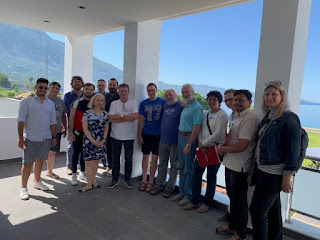


  Some of the conferees at the 2019 Dynamic of Disasters conference in Greece (Professor Urmila is in the photo above with the red bag.)

The first professional obituary I ever wrote (and remember - many journalists are "trained" by writing obituaries), and this one was also very, very difficult to write, was for my PhD dissertation advisor at Brown University, Professor Stella Dafermos, who passed away at age 49. I was her first PhD student. The obituary was published in the journal Operations Research. Stella was one of the very few in Operations Research honored in this way upon passing. I also wrote an In Memoriam for Stella with MIT Professor Amedeo Odoni, which was published in Transportation Science.

Stella chaired my PhD dissertation committee and Professor Martin Beckmann, a renowned economist at Brown, was also on my committee. When he passed away at the age of 93, Professor David Boyce and I wrote the In Memoriam, which was published in Transportation Science. David Boyce and I also wrote an In Memoriam in Transportation Science for Beckmann's co-authors of the classical book, Studies in the Economics of Transportation, Bart McGuire and Chris Winsten. More information on this book can be found here.

In my Transportation and Logistics class that I teach I always share with students stories about Dafermos and Beckmann since their work lives on and has had a tremendous impact. Urmila's publications will also have a tremendous impact on evacuation networks in Nepal, which suffers from so many disasters, and beyond. I will always treasure the wonderful memories of Urmila's smile, her friendship and support. 

Sunday, September 15, 2019

My 200th Article - Remembering a Great One

This week I finished a paper with a colleague of mine, Professor Patrizia Daniele of Italy, which I had been invited to submit to a special issue of a journal. The paper is on international human migration networks, a topic that is very timely, given the various refugee crises around the globe. The topic of human migration I have been publishing on for over 25 years and it is even tackled, using network models, in my first book, Network Economics: A Variational Inequality Approach, published in 1993, with the second edition appearing in 1999.  In the book, the first citation in the chapter on migration is to  Beckmann, M., “On the equilibrium distribution of population in space,” Bulletin of Mathematical Biophysics 19 (1957) 81–89. 

Professor Martin Beckmann was a member of my PhD committee at Brown University, which was chaired by my dissertation advisor, Professor Stella Dafermos. He was renowned in economics, regional science, and transportation science and was the recipient of the Robert Herman Lifetime Achievement Award of the Transportation Science Section of  ORSA/TIMS, now INFORMS. He received this award in 1994, and you can read the wonderful tribute to him on the occasion of this award by David Boyce, published in Transportation Science

Professors Boyce, Hani Mahmassani, and I wrote a retrospective on Beckmann, McGuire, and Winsten's landmark book, Studies in the Economics of Transportation, that was published by Yale University Press.

And, in 2005, at the INFORMS meeting in San Francisco, David Boyce and I organized 2 sessions in honor of the 50th anniversary of the publication of  Studies in the Economics of Transportation, and the photos below were taken after the sessions. Beckmann and McGuire were present, along with their spouses. Winsten had passed away the year before.

Professor Beckmann passed away at age 92 in the spring of  2017  and his family reached out to me to invite me to attend an informal memorial service in the Beckmann home in Providence, Rhode Island. My husband and I were able to attend and to express our deepest condolences to his family members and also to recall numerous wonderful experiences that we had had with Professor Beckmann in many countries, from Sweden to Australia! I wrote a reminiscence is his honor after returning from the service,where I also posted quite a few photos of various events over the years, several that were in his honor. I had earlier written a tribute to him on the occasion of his 90th birthday and his son acknowledged it.

Since David Boyce and I had written an "In Memoriam" on the passing of Beckmann's co-authors: McGuire and Winsten, published in Transportation Science, it was only fitting to have Martin Beckmann be honored in the same way. Hence, when David Boyce approached me this summer to co-author an "In Memoriam" in honor of Martin, I willingly accepted the offer.  This gave us the opportunity to reflect some more on his extraordinary contributions, his effervescent personality, his incredible intellect, lust for travel, and his love of  great food and adventure and music and friendships.

Our article, "In Memoriam: Martin Beckmann (1924-2017),"  has been accepted for publication by the Editor of Transportation Science, Professor Martin Savelsbergh. And, coincidentally, and, this is bittersweet - this is my 200th journal article. Beckmann's work has influenced so much of my work on networks (and that of so many others) that I wish that I could, once again, speak with him. His work will continue to inspire me, my students, co-authors, and all those who are captivated by the interaction of users of many complex networks that underpin our societies and economies. Thank you ever so much, Professor Martin Beckmann!

Sunday, April 16, 2017

He Took the Shortest Route to Get to Work at Brown University and That Involved Climbing a Stone Wall - Rest In Peace, Professor Martin Beckmann!

The email came from his daughter on Thursday, saying that Professor Martin Beckmann, a renowned economist, regional scientist, transportation scientist, and operations researcher, had died two days previously, on April 11, at the age of 92. There would be an informal memorial service at his home in Providence, Rhode Island, on Saturday, April 15, also stated in his obituary.

Immediately, and despite it being a three day holiday weekend in Massachusetts, my husband and I responded that we would be coming.

I had written a tribute to Professor Beckmann, when he turned 90 years old, and had sent him a special card from Sweden, where I was spending time then as a Visiting Professor. Martin had been on my doctoral dissertation committee at Brown University and was the last surviving member, since my advisor, Stella Dafermos, had passed away at age 49, and the other committee member, George Majda, at age 51.

The news of his passing stunned me, and I communicated it to both the operations research and transportation science community and to the Regional Science Association International (RSAI) Fellows. The response was immediate and global in scale. I thank all those who replied with remarkable memories and anecdotes about this truly unique gentleman and scholar, whose impact, through his books and papers, his friendship and mentorship, and his joie de vivre,  have left a legacy that will live on. Martin Beckmann was recognized with numerous awards, including the Robert Herman Lifetime Achievement Award from the Transportation Science Section (now the Transportation Science & Logistics Society) of INFORMS.

In 2005, at the INFORMS National Meeting in San Francisco, I organized two sessions honoring the 50th anniversary of the publication of his classic book, Studies in the Economics of Transportation, with  C. Bart McGuire and Christopher B. Winsten (who had passed away). Beckmann and McGuire, and their spouses came, and then I treated a big group to lunch. We also presented the living authors with a special plaque from Yale University. More info, including presentations, can be viewed here. 
The photos below are from this event and you might be able to identify so many stars in transportation in the first photo below!
David E. Boyce, Hani S. Mahmassani, and I wrote an article on the impact of that book.

And, when my first book was published, Network Economics: A Variational Inequality Approach, I carried copies with me to a conference in Mallacootta, Australia, at which Martin was also an invited speaker.  He caught that I missed a minus sign in my presentation, which took place at about 9PM, after we had been on a boat tour, and he was right! I thought that he had been napping. The photos below are from that amazing conference - and, yes, I was the only invited female to take part.

The last time that I saw Martin Beckmann was at a symposium at Northwestern University organized in his honor by Hani S. Mahmassani in January 2010. Below are photos from the symposium.

However, in the title of this blogpost is a stone wall. Below is the stone wall, in front of Martin's home in Providence that he climbed to get to work at the Economics Department at Brown University, and then hiked through the Aldrich-Dexter Field, since it was the shortest way to work (and back home again).  His work on transportation network behavior, and location theory was fundamental, and has influenced both theory and practice. How fitting that Martin, who had been born in Germany and survived WW II, managed to optimize in both life and research. I will never forget what he taught me through his presence, his scholarship, and his incredible ability to enjoy travel, food, music, and people - wherever we met - in the US, in Europe (especially Sweden, and The Netherlands), and in Australia.

The memorial service yesterday,  at which I spoke with his son and three daughters, as well as grandchildren, and other relatives, childhood friends of his children, who, along with them, climbed the stone wall, and other structures at Brown University, and even multiple faculty of Brown University, from economists to a renowned biologist,  was truly special.  And I felt Martin's presence and even saw one of my professors from the economics department, from whom I took a grad class and got an A in. I recognized his eyes and smile.

My dissertation advisor, Stella Dafermos, was born on April 14 and had died on April 4, 1990. Now I have added April 11, 2017 to my memory bank of a date on which the community lost another brilliant mind and personality.

Friday, July 11, 2014

Living in a Nonlinear World

This past week there have been two big events marking milestones in the lives of major contributors to our understanding of nonlinear phenomena - one very sad and one happy.

I heard the sad news via a tweet by Professor Laura McLay @lauramclay - Professor Harold Kuhn of Princeton University passed away on July 2, 2014 at the age of 88.  The Nobel laureate Al Roth of Stanford wrote this tribute to this co-founder of nonlinear programming and brilliant game theorist, who, interestingly, was a mathematician but had an appointment in Princeton's Economics Department.
Photo above of Harold Kuhn, courtesy of Princeton University

Anyone working, on, researching, or learning about our nonlinear world is aware of the powerful tool of nonlinear programming and the renowned Kuhn-Tucker optimality conditions, now commonly referred to as the Karush-Kuhn-Tucker or KKT Theorem. Dick Cottle of Stanford wrote a wonderful history of these scientific discoveries which can be read here.

Although I never met Karush, Kuhn or Tucker, my first academic interview when I was finishing my PhD in Applied Math at Brown with a specialization in Operations Research, was at SUNY Stony Brook, and I was interviewed by Al Tucker's son, Al Tucker, Jr., so, of course, we talked about his father. Al Tucker passed away in 1995.

This very same week, on July 5, 2014 we celebrated the 90th birthday of Professor Martin Beckmann, the only surviving author of the classic 1956 book, Studies in the Economics of Transportation, who was on my doctoral dissertation committee at Brown University.

I wrote about Beckmann's milestone birthday on this blog and sent his a special card. More information on this classic, including a special festchrift I organized at a previous INFORMS conference in San Francisco can be viewed here.
 The photo above was taken of Beckmann and me at Northwestern University a few years ago.

The massive impact of this book, which formalized what we now commonly refer to as user-optimization and system-optimization to capture different behaviors on congested network systems, with a focus on urban transportation networks, was summarized in our paper, A Retrospective on Beckmann, McGuire and Winsten’s Studies in the Economics of Transportation  David E. Boyce, Hani S. Mahmassani, and Anna Nagurney,  Papers in Regional Science  84: (2005) pp 85-103.

In their book, on page 59, they stated:  “Demand refers to trips and capacity refers to flows on roads. The connecting link is found in the distribution of trips over the network according to the principle that traffic follows shortest routes in terms of average cost. The idea of equilibrium in a network can then be described as follows: ... the existing traffic conditions are such as to call forth the demand that will sustain the flows that create these conditions.” And, as we noted in the paper, That these authors  succeeded to formulate and extensively analyze a nonlinear optimization problem whose optimality conditions correspond to this statement (and related behavioral assumptions) was an enormous advance in the rigorous modeling of network traffic, a result never before achieved for urban traffic, and most unlikely for any complex system involving interactions of human behavior with technology. Moreover, they provided a parallel model and analysis for the case of cost-minimizing (now called system optimum) flows in a congested traffic network.


Boyce published an article in the journal Economics of Transportation last year: "Beckmann's transportation network equilibrium model: Its history and relationship to the Kuhn–Tucker conditions."

Below I depict congestion on a link where the travel time or cost is an increasing function of the flow.


Congestion is a huge problem in the US an beyond. As I noted in my TEDX talk at UMass last November:  Congestion costs continue to rise:  the cost of congestion has risen from $24 billion in 1982 to $121 billion in 2011 in the United States. The average commuter spent an extra 38 hours traveling in 2011, up from 16 hours in 1982. In areas with over 3 million persons, commuters experienced an average of 52 hours of delay in 2011. In 2011,  2.9 billion gallons of wasted fuel -- enough to fill 4 New Orleans Superdomes.

 
Congestion is neither a new phenomenon - it even occurred in ancient Roman times during which time of day chariot policies were used to ameliorate congestion.


Information on some of the most congested roads in the US is available here.

More data can be found in the always fascinating Texas Transportation Institute's Urban Mobility report.

Neither is congestion, and associated nonlinearities, limited to urban transportation systems, but they also arise in freight systems, electric power generation and distribution networks, and the Internet!

And, importantly, if the user travel cost on a link is fixed, then, both user-optimizing solutions coincide with system-optimizing ones, so the (in)famous Braess paradox cannot occur!
 
Many, many thanks to Kuhn, Tucker, Karush, and, of course, to Martin Beckmann for providing us with some of the tools to model and better understand our nonlinear world!

Tuesday, May 24, 2011

Congestion Games, Evolutionary Dynamics, Transportation, and Professor Martin Beckmann

Research that years after publication is still being cited and that gets discovered by different disciplines is research that needs to be celebrated and those behind it recognized. Solid theoretical research, which is implemented in practice, deserves special kudos.

I was incredibly lucky to have had my doctoral dissertation committee at Brown University consist of Professor Stella Dafermos, as the chair, with Professors Martin Beckmann and George Majda. Both Dafermos and Majda died much too young but left amazing scholarly legacies and impacted many students.

Professor Martin Beckmann, the renowned economist and regional scientist, is still with us and his classic book, with McGuire and Winsten, Studies in the Economics of Transportation (1956), continues to inspire both research and practice.

A quote from the Beckmann, McGuire, and Winsten book appears in the first chapter of William Sandholm's recent book, Population Games and Evolutionary Dynamics, MIT Press.

Beckmann's work has stimulated such areas of research as congestion games, evolutionary dynamics, and the development of analytical methodologies from variational inequalities to projected dynamical systems. His research on the rigorous formulation of user-optimized behavior in congested urban transportation networks is applied around the globe.

You can read more about the impact of the Beckmann, McGuire, and Winsten book, Studies in the Economics of Transportation, in a retrospective paper that I wrote with David E. Boyce and Hani S. Mahmassani.

Last year, Professor Mahmassani organized the Transportation Network Design and Economics Symposium at Northwestern University in honor of Professor Beckmann and you can view the video of his lecture, my lecture on supply chain network design under oligopolistic competition, and Professor Boyce's fascinating lecture on the history of transportation highway design in Chicago here.

Saturday, January 9, 2010

Symposium on Transportation Network Design and Economics

On January 29, 2010, the Symposium on Transportation Network Design and Economics will take place at Northwestern University in Evanston, Illinois. This symposium has been organized by Professors David E. Boyce and Hani S. Mahmassani to honor and celebrate the visit of Professor Martin Beckmann to Northwestern. The symposium program is now available.

Professor Beckmann is the only living author of the classic book, Studies in the Economics of Transportation, published in 1956 by Yale University Press, and co-authored with Bart McGuire and Chris Winsten. To mark the fiftieth anniversary of this classic book, in 2005, we organized several sessions at the San Francisco INFORMS meeting and both Beckmann, and McGuire (who died two months after), came to the sessions and took part in the festivities. Please click here for those talks and many photos as well as for a link to the classic book, which is now available online.

Professor Beckmann was on my doctoral dissertation committee at Brown University, which was chaired by Professor Stella Dafermos, and I remember so well the question that he asked after my defense plus the party that I gave in Barus and Holley (that well-known engineering and physics building at Brown) afterwards. Beckmann, a true cosmopolitan and lover of travel and terrific food, especially enjoyed the European tortes that I had prepared for the occasion (although we were quite poor grad students at that time and did not have all the right utensils for slicing). He took advantage of a plastic spatula to do the job.

Professor Beckmann, I hear, will be traveling by train to Northwestern, from Providence, Rhode Island, and the day before the symposium, will be speaking on his reflections of the classic book (BMW).

Boyce, Mahmassani, and I wrote a journal article on the impacts of BMW, which was published in Papers in Regional Science in 2005 .

At Northwestern, I will be speaking on some of my latest work and will be delivering the paper, Supply Chain Network Design Under Profit Maximization and Oligopolistic Competition.

I am very much looking forward to this symposium, which will honor the work of a truly great scholar and human being.

For those who would like to see additional photos of Professor Beckmann, who, as Professor Boyce, was honored with a Lifetime Achievement Award in Transportation Science, please click here. These photos were taken in various locations around the globe, including Australia and Sweden.