Showing posts with label health care. Show all posts

Thursday, February 28, 2013

Looking Forward to Speaking on Supply Chains in Sweden and in Austria

My suitcases are (almost) packed and soon I will be heading back to Europe as part of my sabbatical this year.

And, the lectures that I will be giving on supply chains  as well as a short course on humanitarian logistics and healthcare are prepared and I am very much looking forward to giving them.

I am bringing a few copies of our new book, "Networks Against Time: Supply Chain Analytics for Perishable Products,"  just published by Springer Business and Science Media New York, to give to my hosts at the School of Business, Economics and Law at the University of Gothenburg in Sweden and to also donate a copy to the library.

On Monday, March 4, 2013, I will be presenting a seminar, "Grand Challenges and Opportunities in Supply Chain Networks: From Analysis to Design," at the Chalmers University of Technology, which is also in Gothenburg. This seminar is part of the Optimization Series.
 
 I will have a week to meet with my wonderful colleagues and the students in Gothenburg and then I will be off to Vienna, Austria, where I will speak on one of the themes of our new book: "Perishable Product Supply Chains in Health Care: Models, Analysis, and Computations," at the Vienna University of Economics and Business. The title of my talk in Vienna, which is part of the research seminar series of the Research Institute for Supply Chain Management is: "Perishable Product Supply Chains in Health Care: Models, Analysis, and Computations."

I have several wonderful colleagues there, including Professor Manfred Fischer, and my former doctoral student, Professor Tina Wakolbinger, who recently visited us at the Isenberg School and also took part in the AAAS Sympsoium on Dynamics of Disasters that I organized and which took place February 17 at the Hynes Center in Boston.
 

While in Vienna, I will also teach an intense course on Humanitarian Logistics and Healthcare. I am told that the students who have registered for my course are from many different countries so this should be a very interesting and timely course.

Wednesday, September 14, 2011

Medical Waste, Sustainability, and Operations Resarch

For many months now, we have been researching health care supply chains, with a focus on perishable products ranging from blood supply chains to medical nuclear supply chains.

In our research, we have, specifically, emphasized the impact of improper disposal of medical wastes on the environment. Our mathematical models are generalized network models in which the arc multipliers capture features of the perishable, but, life-saving, products that we are studying.

Today, CBS News is reporting on an investigation by a human rights official of the United Nations that noted that: nations pay "too little attention" to their tons of waste each year — waste that contains pathogens, blood, low levels of radioactivity, discarded needles, syringes, scalpels, expired drugs and vaccines. In many poorer nations, discarded chemicals and pharmaceutical wastes go straight to city dumps, down hospital toilets into water systems, or are burned in cement kilns that just add to dioxide emissions.

Our research on blood supply chains, from the operations management aspects, to the design, is written up in our papers:

Supply Chain Network Operations Management of a Blood Banking System with Cost and Risk Minimization
Anna Nagurney, Amir H. Masoumi, and Min Yu, to appear in Computational Management Science.

Supply Chain Network Design of a Sustainable Blood Banking System
Anna Nagurney and Amir H. Masoumi, in Sustainable Supply Chains: Models, Methods and Public Policy Implications, T. Boone, V. Jayaraman, and R. Ganeshan, Editors, Springer, London, England, 2011, in press.

Our research, to-date, on medical nuclear supply chains, which I presented recently at the INTRIM Conference at McGill University, is reported in the paper:

Medical Nuclear Supply Chain Design: A Tractable Network Model and Computational Approach
Anna Nagurney and Ladimer S. Nagurney.

According to the report, the UN investigator, Cailin Georgescu, recommended that all nations adopt better laws for managing medical waste and replace incinerators with "more environmentally friendly and safe methods of disposal" such as autoclaving, which uses pressurized steam and superheated water to disinfect waste and medical equipment.

Next week I will be speaking on Sustainability: Methodologies with Some Applications at the SAMSI Workshop, which is part of the 2011-2012 Program on Uncertainty Quantification.

One thing that I am certain about is that we need to take better care of our environment not only for us and our children but for future generations as well.

Clearly, we, in the Operations Research community, understand this, and are doing something about it. Just read Dr. Ian Frommer's wonderful blog post on the course that he has taught on Sustainability.

On my list of new courses that I am developing are courses entitled:

Humanitarian Logistics and Healthcare and

Sustainable Systems.

Friday, July 22, 2011

Alan Alda, Marie Curie, and an Update on Our Work on Supply Chains in Health Care


Problems to research are all around us -- now more than ever.

All that one has to do to identify the important and interesting problems in order to help make the world a better place, is to keep one's eyes open and to observe; to read a lot -- news, journal articles, and books; to communicate with others, through both local forums, as with students and colleagues, through conferences, email, social networking, etc., and to experience life. Travel helps, as well, in order to view the world outside of the silos and to better understand what are the major issues.

Successful research, however, requires incredible focus, dedication, and passion, and a book that captures the life of an amazing researcher and scientist, like no other, is Madame Curie, a biography of Marie Curie, written by her daughter, Eve Curie. I decided to read this beautiful biography of Marie Curie this summer, after hearing that Alan Alda (yes, of M*A*S*H* and other fame) had written a play about her that was performed at this year's World Science Festival (WSF) in early June in NYC. Coincidentally, Alda, also around that time, even managed to give a commencement address at a local prep school in our area, from which his granddaughter was graduating.

I feel as though Madame Curie was inspiring me throughout this summer, with a nudge from Alan Alda who loves science and has been an active proponent of the WSF (I had the terrific experience of speaking on the Traffic panel at the 2009 WSF). The WSF is the brainchild of Dr. Brian Greene, a renowned physicist at Columbia University, and his wife, the journalist, Tracy Day.

This summer, coincidentally, after purchasing the Curie biography, I became absolutely fascinated by medical nuclear supply chains and the shock that the US has not even been producing nor processing the most commonly used radioisotope for cancer and heart diagnostics led me to do research on this critical supply chain. But, I needed a collaborator who was skilled in the underlying physics and, luckily, my husband has a PhD in physics, with a concentration in low temperature experimental physics, and we needed to get the news out, which we did through an Op-Ed piece, along with the paper, Medical Nuclear Supply Chain Design: A Tractable Network Model and Computational Approach, Anna Nagurney and Ladimer S. Nagurney, which I will be presenting at a conference at McGill University in Montreal next week.

As noted in our paper, since molybdenum decays with a 66.7 hour half-life, approximately 99.9% of the atoms decay in 27.5 days, making its production, transportation, and processing all extremely time-sensitive. In fact, its production is quantified in Six-day curies end of processing denoting the activity of the sample 6 days after it was irradiated to highlight this (and, yes, named after the Curies). Note that not only did Marie Curie receive a Nobel prize but she actually received 2, in Physics and in Chemistry, and shared the former prize with her husband, Pierre Curie, and with Becquerel.
In our nuclear medical supply chain paper, we needed a theoretical result (our model is a generalized network optimization model in which the arc multipliers capture the various losses due to radioactive decay, etc.) in order to be able to obtain an elegant formulation for analysis and computations. Propitiously, and this also speaks to passion as being a necessary condition for good research, one of my doctoral students, who is very interested in health care, and another doctoral student, who is researching time-sensitive product supply chains, began working on blood supply chains.

Our paper, Supply Chain Network Operations Management of a Blood Banking System with Cost and Risk Minimization, Anna Nagurney, Amir H. Masoumi, and Min Yu, has now been accepted in the journal, Computational Management Science, and it contains a result that we needed in both in our medical nuclear supply chain modeling work as well as in a followon paper, Supply Chain Network Design of a Sustainable Blood Banking System, Anna Nagurney and Amir H. Masoumi, to appear in Sustainable Supply Chains: Models, Methods and Public Policy Implications, T. Boone, V. Jayaraman, and R. Ganeshan, Editors, Springer, London, England, 2011.

On an ending note, Marie and Pierre Curie's other daughter, Irene Curie, and her husband, also were awarded the Nobel prize in chemistry. Amazing accomplishments and among members of two generations of a family.

Saturday, July 16, 2011

Keeping Our Blood Supply Chain Safe for Health Care Through Operations Management

My doctoral student, Amir Masoumi, and I have been deeply researching blood supply chains, a supply chain of a highly perishable product, with life-saving properties.

What makes the modeling and analysis of this health care supply chain so challenging is not only its perishability, but also that there is risk associated with its procurement (on bad weather days, for example, potential donors may decide not to give blood whereas during disasters there may be an outpouring of willing donors).

The safety of the blood supply also requires proper testing and, at times, it may be difficult to predict the demand, resulting in shortages, for example, with associated costs. An oversupply of blood, on the other hand, requires proper waste disposal of outdated blood.

There is now a blood supply shortage gripping the United States.

As noted in the Herald, under federal law, whole blood can be stored for up to 42 days. However, some studies have found that patients who receive blood stored even for a couple of weeks are more likely to suffer infections, cardiovascular problems and even organ failure, particularly those who use several units of older blood.

A new paper, published yesterday in the journal Critical Care Medicine, explaining why this is so -- found that stored red blood cells begin to lose the ability to release a key molecule called adenosine-5’-triphosphate (ATP), which helps prevent the cell from sticking to the walls of blood vessels.

However, before researchers determine how to boost levels of ATP in older blood to make such blood safer, it is important to be able to analyze the risk and perishability of blood in its complete supply chain along with the costs which must include potential unmet demand as well as waste.

We now have two papers on this subject, the first, Supply Chain Network Operations Management of a Blood Banking System with Cost and Risk Minimization, Anna Nagurney, Amir H. Masoumi, and Min Yu, focuses on optimizing the operations of the blood supply chain, whereas the second, Supply Chain Network Design of a Sustainable Blood Banking System, Anna Nagurney and Amir H. Masoumi, to appear in Sustainable Supply Chains: Models, Methods and Public Policy Implications, T. Boone, V. Jayaraman, and R. Ganeshan, Editors, Springer, London, England, 2011, in press, demonstrates how to design (or redesign the blood supply chain).

By doing out best to optimize this life-saving, scarce resource, in a holistic manner, we can save lives.

Thursday, July 14, 2011

Designing a Sustainable Blood Banking Supply Chain Network


Interestingly, health care facilities in the United States are second only to the food industry in producing waste, generating more than 6,600 tons per day, and more than 4 billion pounds annually. In addition, considerable amounts of drugs have been found in 41 million Americans' drinking water due to the improper disposal of unused or expired drugs placed in domestic trash or discarded in the waste water. In other countries, up to 4 pounds of waste per hospital bed per day is produced, out of which 0.5 percent might be categorized as risky / potentially hazardous waste.

Medical waste, also known as clinical waste, refers to the waste products that can not be considered as general waste, and that is produced, typically, at health care premises, including hospitals, clinics, and labs. Due to the potentially hazardous nature of medical waste, both the American Dental Association (ADA) and the Centers for Disease Control (CDC) recommend that medical waste be removed in accordance with regulations.

Disposal of medical waste is not only costly to the health care industry, but also may harm the environment. Consequently, poor management of such waste may lead to the contamination of water, the soil, and the atmosphere. While many hospitals choose to have their waste burned so as to avoid polluting the soil through landfills, the incinerators themselves are one of the nation's leading sources of toxic pollutants such as dioxins and mercury. Thus, minimizing the amount of medical waste throughout the health care supply chains will lead to a cleaner environment, which may, in turn, also reduce illnesses and death.

When it comes to blood supply chains, the scarcity and vitalness of this highly perishable health care product make such supply chains crucial. Hence, the effective design and control of such systems can support the health and well-being of populations and can also positively affect the sustainability of the environment by reducing the associated waste. Indeed, since blood waste is a significant hazard to the environment, a major step in attaining a sustainable blood supply chain is to be able to minimize the outdating of blood products while satisfying the demand.

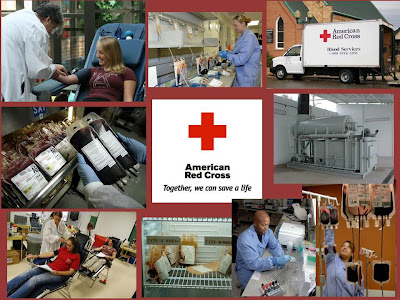
In our paper, "Supply Chain Network Design of a Sustainable Blood Banking System," Anna Nagurney and Amir H. Masoumi, we developed a multicriteria system-optimization framework for the supply chain network design of a sustainable blood banking system. The framework allows for the simultaneous determination of optimal link capacities through investments, and the flows on various links, which correspond to such application-based supply chain network activities as: blood collection, the shipment of collected blood, its testing and processing, its storage, its shipment to distribution centers, and, finally, to the points of demand. The system-optimization approach is believed to be mandated for critical supplies in that the demand for such products must be satisfied as closely as possible at minimal total cost. The use of a profit maximization criterion is not appropriate for an organization such as, for example, the American Red Cross, due to its non-profit status.

In particular, the sustainable supply chain network design model for blood banking that we developed is novel for several reasons:

1. it captures the perishability of the product through the use of arc multipliers;
2. it handles the costs associated with the discarding of the medical waste, which could be hazardous,
3. it captures the uncertainty associated with the demand for the product along with the risk associated with procurement of the product, and
4. it allows for total cost minimization and the total risk minimization associated with the design and operation of the blood banking supply chain network.

Our framework is a contribution to the growing literature on sustainable supply chains and to the design of sustainable supply chains, in particular (cf. Nagurney and Nagurney (2010) and the references therein). However, our supply chain network design model for sustainable blood systems focuses not on the minimization of emissions but rather on the minimization of waste. Moreover, it captures the perishability of this product.

We thank the Red Cross for helpful discussions conducted by Amir H. Masoumi as we conducted this research.

Our paper is now in press in the Springer International Series in Operations Research & Management Science, entitled: Sustainable Supply Chains: Models, Methods and Public Policy Implications, T. Boone, V. Jayaraman, and R. Ganeshan.