Showing posts with label risk analysis. Show all posts

Thursday, February 13, 2020

Outstanding Inaugural INFORMS Security Conference in Beautiful Monterey, California

I arrived back in Amherst at 1AM this morning, having flown from Monterey, California to Denver, Colorado and then to my "local" airport - Bradley.

I had been in beautiful Monterey to take part in INFORMS' inaugural Conference on Security and it was outstanding.  The official dates of the conference were February 9-11, 2020.  Luckily, I am on sabbatical this semester, so this was manageable for me and I was very much looking forward to presenting at this conference. It was also quite nostalgic, since the first talk I ever gave at a conference was at the Naval Postgraduate School in Monterey (which was also heavily involved in this conference) at an MIT/ONR conference organized by Professor Michael Athans of MIT. I was then working in the defense sector, focusing on the navy, in Newport, Rhode Island, while pursuing my Master's at Brown University. I was the only female presenter at that conference.

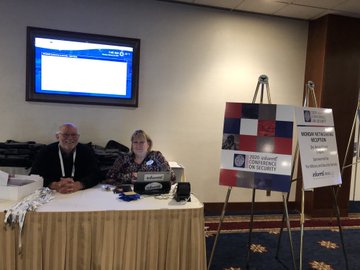
First, I would like to congratulate the organizers of the INFORMS Security Conference: Mr. Harrison Schramm, Captain Brian Morgan, and Dr. Paul Nicholson, on its success! The format was excellent - 50 minute presentations (8 or so parallel sessions), with lunch and coffee provided, and ample time for discussion. Everyone was very gracious and friendly.  One "marker of the success" of this conference was the number of INFORMS Fellows in attendance, including: Gerry Brown, Stephen Robinson, Vicki Bier, Michael Fu, Sheldon Jacobson, and me :) If I missed someone, do let me know! Attendance was about 100 (I was told) and consisted of faculty, military, practitioners from various companies, government, and even some students that I met.

The plenary talks were great as well as a risk analysis panel conducted by Gerry Brown and Sam Savage. 
Image

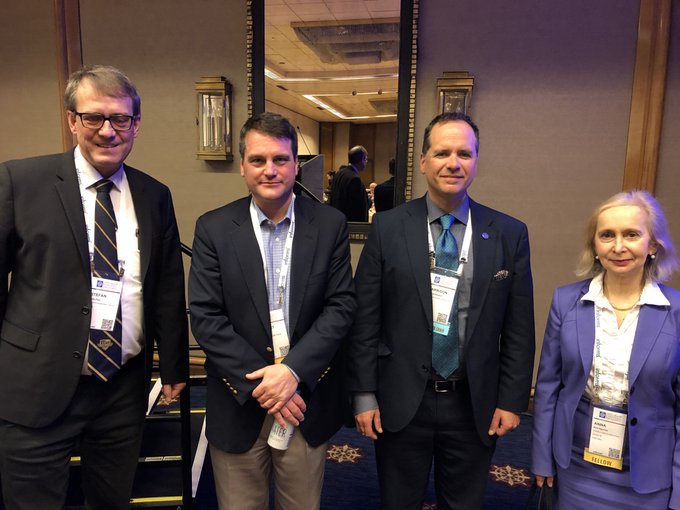
It was thrilling to even see Stefan Pickl, who traveled all the way from Germany for the conference. He had been a participant in the latest Dynamics of Disasters conference that I co-organized with Panos M. Pardalos and Ilias S. Kotsireas, and which took place last summer in Kalamata, Greece. We are now co-editing a new volume, to be published by Springer.
Image
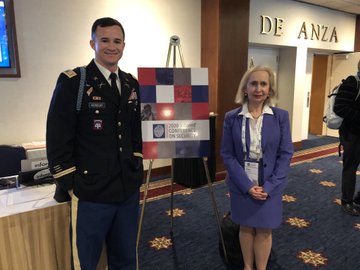
In the above photo I am standing with Stefan Pickl, Rob Dell, who gave one of the plenary talks, and Conference Chair Harrison Schramm.

I had the pleasure of presenting Monday morning on Game Theory Network Models for Disaster Relief. Special thanks to Nathaniel Bastian for being an outstanding stream chair of our stream: Interdisciplinary Applications - Frontiers. He had all of our presentations ready for projecting on his laptop.
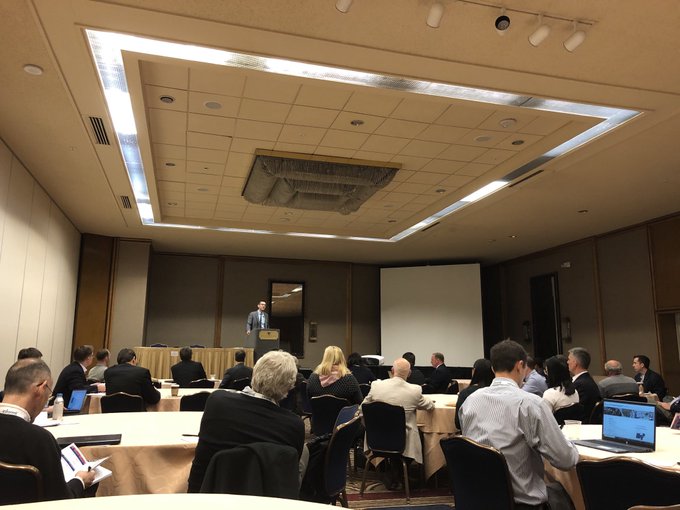
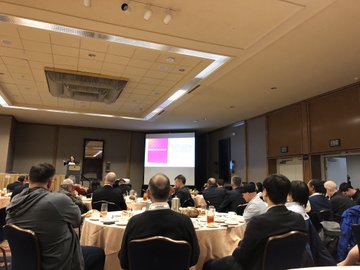
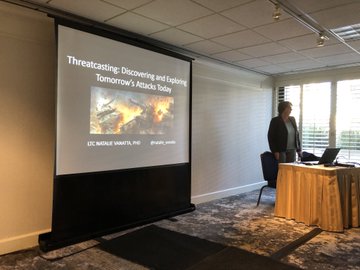
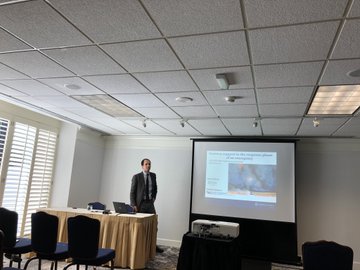
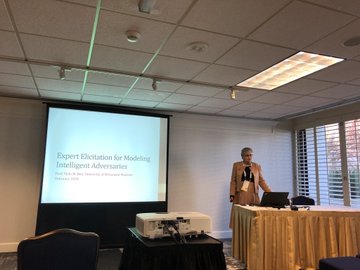
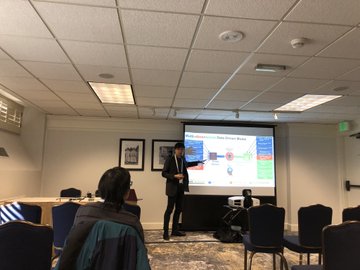
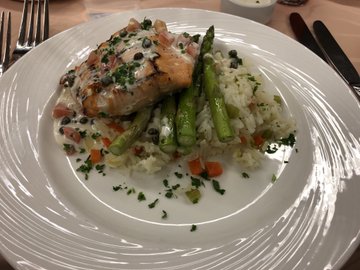
Below are some photos from the delivered talks and of one of the great lunches! Many thanks for the wonderful presenters. Special to also hear from Jun Zhang and James Minas.
Image

Image
Image
Image
Image
Image
Image
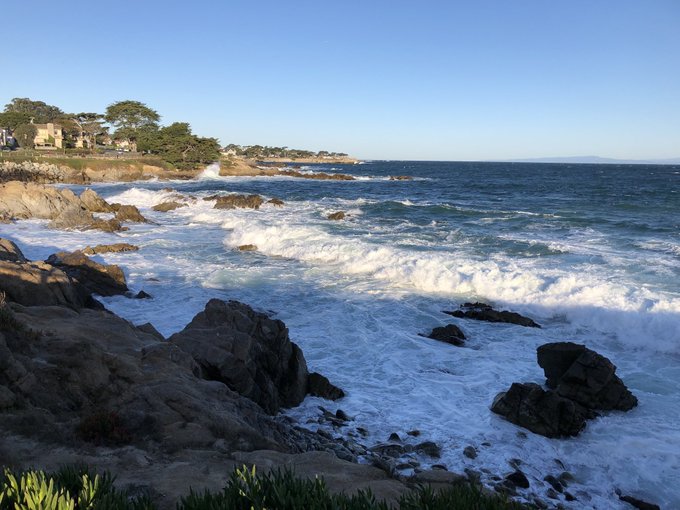
The venue was extraordinary - the hotel is located in downtown Monterey with hiking/biking trails in proximity and views of the Pacific.

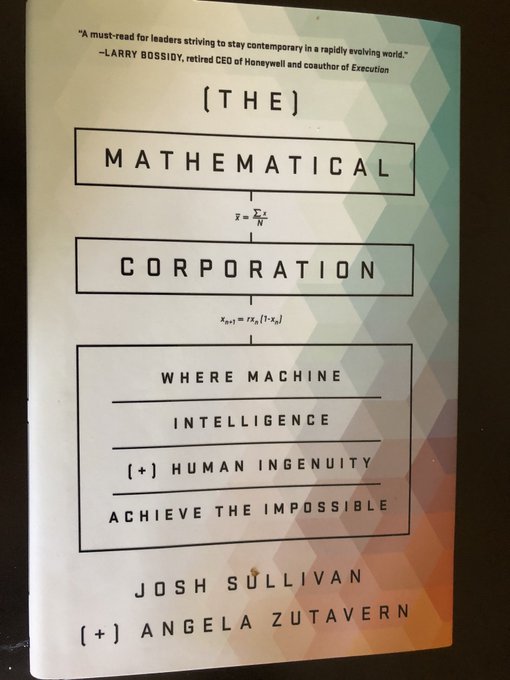
And, at its best, a conference generates new research ideas, new collaborations, reconnecting with colleagues, and growing your network. The INFORMS Conference on Security delivered on all counts and at a location that would be hard to improve upon.  I was even presented with a book by Booz Allen Hamilton consultants. Interestingly, I had had an offer from this company when I was finishing up my PhD.
Image
Image
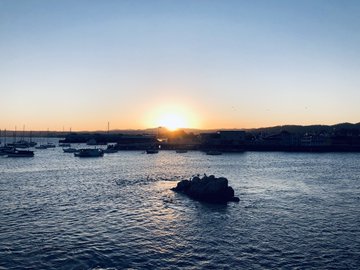
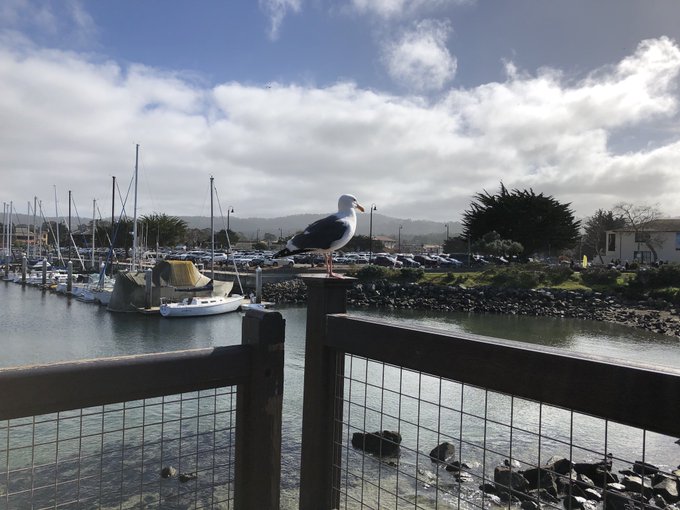
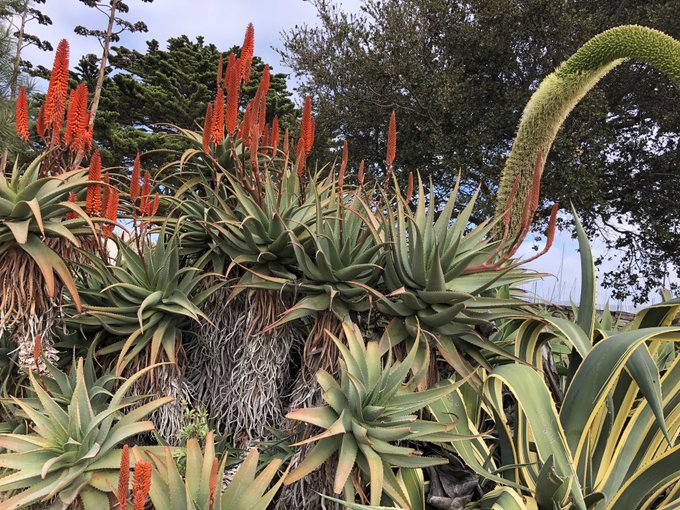
Below I have posted a few photos of the beauty of the natural environment of Monterey.
Image
Image
Image
Image
I am looking forward to the next INFORMS Conference on Security but, in the mean time, there is a lot of important research to be done by our community!

Tuesday, September 6, 2016

Super First Day of Classes at the Isenberg School of Management

There is something special about the month of September, when the new school year begins. The nights are cooler in the northeast, some of the leaves have started to change colors, and there is an air of anticipation.

I am sure that you remember many "first days" of classes, from elementary school onward through high school and college, and perhaps graduate school or a professional school.

I never get tired of the start of the new academic year and last night I was so excited, that I could hardly sleep.  Today, was the first day of the new academic year at the University of Massachusetts Amherst and, in the Fall, I always very much enjoy teaching my Logistics and Transportation class, which is an elective in the Operations and Information Management Department.  Also, if the classroom size permits, I allow interested students, especially from Industrial Engineering, into the course, who have some background in operations and modeling.

Faculty members, as some students do, too, I expect, take the time to decide what outfit to wear on the "first day of school." One of my Marketing colleagues always wears a red tie and recommends something bright and cheery and for those of you who follow Alex Pentland's work (we have hosted him at the Isenberg School through our great UMass Amherst INFORMS Speaker Series), you will know that first impressions - which may be only seconds or minutes long - do matter! Pentland is from MIT and is a member of the National Academy of Engineering, a well-deserved honor.

Today, after having breakfast, I checked my email messages and there was good news, and a perfect start to this special day.

Our paper, which I have blogged about, A Generalized Nash Equilibrium network model for post-disaster relief, and which was co-authored with one of my former undergraduate students, Emilio Alvarez Flores, who received a degree from the Isenberg School in May 2016, and a colleague from economics, Professor Ceren Soylu,  is the lead article in the November issue of Transportation Research E. I received a nice preprint today before my class.
Having such news before your first class is clearly energizing plus synergistic.

During class I asked the students to share a fun fact about themselves having to do with Logistics and Transportation, and these were so interesting and so much fun - from stories about commuting close to two hours each way for their summer internships, to riding mopeds as a mean of transport in Thailand and without a helmet, to driving over 3,000 miles this summer to help a family member move, to flight delays and travails, to working on yachts in Boston, and also fear of flying. It should be a very interesting semester.  One student mentioned that her favorite mode of transport was Uber!
Coincidentally, last night I read the latest issue of The Economist and guess what was the cover story?! It will be fascinating to see what happens with autonomous vehicles, in general, and the impact on Uber, which has no hard assets, for example, one of the issues explored in this issue.

And then, during office hours - I was not sure whether anyone would show up since I do not assign homework on the very first day - a student who was also in my Humanitarian Logistics and Healthcare class stopped by and we brainstormed for 90 minutes (it felt like 10 minutes) about possible topics for her honors thesis. (Emilio's honors thesis I co-supervised last year.) But, mostly, we just talked about healthcare and hospitals and improving the quality of care and our personal experiences.

Catching up with colleagues at the Isenberg School was also a lot of fun today and  hearing about how they spent their summers.

Then it was time for our weekly NSF project teleconference on our EAGER grant (which are high risk but potentially high return projects). Along with Associate Dean of the College of Engineering at UMass Amherst, Dr. Tilman Wolf, I am working with colleagues from the University of Kentucky, who are computer scientists: Dr. Ken Calvert and Dr. Jim Griffioen. Together we had also had, with NCState and RENCI, a multiyear NSF Future Internet Architecture (FIA) grant and we worked on ChoiceNet. Our work is getting a lot of citations which is gratifying.

And, as part of the discussion, Ken mentioned that he had listened to a very interesting podcast in the NPR Freakonomics radio series: http://www.npr.org/podcasts/452538045/freakonomics-radio, the July 213, 2016 edition, entitled: Is the Internet Being Ruined? He mentioned that Dr. David Clark of MIT was interviewed in this segment, so I had to listen. David Clark is one of the brains behind the Internet and an absolutely delightful individual. Two years ago, on September 20, 2014, I had the pleasure, with my wonderful colleagues: Professor Mila Sherman of Finance, Professor Senay Solak of my department, and Professor Wayne Burleson of Electrical and Computer Engineering, of organizing a workshop at the Sloan School at MIT on Cybersecurity Risk Analysis for Enterprise Security (a mouthful). This was made possible through a grant that we received from the Advanced Cyber Security Center in eastern Massachusetts and also with support from Mila's dissertation advisor at MIT, the renowned Dr. Andrew Lo, who also gave a keynote speech.  Dr. David Clark, a visionary and thought leader, was also a keynote speaker and I still remember the research assignment that he had given me. You can see photos in my post on the link above.

I hope that your first day of the new academic year was enjoyable and rewarding!