The number of colleges and universities in the mid-Atlantic states and beyond, including New York, New Jersey, Connecticut, and Pennsylvania that have had to cancel classes for the entire week because of the aftermaths of Hurricane Sandy is not trivial. Large research universities such as NYU had to evacuate its students post Hurricane Sandy, once backup generators in dorms started to fail, and even managed to evacuate a hospital with dramatic news coverage and chilling scenes of medical personnel physically pumping air into babies as they were carried downstairs. Smaller colleges such as Manhattan College in NYC, Sacred Heart University in Connecticut to Lehigh University in Pennsylvania have also cancelled classes for the week and the list goes on.
Many colleges and surrounding areas are still without electric power, over 4 days since Hurricane Sandy made landfall in New Jersey, and have had to cope with fallen trees, damaged property, possible flooding, while ensuring that the students, faculty, and staff are free from injuries. Even Princeton University was not unscathed.
However, the state-of-affairs is clearly no longer "business as usual" and unless colleges and universities establish knowledgeable, specially trained departments to prepare for emergencies, including natural disasters, and know how to mitigate risk and enhance recovery, valuable momentum will be lost, possible damage increased, and even reputations sullied.
Colleges, as some have done, cannot simply appoint ad hoc committees when a disaster such as Hurricane Sandy strikes.
Some have learned from previous disasters. Our area of Massachusetts, for example, last year (2011) was the site of a June 1 tornado, Hurricane Irene that struck in late August and was called a once in a 500 years flood, and the Halloween snowstorm that caused days-long power outages.
UMass Amherst, with its experts in emergency preparedness, did a wonderful job throughout and I personally commend and thank Mr. Thomas O'Regan for ensuring the safety and business continuity of our campus during last year's major weather events. He also came to my Humanitarian Logistics and Healthcare class last Spring and spoke on the topic to the mesmerized class and told us of how UMass even delivered cots to neighboring colleges after the snowstorm and provided assistance, and with trees downed on roads, this was not easy to do. Luckily, UMass Amherst never lost power during this unprecedented October snowstorm, partially, because it has its own co-generation power plant.
Many colleges and universities pride themselves on having students from numerous states and from many countries. When a natural disaster strikes which affects transportation systems and shuts them down one can't just tell students "to go home" without providing any assistance or places that they can obtain safe shelter.
In the case of Hurricane Sandy, many students in colleges in the affected areas, since they are densely populated, may have no homes to go to and we know personally of several of such cases.
Evacuations -- as Governor Christie of New Jersey and Mayor Bloomberg vociferously noted as Hurricane Sandy was approaching and the weather forecasts were warning of a superstorm -- need to happen before the weather events strike an area. For example, my husband's university, the University of Hartford in Connecticut, last year had much of its campus lose power and had parts of the grounds flooded and housed students temporarily in the cafeteria. This year, in anticipation of Hurricane Sandy, the campus was informed on Saturday that classes would be cancelled through Wednesday, giving sufficient time, before the storm struck, to evacuate and find appropriate shelter. The campus, luckily, this year, during and post Sandy, did not lose power and classes resumed yesterday with my husband distributing Halloween candy to his students who were very happy to see him (and the candy).
Having personal experiences with colleges and those affected in disasters from Hurricane Katrina to the above storms and now Hurricane Sandy, colleges need to provide transportation (or provide a safe option) for students to evacuate and to, subsequently, return to campuses. They also need to, if necessary, find appropriate shelter for them (and several are doing this).
Safety should always come first and when a campus is running on minimal power with only a building or two with power, if that, extraordinary measures need to be undertaken.
Managing a crisis, day by day, without adequate preparation and planning, may lead to great uncertainty, anxiety, and may generate a chaotic and, hence, unsafe, atmosphere.
Finally, colleges must work closely with their electric power providers to establish good relationships so that it is understood that a community of hundreds, if not thousands, from many different parts of the country and globe, needs to be kept safe and energy restored as soon as possible.
And, yes, my daughter is at a college that has cancelled classes all this week and, given my uncanny intuition, and overanalysis of the outage maps in the surrounding areas, my projection is that power will not be restored within the week.
The costs to education and confidence are enormous.
A positive, nevertheless, is that personally learning how to manage disruptions in real-time as well as gaining resiliency is valuable knowledge even in a changed landscape in which you cannot find a way of getting safely back home.
Friday, November 2, 2012
Wednesday, October 31, 2012
When the Critical Infrastructure Collapses -- Rebuilding for Resiliency
Many of us have seen the news and photos and have also personally experienced tremendous losses because of Hurricane Sandy, which continue.
There are still, days after Hurricane Sandy made landfall in the Northeast, extensive power outages and, in many parts of the mid-Atlantic states of the US, still uncertainty as to when electricity will be restored, and as to when the transportation networks (both nodes and links) will be fully operational and buildings that were once homes, businesses, and medical facilities, habitable. Dozens have lost their lives.
What I also find absolutely stunning is the number of colleges and universities in the mid-Atlantic states that are still without power and have cancelled classes for this full week!
And, it is next to impossible, to identify a mode or series of modes of transportation, given the disruptions to air travel, bus travel, trains, and subways in major and smaller metropolitan areas, that would get (m)any of the students safely back home, assuming that their homes even exist.
Mind you, it is October and Fall here.
I have received messages not only from operations research colleagues who lived through Hurricane Katrina but even from Italy, expressing concern for the devastation and the suffering. Thank you for asking and for caring about others. I have heard from relatives in several mid-Atlantic states, who are without power.
Who would have thought that a natural disaster could impact tens of millions of people in the US over such a short, intense period of time, and disrupt their routines, livelihoods, and even educations and affect an area of 900 miles!
At a Transportation Research Board meeting in Washington DC, in 2011, I had the honor of speaking on a panel, with the title, Disaster Recovery and Mitigation Planning and Resilience, which does seem uncannily prescient, with the program below:
Presentations:
Update on TRB Activities (P11-1419)
Jeffrey L. Western - Western Management and Consulting, LLC
Building Resilience into Fragile Transportation Networks in an Era of Increasing Disasters (P11-1394)
Anna Nagurney - University of Massachusetts
Infrastructure: Critical Link and Cutting Edge for Disaster Recovery and Mitigation (P11-1397)
Rae Zimmerman - New York University
Learning from the Haiti Reconstruction Efforts (P11-1399)
Herby Lissade - California Department of Transportation
U.K. Perspective (P11-1464)
Sujith Kollamthodi - AEA Group, United Kingdom

My presentation, Building Resilience into Fragile Networks in an Era of Increasing Disasters, I have posted since, in it, I also emphasized the impact of climate change on critical infrastructure, especially that of transportation networks. This is a topic that we have done a lot of research on and even Governor Andrew Cuomo of New York realizes that we need to design our infrastructure for resiliency as we adapt and cope with climate change.
We are now seeing that, as I have written many times, we are in an Era of Supernetworks, in which our critical infrastructure networks from electric power to transportation and logistics to communications and financial networks are so intertwined and interdependent that a failure in one can have cascading failures and long-term disruptions that propagate. And when a disaster strikes, in the form of Hurricane Sandy, we are painfully reminded that we need to design for resiliency.
Dr. June Dong and I wrote our Supernetworks book back in 2001 and it was published in 2002. When 9/11 struck, the camera-ready copy was stuck at the JFK airport but eventually made it to the publisher in England.
Now, my latest book, which was just sent off to the publisher last week, is probably floating in electronic form somewhere in lower Manhattan since my publisher's office is shut down due to the flooding and lack of electric power.
Plus, I cannot even figure out a way of getting my daughter home from her college, besides driving 5 hours on roads and over bridges, in conditions that I cannot fathom and that, just this past Sunday, were fine.
So many of our critical nodes and links have been affected, changing economic and human activities in ways we did not foresee.
There are still, days after Hurricane Sandy made landfall in the Northeast, extensive power outages and, in many parts of the mid-Atlantic states of the US, still uncertainty as to when electricity will be restored, and as to when the transportation networks (both nodes and links) will be fully operational and buildings that were once homes, businesses, and medical facilities, habitable. Dozens have lost their lives.
What I also find absolutely stunning is the number of colleges and universities in the mid-Atlantic states that are still without power and have cancelled classes for this full week!
And, it is next to impossible, to identify a mode or series of modes of transportation, given the disruptions to air travel, bus travel, trains, and subways in major and smaller metropolitan areas, that would get (m)any of the students safely back home, assuming that their homes even exist.
Mind you, it is October and Fall here.
I have received messages not only from operations research colleagues who lived through Hurricane Katrina but even from Italy, expressing concern for the devastation and the suffering. Thank you for asking and for caring about others. I have heard from relatives in several mid-Atlantic states, who are without power.
Who would have thought that a natural disaster could impact tens of millions of people in the US over such a short, intense period of time, and disrupt their routines, livelihoods, and even educations and affect an area of 900 miles!
At a Transportation Research Board meeting in Washington DC, in 2011, I had the honor of speaking on a panel, with the title, Disaster Recovery and Mitigation Planning and Resilience, which does seem uncannily prescient, with the program below:
| Event Description: | Transportation systems throughout the world are greatly affected by natural disasters and human-created events. These systems are critical for daily activities and the economy. The magnitude of the U.S. transportation infrastructure makes protecting it extremely challenging and costly. This special session highlights innovative approaches to disaster recovery planning and assesses improving transportation infrastructure resilience to extreme events. |
Presentations:
Update on TRB Activities (P11-1419)
Jeffrey L. Western - Western Management and Consulting, LLC
Building Resilience into Fragile Transportation Networks in an Era of Increasing Disasters (P11-1394)
Anna Nagurney - University of Massachusetts
Infrastructure: Critical Link and Cutting Edge for Disaster Recovery and Mitigation (P11-1397)
Rae Zimmerman - New York University
Learning from the Haiti Reconstruction Efforts (P11-1399)
Herby Lissade - California Department of Transportation
U.K. Perspective (P11-1464)
Sujith Kollamthodi - AEA Group, United Kingdom
My presentation, Building Resilience into Fragile Networks in an Era of Increasing Disasters, I have posted since, in it, I also emphasized the impact of climate change on critical infrastructure, especially that of transportation networks. This is a topic that we have done a lot of research on and even Governor Andrew Cuomo of New York realizes that we need to design our infrastructure for resiliency as we adapt and cope with climate change.
We are now seeing that, as I have written many times, we are in an Era of Supernetworks, in which our critical infrastructure networks from electric power to transportation and logistics to communications and financial networks are so intertwined and interdependent that a failure in one can have cascading failures and long-term disruptions that propagate. And when a disaster strikes, in the form of Hurricane Sandy, we are painfully reminded that we need to design for resiliency.
Dr. June Dong and I wrote our Supernetworks book back in 2001 and it was published in 2002. When 9/11 struck, the camera-ready copy was stuck at the JFK airport but eventually made it to the publisher in England.
Now, my latest book, which was just sent off to the publisher last week, is probably floating in electronic form somewhere in lower Manhattan since my publisher's office is shut down due to the flooding and lack of electric power.
Plus, I cannot even figure out a way of getting my daughter home from her college, besides driving 5 hours on roads and over bridges, in conditions that I cannot fathom and that, just this past Sunday, were fine.
So many of our critical nodes and links have been affected, changing economic and human activities in ways we did not foresee.


Tuesday, October 30, 2012
Investing in Science for Economic Growth and Our Future in the Aftermath of Hurricane Sandy
The power had gone out in our neighborhood last night in Amherst, Massachusetts at 8PM sharp.
We had been expecting that it would, at some time, given the massive size and strength of Hurricane Sandy and had planned and prepared accordingly. We had purchased supplies even in Pennsylvania, where we had spent the weekend, filling up our cars with gas, getting enough cash from the ATM machines, stocking up on water and nonperishables as well as flashlights and extra batteries. We had worked furiously yesterday at home, taking advantage of what electric power provides and knowing full well the difficulties presented when it is not available. My husband's university and mine (UMass Amherst) were closed yesterday due to Hurricane Sandy.
Only a few days before, I had been speculating whether this October storm would be worse than that of our freaky Halloween snowstorm of a year ago when we were without power for over 72 hours and many of our friends in Connecticut for over 8 days!
We were prepared for this one, in part, because scientists had been informing us regularly as to the status of the weather forecasts for this major hurricane. I do admit that I followed closely the predictions of the European weather forecasting computer model versus the US one and was pleased to hear when they were "converging" since the information that was being provided allowed for emergency preparedness of many organizations and communities.
Usually, we speak of algorithms converging to a solution, but, in this case, different mathematical models were converging to similar forecasts and information for the storm that is now being estimated as having caused over $20 billion in damage and it is not even over yet. Colleges and universities have shut down for 2 days -- including 5 Ivies -- my alma mater, Brown University, the University of Pennsylvania, which we had watched row in the Schuykill rowing regatta just this past Saturday in Philadelphia, along with many other college teams, and Princeton University (that also had its own regatta on Sunday), as well as Columbia University and Yale University. The breadth of the storm is affecting 900 miles and has produced low pressures never before measured.
Millions in the northeast of the US are without power and certain colleges are still without power.
In NYC, backup generators for hospitals failed resulting in superhuman efforts by the medical staff to evacuate and to keep life support systems for patients, including newborns, functioning.
The New York Stock Exchange has now been closed for the longest period for a shutdown due to weather since 1888! Transportation in the major cities of the Northeast from Washington DC to Philadelphia and NYC has ground to a halt with mass transit systems shut down because of the anticipated flooding, which has now come to fruition, and bridges and tunnels are closed because of the winds of over 60 miles an hour that have swept over our communities and cities. Highways that we were on just two days ago in Connecticut were closed yesterday to all traffic except for emergency vehicles as was the Tappan Zee bridge and we drove over it this past Sunday.
Beautiful shorelines in New Jersey from Atlantic City to Long Island, Connecticut, and Rhode Island, now under water, and covered with debris, will be unveiled in new realizations as the tides pull back.
Today, after the sun rises, many of us will venture out of our shelters to survey the landscape, if we can, to see if and how it has been changed by Hurricane Sandy, which, as a natural disaster, will break records in terms of economic and physical impacts.
Last night, when the power failed, my husband and I hunkered down with a big battery-operated lamp and one flashlight each to read newspapers (good backup plan since we could not then be reading news online since our power had failed).
An OpEd in The New York Times, "Science Is the Key to Growth," by Dr. Neal Lane, a former Director of the National Science Foundation (NSF) and the Chief Science and Technology Adviser to President Bill Clinton, caught my eye. In his thought-provoking OpEd, Lane writes:
Scientific knowledge and new technologies are the building blocks for longterm economic growth -- "the key to a 21st century economy," as President Obama said in the final debate.
He goes on to emphasize that the private sector can't do it alone and although companies translate our scientific discoveries into products federal investment in R&D, especially in basic research, is critical to their success -- just think of Google, for example, which he notes was started by two former grad students, whose names are now known by everyone using a computer, who were on NSF graduate fellowships!
Investments in science create jobs in entirely new industries and we deserve and need to be again "a land of rewarding jobs." As Dr. Lane eloquently concludes: "we need to understand the basic investment principle in America's future: no science, no growth."
The electric power in our home was restored at 4AM and I hopped out of bed to get back to work.
Without science, there would be no weather forecasting -- there would be no modern healthcare -- there would be no well-thought out and executed evacuation plans -- and the same holds for recovery and reconstruction efforts.
The disasters of last year as well as the research that we had done for our Fragile Networks book motivated me to prepare a new course, Humanitarian Logistics and Healthcare, in which the students learned about crisis management and disaster relief and one of the student team projects was on the evacuation of a hospital. This year, although I am on sabbatical, I have been invited to teach a condensed version of the course at the Vienna University of Economics and Business, where a former doctoral student of mine, Dr. Tina Wakolbinger, who received a PhD from the Isenberg School of Management, with a concentration in Management Science, is now a Full Professor. I will have an immense amount of material to cover and will definitely include topics about Hurricane Sandy.
Science uncovers frontiers and it also helps us to undetsand what makes for resiliency and how to prepare for emergencies and crises.
As I have written before, why can't the US be more like Sweden, where I spend a lot of time as a Visiting Professor and which Dr. Lane also singled out, along with Israel, Japan, and South Korea in terms of investments in national research and development.
Thank you, Dr. Neal Lane, for speaking out!
We had been expecting that it would, at some time, given the massive size and strength of Hurricane Sandy and had planned and prepared accordingly. We had purchased supplies even in Pennsylvania, where we had spent the weekend, filling up our cars with gas, getting enough cash from the ATM machines, stocking up on water and nonperishables as well as flashlights and extra batteries. We had worked furiously yesterday at home, taking advantage of what electric power provides and knowing full well the difficulties presented when it is not available. My husband's university and mine (UMass Amherst) were closed yesterday due to Hurricane Sandy.
Only a few days before, I had been speculating whether this October storm would be worse than that of our freaky Halloween snowstorm of a year ago when we were without power for over 72 hours and many of our friends in Connecticut for over 8 days!
We were prepared for this one, in part, because scientists had been informing us regularly as to the status of the weather forecasts for this major hurricane. I do admit that I followed closely the predictions of the European weather forecasting computer model versus the US one and was pleased to hear when they were "converging" since the information that was being provided allowed for emergency preparedness of many organizations and communities.
Usually, we speak of algorithms converging to a solution, but, in this case, different mathematical models were converging to similar forecasts and information for the storm that is now being estimated as having caused over $20 billion in damage and it is not even over yet. Colleges and universities have shut down for 2 days -- including 5 Ivies -- my alma mater, Brown University, the University of Pennsylvania, which we had watched row in the Schuykill rowing regatta just this past Saturday in Philadelphia, along with many other college teams, and Princeton University (that also had its own regatta on Sunday), as well as Columbia University and Yale University. The breadth of the storm is affecting 900 miles and has produced low pressures never before measured.
Millions in the northeast of the US are without power and certain colleges are still without power.
In NYC, backup generators for hospitals failed resulting in superhuman efforts by the medical staff to evacuate and to keep life support systems for patients, including newborns, functioning.
The New York Stock Exchange has now been closed for the longest period for a shutdown due to weather since 1888! Transportation in the major cities of the Northeast from Washington DC to Philadelphia and NYC has ground to a halt with mass transit systems shut down because of the anticipated flooding, which has now come to fruition, and bridges and tunnels are closed because of the winds of over 60 miles an hour that have swept over our communities and cities. Highways that we were on just two days ago in Connecticut were closed yesterday to all traffic except for emergency vehicles as was the Tappan Zee bridge and we drove over it this past Sunday.
Beautiful shorelines in New Jersey from Atlantic City to Long Island, Connecticut, and Rhode Island, now under water, and covered with debris, will be unveiled in new realizations as the tides pull back.
Today, after the sun rises, many of us will venture out of our shelters to survey the landscape, if we can, to see if and how it has been changed by Hurricane Sandy, which, as a natural disaster, will break records in terms of economic and physical impacts.
Last night, when the power failed, my husband and I hunkered down with a big battery-operated lamp and one flashlight each to read newspapers (good backup plan since we could not then be reading news online since our power had failed).
An OpEd in The New York Times, "Science Is the Key to Growth," by Dr. Neal Lane, a former Director of the National Science Foundation (NSF) and the Chief Science and Technology Adviser to President Bill Clinton, caught my eye. In his thought-provoking OpEd, Lane writes:
Scientific knowledge and new technologies are the building blocks for longterm economic growth -- "the key to a 21st century economy," as President Obama said in the final debate.
He goes on to emphasize that the private sector can't do it alone and although companies translate our scientific discoveries into products federal investment in R&D, especially in basic research, is critical to their success -- just think of Google, for example, which he notes was started by two former grad students, whose names are now known by everyone using a computer, who were on NSF graduate fellowships!
Investments in science create jobs in entirely new industries and we deserve and need to be again "a land of rewarding jobs." As Dr. Lane eloquently concludes: "we need to understand the basic investment principle in America's future: no science, no growth."
The electric power in our home was restored at 4AM and I hopped out of bed to get back to work.
Without science, there would be no weather forecasting -- there would be no modern healthcare -- there would be no well-thought out and executed evacuation plans -- and the same holds for recovery and reconstruction efforts.
The disasters of last year as well as the research that we had done for our Fragile Networks book motivated me to prepare a new course, Humanitarian Logistics and Healthcare, in which the students learned about crisis management and disaster relief and one of the student team projects was on the evacuation of a hospital. This year, although I am on sabbatical, I have been invited to teach a condensed version of the course at the Vienna University of Economics and Business, where a former doctoral student of mine, Dr. Tina Wakolbinger, who received a PhD from the Isenberg School of Management, with a concentration in Management Science, is now a Full Professor. I will have an immense amount of material to cover and will definitely include topics about Hurricane Sandy.
Science uncovers frontiers and it also helps us to undetsand what makes for resiliency and how to prepare for emergencies and crises.
As I have written before, why can't the US be more like Sweden, where I spend a lot of time as a Visiting Professor and which Dr. Lane also singled out, along with Israel, Japan, and South Korea in terms of investments in national research and development.
Thank you, Dr. Neal Lane, for speaking out!
Monday, October 29, 2012
Meet a UMass PhD Alum Event at the Isenberg School on November 2 and Poster
Yes, today, UMass Amherst is closed and we are hunkering down for the arrival of Hurricane Sandy. Since we still have power and I hope that this good fortune continues, we can still accomplish some work.
We are delighted that Dr. Benneyan, who received his PhD in Mechanical and Industrial Engineering from UMass Amherst, will be speaking at the Isenberg School of Management this Friday in Room 106 at 2PM. Dr. Benneyan's PhD advisor was Dr. Larry Seiford, who is an INFORMS Fellow, and had served at NSF and is now at the University of Michigan.
Professor Benneyan is a Professor at Northeastern University and his talk is being hosted by the UMass Amherst INFORMS Student Chapter, which I have served as the Faculty Advisor of, for over 8 years.
The students prepared the nice poster below. If you click on the image you can enlarge it.
 Also, immediately after Professor Benneyan's presentation on Healthcare Systems Engineering, we will be celebrating the UMass Amherst INFORMS Student Chapter's receipt of the magna cum laude award from INFORMS. This is the sixth award that our chapter has received from our parent society in as many years!
Professor Benneyan is sponsored, in part, by the INFORMS Speakers Program, which I have chaired for the past two years.
In the meantime, all in the Northeast of the US, please stay safe and take care with Hurricane irene.
We are delighted that Dr. Benneyan, who received his PhD in Mechanical and Industrial Engineering from UMass Amherst, will be speaking at the Isenberg School of Management this Friday in Room 106 at 2PM. Dr. Benneyan's PhD advisor was Dr. Larry Seiford, who is an INFORMS Fellow, and had served at NSF and is now at the University of Michigan.
Professor Benneyan is a Professor at Northeastern University and his talk is being hosted by the UMass Amherst INFORMS Student Chapter, which I have served as the Faculty Advisor of, for over 8 years.
The students prepared the nice poster below. If you click on the image you can enlarge it.

Professor Benneyan is sponsored, in part, by the INFORMS Speakers Program, which I have chaired for the past two years.
In the meantime, all in the Northeast of the US, please stay safe and take care with Hurricane irene.
Sunday, October 28, 2012
What a Difference a Day Makes -- from the Schuykill Regatta to College and University Closings Because of Hurricane Sandy
Being a professor one has colleagues and friends in many colleges and universities around the globe -- so when an event happens somewhere, chances are high that you may know someone there.
Now with Hurricane Sandy expected to affect over 60 million people with its fury in the Northeast many of us are getting prepared.
However, only yesterday, we were in Philadelphia at the Head of the Schuykill Regatta watching so many rowers from the Northeast (men and women of all ages, including numerous college and university teams) compete in an atmosphere of warm weather, numerous spectators, and beautiful Fall foliage. We saw friends from many colleges that we had gotten to know through our daughter's elementary school and high school in Deerfield, Massachusetts. I was amazed at the boathouses that line the river and the beauty of Fairmont Park.My college roomate at Brown University was on the crew team so I have come to appreciate the sport.


 And today, driving back from eastern Pennsylvania back to western Massachusetts, we saw state of emergency signs in New Jersey, in Connecticut, and we heard Governor Andrew Cuomo of NY announce that the subways were shutting down in NYC tonight at 7PM. Now Governor Deval Patrick has declared a state of emergency in Massachusetts. We also saw electric power company trucks from Georgia and Tennessee in caravans as we were driving north.


Crew teams were rowing yesterday for colleges from UPenn to Lafayette College, among others, which are now closing for tomorrow because of Hurricane Sandy.
The University of Massachusetts Amherst is closed tomorrow (Monday) and my husband's university in Connecticut has cancelled classes for the next three days.
What a difference a day makes!
What will await us as when we wake up tomorrow and on Tuesday?!
Now with Hurricane Sandy expected to affect over 60 million people with its fury in the Northeast many of us are getting prepared.
However, only yesterday, we were in Philadelphia at the Head of the Schuykill Regatta watching so many rowers from the Northeast (men and women of all ages, including numerous college and university teams) compete in an atmosphere of warm weather, numerous spectators, and beautiful Fall foliage. We saw friends from many colleges that we had gotten to know through our daughter's elementary school and high school in Deerfield, Massachusetts. I was amazed at the boathouses that line the river and the beauty of Fairmont Park.My college roomate at Brown University was on the crew team so I have come to appreciate the sport.


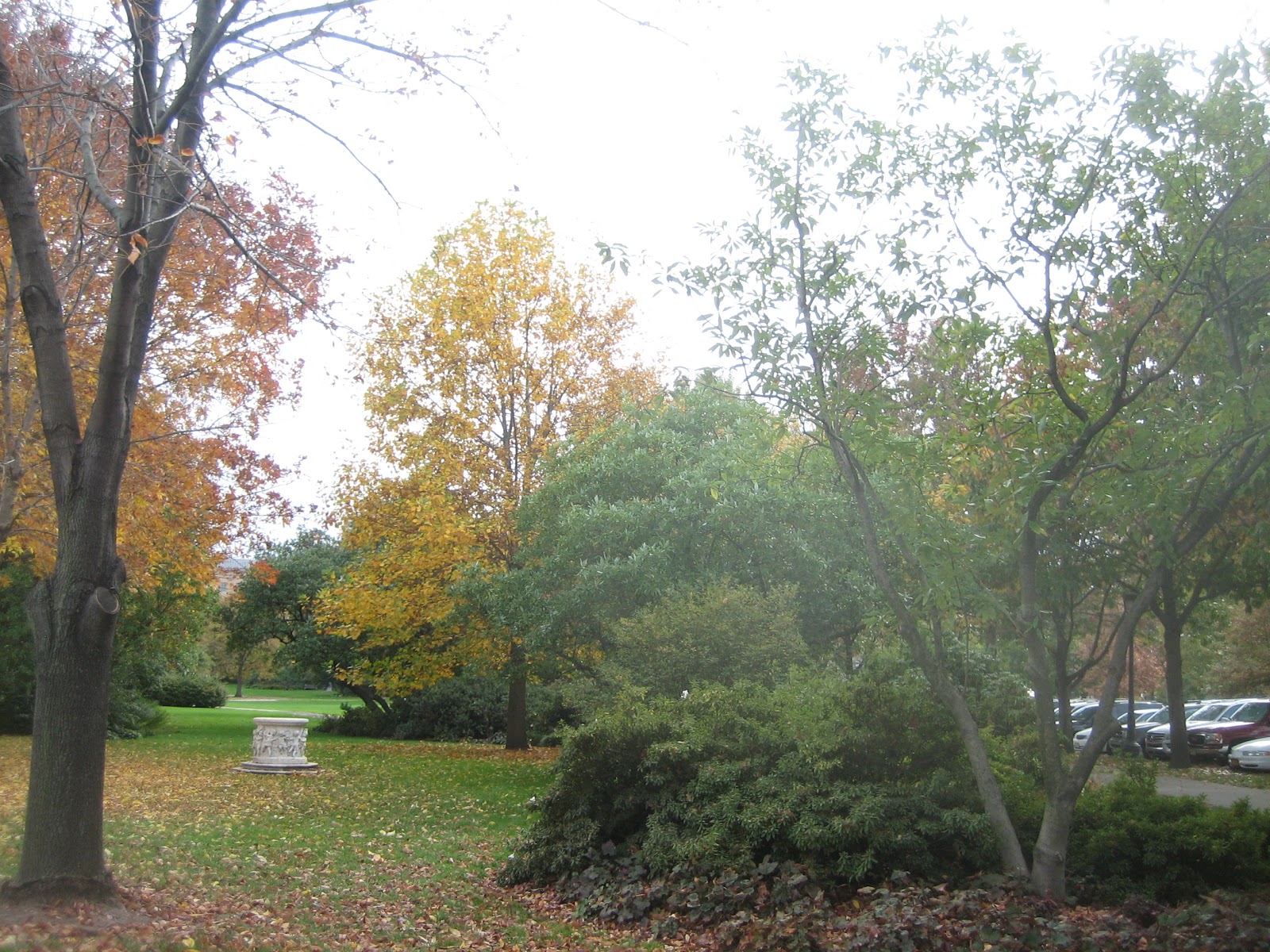


Crew teams were rowing yesterday for colleges from UPenn to Lafayette College, among others, which are now closing for tomorrow because of Hurricane Sandy.
The University of Massachusetts Amherst is closed tomorrow (Monday) and my husband's university in Connecticut has cancelled classes for the next three days.
What a difference a day makes!
What will await us as when we wake up tomorrow and on Tuesday?!
Friday, October 26, 2012
Healthcare Systems Engineering: Past, Present, Future -- Mark Your Calendars!
Next Friday, we will be hosting Dr. James C. Benneyan at the Isenberg School of Management at UMass Amherst.
Dr. Benneyan will be speaking on Healthcare Systems Engineering: Past, Present, Future.
Dr. Benneyan is a member of the INFORMS Speakers Program, which I have had the privilege of chairing for the past two years. The UMass Amherst INFORMS Student Chapter has invited him to our campus. We will also be celebrating the chapter's receipt of the magna cum laude award at the 2012 INFORMS Conference in Phoenix recently.
Dr. Benneyan is a UMass Amherst alum.
His talk will take place at the Isenberg School of Management in Room 106 from 2-3PM followed by a reception to celebrate the award. Please join us if you can -- it should be a fabulous, informative presentation.
The abstract of Dr. Benneyan's presentation and his bio are below.
Dr. Benneyan will be speaking on Healthcare Systems Engineering: Past, Present, Future.
Dr. Benneyan is a member of the INFORMS Speakers Program, which I have had the privilege of chairing for the past two years. The UMass Amherst INFORMS Student Chapter has invited him to our campus. We will also be celebrating the chapter's receipt of the magna cum laude award at the 2012 INFORMS Conference in Phoenix recently.
Dr. Benneyan is a UMass Amherst alum.
His talk will take place at the Isenberg School of Management in Room 106 from 2-3PM followed by a reception to celebrate the award. Please join us if you can -- it should be a fabulous, informative presentation.
The abstract of Dr. Benneyan's presentation and his bio are below.
Abstract
Problems
with our healthcare system are well-known and staggering, including
poor access, inefficient processes, equity disparities, practice
variability, and patient safety issues, all at enormous costs.
Healthcare expenditures now exceed $3 trillion annually
(nearly 18% GDP), increasing at almost double inflation and with ~30%
attributable to poor processes, error, and waste. Estimates of
medical errors include 1.4 million affected patients, 98,000 deaths,
and $8.8 billion annually, while avoidable readmissions, variability,
and non-compliance cost over $200 billion/year. The enormity of this
crisis has prompted the National Academy of Engineering, Institute of
Medicine, and others to advocate greater application of systems
engineering and operations research over a decade ago, yet not much
has changed. Management science, by whatever name, in fact has a long
history in health care, recently enjoying another renaissance within
academia. This talk is divided roughly into thirds - discussing the
state of healthcare today, history of healthcare IEOR and examples of
current applications, and important future directions and changes if
our field is to have more profound societal impact.
Bio
Dr.
James Benneyan is director of the Healthcare Systems Engineering
Institute at Northeastern
University, including undergraduate through doctoral academic and
internship programs and three centers
funded by the National Science
Foundation, Centers for
Medicare and Medicaid, and Veterans
Health Administration. He is a senior fellow at the Institute
for Healthcare Improvement, advisor to CMS’s Innovation center,
past vice president of the Institute for Industrial Engineers, and
serves on numerous editorial and advisory boards. Benneyan has
received nine research, teaching, and service awards; is a fellow of
the Society for Health Systems, Institute of Industrial Engineers,
and Healthcare Information and Management Systems Society; and has
served as principal investigator, director, or co-director in seven
research centers and laboratories totaling over $32 million in
funding. Prior to Northeastern, he was senior systems engineer at
Harvard Community Health Plan, an industrial engineer at IBM and
Digital Equipment Corporation, and consultant in a healthcare
engineering company.
Thursday, October 25, 2012
Will the 2012 Halloween Storm Be Even Worse than the 2011 Snowstorm?!
All of us who lived through the 2011 Halloween snowstorm in the Northeast of the US will never forget it. The photos below were taken in our neighborhood a year ago and I (re)post them as we come to mark the first anniversary. Some folks, including many friends, were without power for over 8 days -- just think -- no lights -- many without heat during unseasonably cold temperatures -- no Internet -- and no hot coffee. Food spoiled, people ran out of gas and food, and many really suffered.


This event and its response featured prominently in the course I taught last Spring on humanitarian logistics and healthcare since all students had experienced it and we heard from many professionals since it was a year of disasters. This past week I received emails from students, even from other universities, who were hoping that I would be teaching the course again at UMass Amherst in the Spring of 2013, but I am on sabbatical, so I will not be. Although I will be offering a condensed, intense version in Vienna, Austria, where I have been invited to teach it.
I wrote a tribute to the Isenberg School of Management and UMass Amherst, which had power throughout the multiday power outage that followed. We dined at UMass dining facilities (my students told me to come) and my husband and I hunkered down in the Isenberg School during the day and we huddled back in our heatless home at night. Luckily, our daughter's school, Deerfield Academy, had power throughout so she boarded there for 5 days and we are eternally grateful for this.


Below are photos that were taken at one of the UMass Amherst dining commons on Halloween night (needless to say there was no trick or treating that Halloween in Amherst and surroundings areas).

 The latest weather reports with one titled Hybrid of Sandy, Winter Storm Threatens East Coast (sounds like another winter storm in October -- deja vu) begins with the ominous paragraph:
Much of the U.S. East Coast has a good chance of getting blasted by gale-force winds, flooding, heavy rain and maybe even snow early next week by an unusual hybrid of hurricane and winter storm, federal and private forecasters say.
The article contrinues and then we have the following:
"It'll be a rough couple days from Hatteras up to Cape Cod," said forecaster Jim Cisco of the National Oceanic and Atmospheric Administration prediction center in College Park, Md. "We don't have many modern precedents for what the models are suggesting."
It is likely to hit during a full moon when tides are near their highest, increasing coastal flooding potential, NOAA forecasts warn. And with some trees still leafy and the potential for snow, power outages could last to Election Day, some meteorologists fear. They say it has all the earmarks of a billion-dollar storm.
Many of our neighbors, given the experiences of last year, have purchased generators. One started baking cookies yesterday, which she plan on delivering to neighbors with generators, in event of another power outage.
Hope for the best but prepare for the worst.


This event and its response featured prominently in the course I taught last Spring on humanitarian logistics and healthcare since all students had experienced it and we heard from many professionals since it was a year of disasters. This past week I received emails from students, even from other universities, who were hoping that I would be teaching the course again at UMass Amherst in the Spring of 2013, but I am on sabbatical, so I will not be. Although I will be offering a condensed, intense version in Vienna, Austria, where I have been invited to teach it.
I wrote a tribute to the Isenberg School of Management and UMass Amherst, which had power throughout the multiday power outage that followed. We dined at UMass dining facilities (my students told me to come) and my husband and I hunkered down in the Isenberg School during the day and we huddled back in our heatless home at night. Luckily, our daughter's school, Deerfield Academy, had power throughout so she boarded there for 5 days and we are eternally grateful for this.


Below are photos that were taken at one of the UMass Amherst dining commons on Halloween night (needless to say there was no trick or treating that Halloween in Amherst and surroundings areas).


Much of the U.S. East Coast has a good chance of getting blasted by gale-force winds, flooding, heavy rain and maybe even snow early next week by an unusual hybrid of hurricane and winter storm, federal and private forecasters say.
The article contrinues and then we have the following:
"It'll be a rough couple days from Hatteras up to Cape Cod," said forecaster Jim Cisco of the National Oceanic and Atmospheric Administration prediction center in College Park, Md. "We don't have many modern precedents for what the models are suggesting."
It is likely to hit during a full moon when tides are near their highest, increasing coastal flooding potential, NOAA forecasts warn. And with some trees still leafy and the potential for snow, power outages could last to Election Day, some meteorologists fear. They say it has all the earmarks of a billion-dollar storm.
Many of our neighbors, given the experiences of last year, have purchased generators. One started baking cookies yesterday, which she plan on delivering to neighbors with generators, in event of another power outage.
Hope for the best but prepare for the worst.
Subscribe to:
Posts (Atom)

 Posts
Posts