Showing posts with label perishable products. Show all posts

Wednesday, October 28, 2020

The Covid-19 Vaccine Cold Chain

On September 18, 2020 my article, "Keeping coronavirus vaccines at subzero temperatures during distribution will be hard, but likely key to ending pandemic," was published in The Conversation. I believed that it was imperative (and my Editors at The Conversation agreed) to start speaking to a broad audience on the necessity and importance of the cold chain to the effective distribution of the Covid-19 vaccines that are presently under development by major pharmaceutical firms.  There was much discussion and coverage in the press about the manufacturing aspects of the different vaccines as well as the R&D involved. However, there was very little being discussed about the distribution issues.  It was imperative to me  that emphasis (and associated challenges) on getting the approved vaccines ultimately from point A (manufacturing) to point B (point of administering of the vaccine), with the quality preserved in the transportation and distribution process, be brought to everyone's attention.

I have conducted research on perishable product supply chains from food to pharmaceuticals and even co-authored a book on the topic.

There are now 4 major Covid-19 vaccines that are far along in the trial phases and this is quite promising, with the Moderna and Pfizer vaccines requiring storage below freezing (Pfizer's to the extreme temp of -94 F) with those of Astrazeneca's and John & Johnson's needing to be in the range of 2-8 degrees C, which is standard for many vaccines. 

I have published multiple articles in The Conversation, but this one generated the greatest number of comments and even emails to me from around the globe, which continue. Clearly, the article that I wrote had touched on a very important issue, and I am also grateful that the article got reprinted in multiple media outlets.

Since the publication of my article, much has happened, and the momentum keeps on growing.

I had the pleasure of being interviewed by David Williams and John Driscoll for their Care Talk podcast, the link to which is below. 


Lori Hinnant, who is an Associated Press journalist, based in Paris, subsequently interviewed me for a fabulous article, "Vaccine storage issues could leave 3B without access."  My colleague at the Carey School of Business at Johns Hopkins, Tinglong Dai, was also interviewed for this article, which has been reprinted internationally in numerous outlets and also published in The Washington Post and ABCNews.


I have had additional interviews with journalists at The Wall Street Journal and am quoted in the article, "Covid-19 vaccines to be stored secretly under tight security," by Jared S. Hopkins on the security of the distribution of the vaccine. There is a slightly modified title in the hard copy version - a colleague kindly delivered his copy to my door!

I've done research with collaborators on freight security of highly value cargo and clearly the Covid-19 vaccines fall into this category!

And, on November 6, I will be featured on the NPR show The Pulse, based on an interview on the vaccine cold chain conducted by Alan Yu.

One of the goals of my Conversation article was to make the cold chain distribution issues more visible in order that appropriate preparedness measures would be taken, both nationally and globally, so that, once vaccines are approved, time is not wasted and the vaccines do not go to waste as well.

Many thanks to all those who have responded, including the amazing journalists, who continue to keep this important topic in the news!

And, just before publishing this blogpost, I received another inquiry from a journalist requesting an interview because of my article in The Conversation!


Monday, March 14, 2016

Started My Spring Break By Speaking at the University of Buffalo

While many students and faculty were heading to warmer climates at the beginning of our spring break, I was off to speak at the University of Buffalo. I had been invited to give a Praxair Seminar in the Department of Industrial and Systems Engineering.The title of my presentation was: Supply Chain Networks Against Time: From Food to Pharma.

My great host there was Professor Chase Murray, whose research involves drones and logistics, so how could I possibly refuse? Also, I know quite a few faculty who have spoken or will be speaking in this seminar series this year, including Professor Mike Trick of CMU, Professor Carolina Osorio from MIT, who was my host at MIT when I spoke there this past December, and even my neighbor and Engineering colleague at UMass Amherst, Professor Sundar Krishnamurty. who is the Chair of the Department of Mechanical and Industrial Engineering! Plus, I had never been to Buffalo before.

To get to Buffalo, I had to fly via Southwest to Baltimore and then onwards to Buffalo. Ridiculous to have to fly south to end up north eventually. I missed a nice dinner on Thursday night since there was a delay in Baltimore for my flight to Buffalo. Everything else worked smoothly and I had nice seat mates on all of my flights on Southwest. If I had continued on the same plane that I flew from Bradley to Baltimore I could have gone on to Orlando and probably seen at least one of my students who was off to Disney for spring break.  My students had hoped that I could arrange a class trip there since operations research is very important at Disney.

The logistics for my talk were incredibly well-done. Having a nice lunch was pleasant after my talk and meeting very bright students was also a highlight. Special thanks to Professor Jamie Kang for picking me up at the Ramada Inn on Friday and for driving me to the University and for also meeting with me. I was honored when she asked me to autograph her copy of the Supernetworks book that I co-authored with Professor June Dong and, of course, I did so. It was also wonderful to meet with Professor Chi Zhou who is doing fascinating research on biological (tissue) 3D printing and with Professor Alex Nikolaev, who is a good friend of Professor Vladimir Boginskii's in Florida, whom I also know quite well. Accompanying us to lunch was Professor Jun Zhuang. Afterwards I met with Professor Jose Walteros, who was Professor Panos Pardalos' PhD student at the University of Florida and who is from Colombia.
I even got to fly a drone, courtesy of Professor Chase Murray, who is a great instructor. Another highlight was meeting the new Chair of the Department of Computer Science, who knows my collaborators on the NSF Future Internet Architecture project and our NSF EAGER grant, including my UMass colleague, Associate Dean Professor Tilman Wolf.
I was very impressed by the outstanding research at the University of Buffalo and thank so many for coming to my presentation, although it was also the Friday before their spring break. Although I did not see Professor Rajan Batta since I had missed the dinner and he was off to Chile, I had a great time speaking with his students on topics that included global health.

I did not have time to cover all the material in the slides that I had prepared. Hence, I have posted them for those who would like to look over them at their leisure.
There was no snow in Buffalo and the temperature was about 50 degrees. Of course, we reminisced about last winter, which was the worst one in 180 years in the northeast, and, thank goodness, this one was so easy on us.

Thanks to the Department of Industrial and Systems Engineering for the wonderful hospitality! I was even presented with the gift below.
Happy spring break!

Today I will be speaking at the MITRE Corporation in Bedford, MA on an entirely different topic - that of cyber crime and cybersecurity.

Thursday, February 18, 2016

Great Visit to the Yale Institute for Network Science

Yesterday I had the great pleasure and honor of delivering a Distinguished Lecture at the Yale Institute for Network Science (YINS). The title of my presentation was: Supply Chain Networks Against Time: From Food to Pharma.


My full presentation can be downloaded here.

I had been invited to speak at Yale by the Co-Directors of  YINS, Professors Nicholas Christakis and Daniel Spielman, and was delighted to be introduced by the INFORMS President, the one and only Professor Ed Kaplan, whose latest column is a must read. YINS is thriving under the visionary leadership of Christakis and Spielman.

The wonderful attention to detail surrounding my visit I am most grateful for and extend special thanks to Ms. Emily Hau. Not only did I have an office, but there was even a welcome sign and even gifts. Plus, there was a luncheon spread that the audience could indulge in before and during my talk, which was videotaped.

The lecture took place on the third floor of  17 Hillhouse Avenue on the Yale University campus. Professor Ed Kaplan introduced me.
Given the composition of the affiliated faculty, postdocs, and students of YINS, which include not only MDs but also PhDs from disciplines such as computer science, sociology, operations research, electrical and computer engineering, biology, public health, as well as other (all lovers of networks),  I wanted to make sure that the topics I covered would appeal to such a broad audience.

A delightful surprise during my presentation was having Cyrus, the YINS mascot, a highly intelligent German Shepherd who loves chasing after laser beams of remote pointers, show up o make a command appearance right next to me! I had to have a photo taken with him.
After my presentation I enjoyed speaking to faculty and students and had additional appointments even with MD/PhDs, a sociology professor, and a postdoc in Electrical and Computer Engineering.

The day was filled with intellectual delights - from discussions on network models of the shared economy and new currencies to supply chains of pharmaceuticals in Africa - I wish that the day would not end.

And then to make a perfect ending to a fabulous day, we had dinner at the Union League Cafe. Walking through the Yale University campus was also a highlight of the day.

The ambience at the restaurant was perfect - with marble columns and Tiffany glass windows and the company magnificent - Professors Daniel Spielman, Ed Kaplan, and Leandros Tassiulas.

I marvel at what YINS has accomplished and look forward to its continuing growth and the breaking down of barriers between disciplines through Network Science and the building of new communities. Congratulations and thanks to its outstanding Directors: Professors Christakis and Spielman.

And I was even given souvenirs!

Friday, January 15, 2016

Looking Forward to Speaking at Yale at its Network Science Institute

The new semester begins at UMass Amherst on Tuesday. It will be a very busy semester but a thrilling one. Besides teaching two courses at the Isenberg School, I will also be hosting speakers not only in my classes but also through the UMass Amherst INFORMS Student Chapter as its Faculty Advisor. Plus, I will be traveling to give invited lectures at various universities and companies.

I very much enjoy traveling to different locations and giving talks and always come back with new ideas, an expanded professional network,  wonderful memories, and, sometimes, even adventures. Plus, what could be better than interacting with faculty, students, and practitioners that come to your presentations?

The first invited seminar that I am giving in 2016 will be at Yale University. Although I have given talks at such Ivy League schools (at some of these multiple times) as: Harvard, Brown, Cornell, and UPenn, I have never before spoken at Yale. For this reason, and quite a few others, I am quite excited about speaking there on February 17, 2016.

Since my host at Yale will be the Network Science Institute, it will be extra special to be surrounded by those who share my passion for networks!

I am speaking in the Yale Institute for Network Science (YINS) Distinguished Lecture Series and the title of my presentation is: "Supply Chain Networks Against Time: From Food to Pharma." The abstract and announcement YINS has already graciously posted.  My presentation will be videotaped. The lecture and Q&A will take place from noon until 1:30PM.

I have started working on my presentation, which I will be polishing over the next couple of weeks.
The Directors of the Institute for Network Science are Professor Nicholas A. Christakis and Professor Daniel Speilman. The Executive Director is Dr. Tom Keegan. The Faculty in Residence at the Institute represent many different disciplines from Engineering and Computer Science to Sociology, so I will do my best to have something fascinating for each of them. The Directors have done extraordinary research that has also been widely covered by the media. The YINS Distinguished Lecture Series has hosted such network science colleagues as Albert-László Barabási (whom I had dinner with on October 30,2015), Matthew O. Jackson of Stanford, and Jennifer Chayes of Microsoft Research, among others.

Also, I expect to see the INFORMS President, Professor Ed Kaplan, there, which will be an additional highlight of my visit to Yale.

Thursday, June 25, 2015

First Review of Our Book, Networks Against Time: Supply Chain Analytics for Perishable Products, and It Is Great!

In my previous blogpost, I wrote about books that I am reading this summer, and I mentioned that one of the books that I had read (all 21 chapters of it) was the Handbook of Global Logistics, edited by James H. Bookbinder. I reviewed this book for the European Journal of Operational Research.

Authors always anxiously await reviews of their books and I certainly am no different.

My most recent book (I am writing another one), which was published by Springer in 2013, is Networks Against Time: Supply Chain Analytics for Perishable Products. It was co-authored with two of my former doctoral students, Min Yu, who is a Professor at the School of Business at the University of Portland, and Professor Amir H. Masoumi, who is a Professor at the School of Business at Manhattan College, along with "the other Professor Nagurney," my husband, Ladimer S. Nagurney, who is a Professor of Electrical, Computer and Biomedical Engineering at the University of Hartford.
The first review of our book is in and it was written by Professor Anna Corinna Cagliano of the Department of Management and Production Engineering, Politecnico di Torino, Italy. The review was published in the Taylor and Francis journal, Production Planning & Control: The Management of Operations.

You can read the first page of the review online here. The first page overviews the organization of the book and its contents. On the second page of the review,  Professor Cagliano writes: In my opinion, this book is a valid contribution to the discipline of supply chain management in the time-sensitive product field because it provides a systematic and analytic framework of analysis which actually lacks in the existing literature.

Professor Cagliano also says in her review of our book: Both researchers and practitioners might benefit from reading the book. As a matter of fact, it can guide researchers in advancing knowledge about the topic by developing network problems and deriving associated solutions in various supply chain and competitive environments. In this way, they can define approaches that specifically capture the perishable and time-sensitive properties of products and services and the impacts they have on supply chain dynamics. 

In addition, according to Professor Cagliano:  Practitioners, not only in the analysed industries, but also in other sectors, can find the present work as useful reference in understanding the structure and the behaviour of their supply chains and formulating appropriate management strategies to either establish or retain a competitive advantage in complex global marketplaces. To this end, they can be inspired by the numerous numerical examples and case studies provided by the book.

My co-authors and I are very appreciative of Professor Cagliano's careful reading of our book and of her appreciation and understanding of its contributions. We thank her accordingly.


Friday, August 2, 2013

Vulnerability and Resilience of Supply Chains

Resilience is a theme that resonates among researchers, practitioners, and policy-makers. Michael Batty, in his editorial,  Resilient cities, networks, and disruption,  in the latest issue of Environmental & Planning B, argues that: Resilience is a more precise term than sustainability and, although it has some rather ill-defined properties, resilience can be defined relatively unambiguously, making it somewhateasier to apply to complex systems like cities.

I would argue that sustainability is a key building block of resiliency whether it comes to cities or supply chains, which span our globe and, interestingly, my paper, "Design of sustainable supply chains for sustainable cities," is now in press in Environment & Planning B.

I have written a lot on network vulnerability, including that of supply chains, as well as robustness and synergies associated with partnerships and teaming and even mergers and acquisitions. So, when the invitation to attend the ETH Risk Center Workshop on Vulnerability and Resilience of Supply Chains -- see information below came -- I was very intrigued and accepted to speak.

I am honored to be in such a great lineup and I am sure that there will be many stimulating presentations and discussion!

The talk that I am preparing for this workshop is: Networks Against Time: From Food to Pharma. I will discuss some o fthe major methodologies, models, and applications in our latest book Networks Against Time: Supply Chain Analytics for Perishable Products.

Hope that some of you can join us in Zurich, Switzerland for the workshop next month! 

Risk Center: Vulnerability and resilience of supply chains

Workshop 2013 - ETH Risk Center: Vulnerability and resilience of supply chains

ETH Zurich (Switzerland), September 12-13, 2013

Topics

  • Supply chains as economic networks and “critical infrastructures”
  • Response to external shocks and inherent instabilities
  • Risk reduction, disaster response management, and insurance issues
The following questions will be addressed:
  • What kinds of hazards are there? What are the challenges?
  • What does the interaction of regulators and the industry look like during a critical event?
  • What are the critical parts in supply chains seen from the different perspectives? How can one identify them, what could be improved?

Speakers

Program

The workshop will run for two days, with an evening dinner cruise on Lake Zurich after the first day. Two sessions each day will consist of talks by invited speakers and there will be a panel discussion at the end of each day.

Poster session

The poster session offers an opportunity for an interactive presentation of your work.
If you want to present a poster, please submit a pdf file of it (max. 5 megabytes) to info-riskcenter@ethz.ch. The best posters will be selected for the poster exhibition by the program committee. The submission deadline is July 31.

Registration

Please click here for your registration to the workshop. There is a participation fee of 200 CHF. Note: The number of participants is limited.

Organizing Committee

Organizing Team

The workshop is sponsored by the ETH Risk Center and the Zurich Insurance Group.
ETH_Risk_Center
ZurichInsLogo
 

Wednesday, April 17, 2013

Networks Against Time and Thanks to the Penn State School of Graduate Professional Studies

I have returned from the Philly area. I flew back to Bradley Airport at Hartford/Springfield this afternoon via USAIR and actually had legroom and a very pleasant flight.

Yesterday evening, I delivered a talk, "Networks Against Time: From Food to Pharma," at Penn State's School of Graduate Professional Studies. My host was Dr. Patrick Qiang, who is also my co-author of the book, Fragile Networks: Identifying Vulnerabilities and Synergies in an Uncertain World.
 
 The campus had done a super job publicizing my talk.

I focused on models that we had developed and are synthesized and summarized in our new book: Networks Against Time: Supply Chain Analytics for Perishable Products using optimization and game theory in a generalized network framework with arc multipliers to capture the physics/chemistry of the perishability of products over space and time from food to medical nuclear products to pharmaceuticals.

In my presentation, towards the end, I included a slide on our latest paper, which is a supply chain network model for disaster relief.


The audience was terrific -- interesting questions -- thanks -- and some came from Delaware and Maryland. It was wonderful to speak to an audience of academics and practitioners and even the INFORMS Philadelphia Chapter had advertised my presentation so it was great to have representatives from the chapter also in attendance.

Thanks to all those who came to my presentation and thanks to this Penn State campus for the hospitality!

I even got to meet with its Chancellor, Dr. Ctraig Edelbrock.

As I wrote in my previous blogpost, We Must Go On, I dedicated my talk to the Boston Marathon bombing victims. I had written that one friend was not accounted for. Since the post was written, I have heard that, at the 25th mile, which she had reached at just over 4 hours, she was told to stop running. This was good news on a horrific day filled with tragedy and complete senselessness and cruelty

On my flight today I especially appreciated the OpEd in The New York Times written by Thomas L. Friedman, Bring on the Next Marathon, And, the UMass Amherst sports teams doctor, Dr. Pierre Rouzier, was at the Boston Marathon as a medical volunteer -- his fifth time, and he assisted victims, as reported in today's Daily Hampshire Gazette. Also, my husband's cousin, is a faculty member at Harvard Medical School and an emergency room physician at Mass General Hospital.

Speaking of Chancellors and University Presidents, as a Radcliffe Fellow, I am a Harvard alumna, and we were emailed a message by the President of Harvard, Dr. Drew Gilpin Faust. In her letter, she concluded with: The Boston Marathon is an event that demands resilience. As we struggle to make sense of yesterday’s events, I urge all of us to draw on the strength of the Harvard community and the support of colleagues and friends.

The Chancellor of UMass Amherst, Dr. Kumble Subbaswamy sent out a message to UMass Amherst.

His concluding words in it were: In the days ahead we must stand together as a community to extend our support to all affected by this terrible tragedy.

Such events affect all of us as citizens of the free world.


Monday, April 8, 2013

Networks Against Time -- From Food to Pharma

Last week I spoke at the University of Oklahoma and had wonderful experiences and now I am preparing a presentation that I will be giving next week in the Philadelphia area.

I will be speaking at the Penn State's School of Graduate Professional Studies in Great Valley.

The title of my talk is Networks Against Time: From Food to Pharma and the campus has prepared the nice poster below.

More information on my talk is available here.

The INFORMS Philadelphia Chapter had also invited me to speak so I hope to see additional ORMS folks in the audience since my talk is open to the public.

I thank Professor Patrick Qiang of Penn State Great Valley for inviting me to speak and look forward to sharing insights in my talk from the research that we did that is described in the book Networks Against Time: Supply Chain Analytics for Perishable Products.

Friday, March 29, 2013

Felt Like the Chairman of General Motors

Now that I am back from another wonderful stint in Europe I have some time to reflect on my great experiences as a Visiting Professor in Sweden and as a Guest Professor in Austria.

I have blogged over the past several weeks about academic and travel experiences in Europe but today I would like to share with my readers some photos.

On March 12, 2013, I gave a big seminar at the Vienna University of Economics and Business (WU), after teaching that morning the Humanitarian Logistics and Healthcare course that I was offering there. The seminar was on Perishable Product Supply Chains in Healthcare: Models, Analysis, and Computations and  the nice announcement for it is online here.  My hosts during my stay in Vienna were Professor Manfred Fischer and Professor Tina Wakolbinger with great hospitality also provided by Dr. Petra Staufer-Steinnocher.

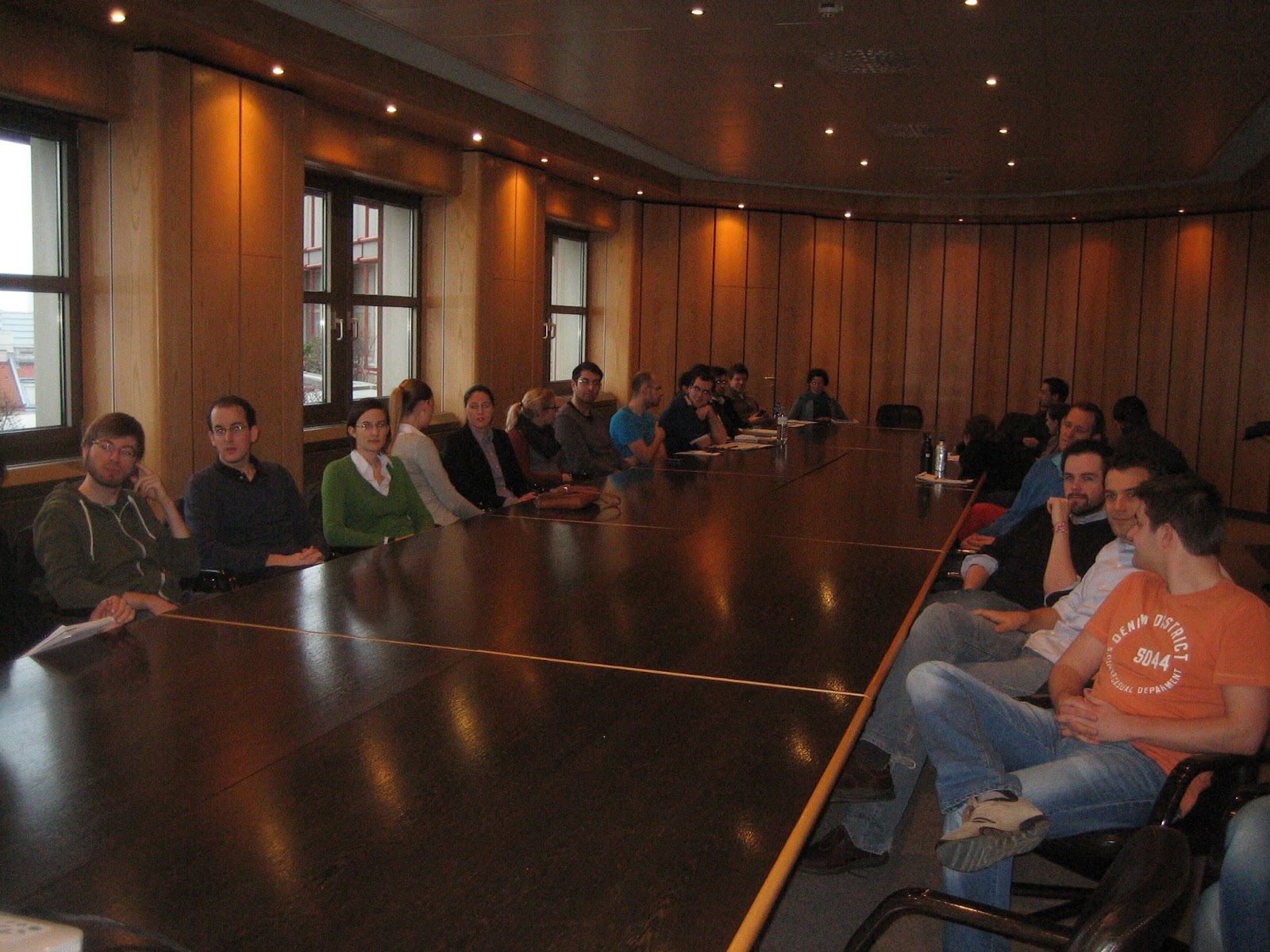
I was impressed by the seminar room, in the photos below, with the largest corporate-looking table I had ever seen.
 

I felt like I was the Chairman of General Motors (GM) speaking to my board!

I must admit that I do have a connection to one former Chairman of GM and that is to Mr. John F. Smith Jr. (or "Jack" when we converse and correspond). I hold the John F. Smith Memorial Professorship of Operations Management at the Isenberg School of Management, which is named after his father. Both graduated from UMass Amherst and Jack studied Operations Management, whereas his father.had graduated from the Stockbridge School at UMass Amherst. Jack had also been the President and the CEO of GM.

He is a fabulous role model and I am sure that he would be delighted to hear that one of my former PhD students, Dr. Tina Wakolbinger, is now the Director of the Supply Chain Management Institute at  WU in Vienna.
 

And you can read from The New York Times what Jack Smith did once he stepped down from the board of GM. Transportation, whether by land, or air, is simply in our blood!

I am preparing a package to mail to him, which will include my new book:

As for alternative modes of transportation that I saw in Vienna, I liked those below.

Enjoy the flowers from Vienna and Happy Spring!

Thursday, February 28, 2013

Looking Forward to Speaking on Supply Chains in Sweden and in Austria

My suitcases are (almost) packed and soon I will be heading back to Europe as part of my sabbatical this year.

And, the lectures that I will be giving on supply chains  as well as a short course on humanitarian logistics and healthcare are prepared and I am very much looking forward to giving them.

I am bringing a few copies of our new book, "Networks Against Time: Supply Chain Analytics for Perishable Products,"  just published by Springer Business and Science Media New York, to give to my hosts at the School of Business, Economics and Law at the University of Gothenburg in Sweden and to also donate a copy to the library.

On Monday, March 4, 2013, I will be presenting a seminar, "Grand Challenges and Opportunities in Supply Chain Networks: From Analysis to Design," at the Chalmers University of Technology, which is also in Gothenburg. This seminar is part of the Optimization Series.
 
 I will have a week to meet with my wonderful colleagues and the students in Gothenburg and then I will be off to Vienna, Austria, where I will speak on one of the themes of our new book: "Perishable Product Supply Chains in Health Care: Models, Analysis, and Computations," at the Vienna University of Economics and Business. The title of my talk in Vienna, which is part of the research seminar series of the Research Institute for Supply Chain Management is: "Perishable Product Supply Chains in Health Care: Models, Analysis, and Computations."

I have several wonderful colleagues there, including Professor Manfred Fischer, and my former doctoral student, Professor Tina Wakolbinger, who recently visited us at the Isenberg School and also took part in the AAAS Sympsoium on Dynamics of Disasters that I organized and which took place February 17 at the Hynes Center in Boston.
 

While in Vienna, I will also teach an intense course on Humanitarian Logistics and Healthcare. I am told that the students who have registered for my course are from many different countries so this should be a very interesting and timely course.

Thursday, October 4, 2012

How to Celebrate Journal Article Publications


I usually try to motivate my doctoral students with carrots, since sticks belong on trees and in happy dogs' mouths.

Here, in Gothenburg, Sweden, or at least at the School of Business, Economics, and Law at the University of Gothenburg, in my group, which is located in Tower D (consisting of transport and logistics and financial management and some economics folks), there is a tradition that may work as an incentive to do research and publish.

When someone in the group publishes a paper, we celebrate with cake!

Today, we will be celebrating the publication of two of my papers.

I will be bringing additional treats that I have located in one of the wonderful restaurants in Haga, which is close to the business school.

The event takes place at 3PM.

I have been asked to first highlight the contributions in the two papers that I co-authored that acknowledge support from the school where I am now a Visiting Professor of Operations Management.

The first paper, "Competitive Food Supply Chain Networks with Application to Fresh Produce," co-authored with Min Yu, who is now an Assistant Professor at the University of Portland, in Oregon, is in press in the second issue of the European Journal of Operational Research in 2013 and is available online http://www.sciencedirect.com/science/article/pii/S0377221712005747

and the second paper, "Medical Nuclear Supply Chain Design: A Tractable Network Model and Computational Approach," co-authored with the other Professor Nagurney, my husband, was just published in the International Journal of Production Economics: http://www.sciencedirect.com/science/article/pii/S0925527312003155   

And now for some photos! 

The event is now over and the cakes and treats were delicious but they were consumed rather quickly.

Our wonderful secretary here, shared the photos belowm which were also sent to a faculty member who is at a conference in Saudi Arabia to get him envious.


Sunday, June 17, 2012

Off to Stockholm to Speak at the Royal Institute of Technology -- KTH

It is a wonderful time to be living in Sweden (although, regretfully, Sweden lost its recent Euro 2012 soccer match, and we were hoping for some major celebrations).

It is close to midsommer, when the Swedes recognize the beginning of summer and have many get-togethers with family and friends, often in their summer homes, which tend to be small red cottages with, if possible, views of the sea.

When the sun is out, the Swedes are out and I love the emphasis on being outdoors in this country. Even in Gothenburg, where I have been for several weeks, the cafes have blankets on the chairs to warm us up because it is great to be sitting outside to dine.

Today, I will be taking the train from Gothenburg to Stockholm. My family and I lived in Stockholm, and I could not resist an invitation to speak at the Royal Institute of Technology (KTH), which had hosted me when my daughter was only 2 with visits back when she was 4 and 7. It will be wonderful to see former colleagues in transport, regional science, and optimization there. I also plan on going back to the Wenner Gren Center off of Haga Park, where we lived in Stockholm and made friends from around the globe  and which I have written about.

I will be speaking at KTH tomorrow on perishable product supply chains in health care and will be describing some of our recent research on oligopolistic competition in pharmaceuticals, blood supply chains, as well as medical nuclear supply chains, which combines operations research and network economics.

Sweden has always felt like my second home -- its natural beauty, architecture, emphasis on sustainability, elegant design, and its fascinating history and architecture plus its people and food captivate me.

Friday, March 16, 2012

Medical Operations Research and More

What an amazing week it has been!

Last Friday, at UMass Amherst, several of my colleagues and I from the Isenberg School spoke at a Risk Management and Optimization Workshop, as part of a new funded project that we are researching through the UMass Innovation Institute. My presentation was on Networks, Performance Assessment, and Vulnerability Analysis, and, given the recent power outages in Boston, which affected even the Prudential Center, it was certainly timely.

Then, last Saturday, I flew to Gothenburg, Sweden, where I have been appointed a Visiting Professor. I just gave my fourth presentation since arriving at the School of Business, Economics and Law at the University of Gothenburg.

My presentation today was part of the Finance Seminar Series and I spoke on Financial Networks and Disruption Management. The audience was terrific and included faculty, postdocs, doctoral students, and even an Associate Dean, who I mistook for a student.

Next Tuesday, I will be giving a talk at the Chalmers University of Technology, which is also located in Gothenburg, Sweden.

According to the announcement, which is now posted, I will be speaking on Medical Operations Research. I think that the title got changed as the electrons crossed the Atlantic Ocean, but I do like it. The title of my presentation, however, is actually: Perishable Product Supply Chains in Health Care: Models, Analysis, and Computations.

In one week, and on opposite sides of the Atlantic, I will have given 5 talks and the one at Chalmers will make it 6. I am enjoying the questions and discussions tremendously.

Saturday, November 5, 2011

The Irony of Speaking on Perishable Supply Chains on Friday Only to Throw Out All the Food in the Fridge on Wednesday

What a week it has been!

On Friday, October 28, 2011, I had the pleasure of being hosted by the Management Science group at the Desautels Faculty of Management at McGill University, where I spoke on Perishable Product Supply Chains with a focus on healthcare.

In my talk, I presented our recent research on such perishable products in healthcare as vaccines and medicines, as well as medical radioisotopes used in cancer diagnostics and cardiac imaging, and even blood.

The mathematical formulations that I discussed, which ranged from competitive oligopoly models with brand differentiation for vaccines and medicines to system-optimization network models for blood supply chains, with minor modifications and adaptations, can also be used for such perishable products as food.

My presentation, in pdf format, can be downloaded here.


Today is the seventh full day after the October snowstorm hit our area on October 29, 2011 and, unbelievably, still thousands in Massachusetts are without electricity.

Our neighborhood's electricity got restored after 73 hours without power.

However, all of the food in our fridge had spoiled and had to be discarded.

One of my Finance colleagues had the foresight to purchase insurance for this kind of disaster and he will recover hundreds of dollars to compensate him for the perished/spoiled food in his fridge.

Wednesday, October 26, 2011

Perishable Product Supply Chains in Health Care

I will be speaking at McGill University in the Management Science research seminar this Friday.

I am very much looking forward to being back at McGill, having been there only this past August at the terrific INTRIM Conference, which focused in integrated risk management in operations and global supply chains.

The title and abstract of my presentation are below.

Title: Perishable Product Supply Chains in Health Care: Models, Analysis, and Computations

Abstract: In this presentation, I will describe our recent research on perishable product supply chains ranging from pharmaceutical supply chains with branded products to medical nuclear supply chains and blood supply chains. I will discuss the generalized network frameworks under system-optimization as well as in the case of oligopolistic competition. Waste management and sustainability issues will also be highlighted.

The OM/MS group at McGill is fabulous and I will be hosted by Professor Vedat Verter and Mehmet Gumus.

Wednesday, September 14, 2011

Medical Waste, Sustainability, and Operations Resarch

For many months now, we have been researching health care supply chains, with a focus on perishable products ranging from blood supply chains to medical nuclear supply chains.

In our research, we have, specifically, emphasized the impact of improper disposal of medical wastes on the environment. Our mathematical models are generalized network models in which the arc multipliers capture features of the perishable, but, life-saving, products that we are studying.

Today, CBS News is reporting on an investigation by a human rights official of the United Nations that noted that: nations pay "too little attention" to their tons of waste each year — waste that contains pathogens, blood, low levels of radioactivity, discarded needles, syringes, scalpels, expired drugs and vaccines. In many poorer nations, discarded chemicals and pharmaceutical wastes go straight to city dumps, down hospital toilets into water systems, or are burned in cement kilns that just add to dioxide emissions.

Our research on blood supply chains, from the operations management aspects, to the design, is written up in our papers:

Supply Chain Network Operations Management of a Blood Banking System with Cost and Risk Minimization
Anna Nagurney, Amir H. Masoumi, and Min Yu, to appear in Computational Management Science.

Supply Chain Network Design of a Sustainable Blood Banking System
Anna Nagurney and Amir H. Masoumi, in Sustainable Supply Chains: Models, Methods and Public Policy Implications, T. Boone, V. Jayaraman, and R. Ganeshan, Editors, Springer, London, England, 2011, in press.

Our research, to-date, on medical nuclear supply chains, which I presented recently at the INTRIM Conference at McGill University, is reported in the paper:

Medical Nuclear Supply Chain Design: A Tractable Network Model and Computational Approach
Anna Nagurney and Ladimer S. Nagurney.

According to the report, the UN investigator, Cailin Georgescu, recommended that all nations adopt better laws for managing medical waste and replace incinerators with "more environmentally friendly and safe methods of disposal" such as autoclaving, which uses pressurized steam and superheated water to disinfect waste and medical equipment.

Next week I will be speaking on Sustainability: Methodologies with Some Applications at the SAMSI Workshop, which is part of the 2011-2012 Program on Uncertainty Quantification.

One thing that I am certain about is that we need to take better care of our environment not only for us and our children but for future generations as well.

Clearly, we, in the Operations Research community, understand this, and are doing something about it. Just read Dr. Ian Frommer's wonderful blog post on the course that he has taught on Sustainability.

On my list of new courses that I am developing are courses entitled:

Humanitarian Logistics and Healthcare and

Sustainable Systems.

Sunday, February 20, 2011

Blood Supply Chains, Risk Minimization, and Healthcare Operations

Blood is a life-saving "product" and, at the same time, it is highly perishable. Its delivery is also time-sensitive. In addition, since blood is not manufactured, there is risk associated with the supply side of the blood supply chains; that is, the blood drive sites.

Blood service operations are a key component of the healthcare system all over the world. According to the American Red Cross, over 39,000 donations are needed everyday in the United States, alone, and the blood supply is frequently reported to be just 2 days away from running out. Of 1,700 hospitals participating in a survey in 2007, a total of 492 reported cancellations of elective surgeries on one or more days due to blood shortages. While for many hospitals, the reported number of blood-related delays was not significant, hospitals with as many days of surgical delays as 50 or even 120 have been observed. Furthermore, in 2006, the national estimate for the number of units of whole blood and all components outdated by blood centers and hospitals was 1,276,000 out of 15,688,000 units.

Considering also the ever-increasing hospital cost of a unit of red blood cells with a 6.4% increase from 2005 to 2007 further highlights the criticality of this perishable, life-saving product. The New York Times reported in 2010 that this criticality has become more of an issue in the Northeastern and Southwestern states in the United States since this cost is meaningfully higher compared to that of the Southeastern and Central states. Moreover, hospitals were responsible for approximately 90% of the outdates, with this volume of medical waste imposing discarding costs to the already financially-stressed hospitals.

In the paper, "Supply Chain Network Operations Management of a Blood Banking System with Cost and Risk Minimization," my doctoral students, Amir Masoumi, and Min Yu, and I, developed a network optimization model for the complex supply chain of human blood. In particular, we considered a regionalized blood banking system consisting of collection sites, testing and processing facilities, storage facilities, distribution centers, as well as points of demand, which, typically, include hospitals.

Our multicriteria system-optimization approach on generalized networks with arc multipliers captures many of the critical issues associated with blood supply chains such as the determination of the optimal allocations, and the induced supply-side risk, as well as the induced cost of discarding the waste, while satisfying the uncertain demands as closely as possible. Indeed, since it may be difficult to predict the demand, it is essential to capture the uncertainty associated with the demand in an appropriate modeling and computational framework.

This research we will be presenting at the POMS Conference in Reno, Nevada, as well as at the Northeast Regional INFORMS Conference at UMass Amherst.

The supply chain network model for the optimization of blood supply chains is part of our growing body of research on healthcare-oriented supply chains with applications even in disasters. For example, results in the study, "Supply Chain Network Design for Critical Needs with Outsourcing," co-authored with Min Yu and Dr. Patrick Qiang, can also be applied in disaster relief.

It is especially gratifying to see students so engaged in research that can have a positive societal impact!