Showing posts with label security. Show all posts

Thursday, February 13, 2020

Outstanding Inaugural INFORMS Security Conference in Beautiful Monterey, California

I arrived back in Amherst at 1AM this morning, having flown from Monterey, California to Denver, Colorado and then to my "local" airport - Bradley.

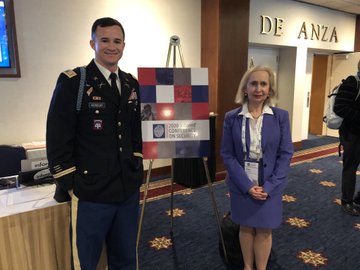
I had been in beautiful Monterey to take part in INFORMS' inaugural Conference on Security and it was outstanding.  The official dates of the conference were February 9-11, 2020.  Luckily, I am on sabbatical this semester, so this was manageable for me and I was very much looking forward to presenting at this conference. It was also quite nostalgic, since the first talk I ever gave at a conference was at the Naval Postgraduate School in Monterey (which was also heavily involved in this conference) at an MIT/ONR conference organized by Professor Michael Athans of MIT. I was then working in the defense sector, focusing on the navy, in Newport, Rhode Island, while pursuing my Master's at Brown University. I was the only female presenter at that conference.

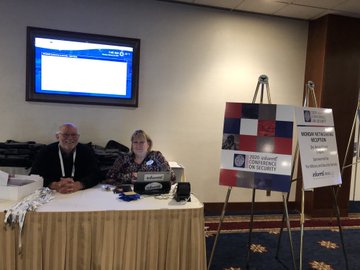
First, I would like to congratulate the organizers of the INFORMS Security Conference: Mr. Harrison Schramm, Captain Brian Morgan, and Dr. Paul Nicholson, on its success! The format was excellent - 50 minute presentations (8 or so parallel sessions), with lunch and coffee provided, and ample time for discussion. Everyone was very gracious and friendly.  One "marker of the success" of this conference was the number of INFORMS Fellows in attendance, including: Gerry Brown, Stephen Robinson, Vicki Bier, Michael Fu, Sheldon Jacobson, and me :) If I missed someone, do let me know! Attendance was about 100 (I was told) and consisted of faculty, military, practitioners from various companies, government, and even some students that I met.

The plenary talks were great as well as a risk analysis panel conducted by Gerry Brown and Sam Savage. 
Image

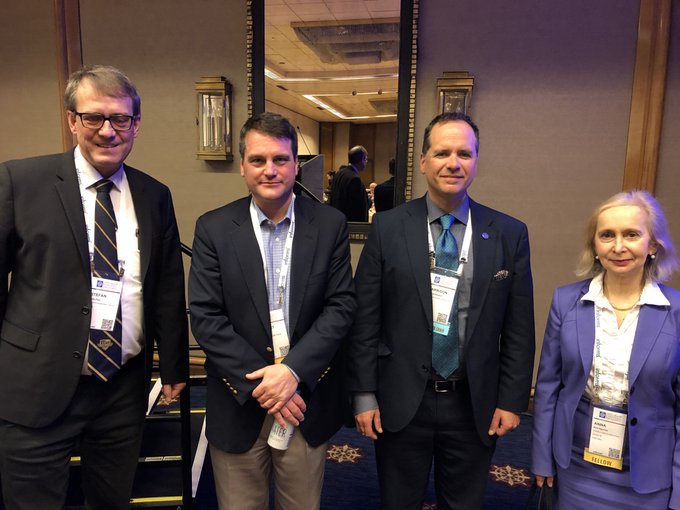
It was thrilling to even see Stefan Pickl, who traveled all the way from Germany for the conference. He had been a participant in the latest Dynamics of Disasters conference that I co-organized with Panos M. Pardalos and Ilias S. Kotsireas, and which took place last summer in Kalamata, Greece. We are now co-editing a new volume, to be published by Springer.
Image
In the above photo I am standing with Stefan Pickl, Rob Dell, who gave one of the plenary talks, and Conference Chair Harrison Schramm.

I had the pleasure of presenting Monday morning on Game Theory Network Models for Disaster Relief. Special thanks to Nathaniel Bastian for being an outstanding stream chair of our stream: Interdisciplinary Applications - Frontiers. He had all of our presentations ready for projecting on his laptop.
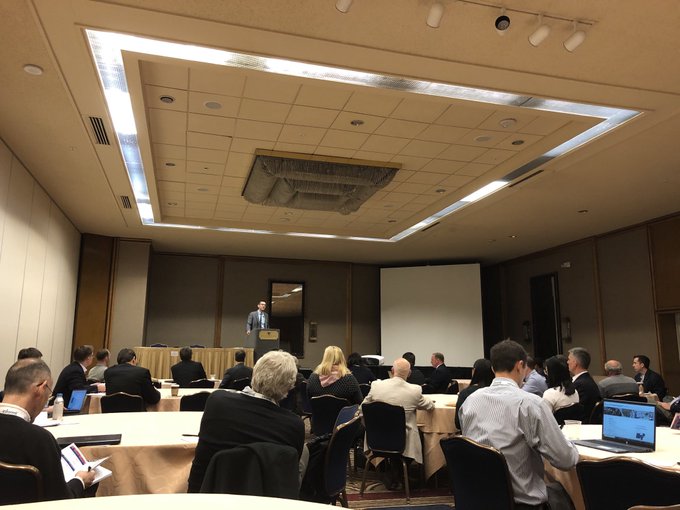
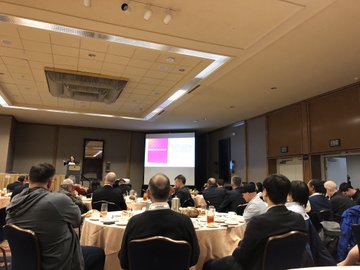
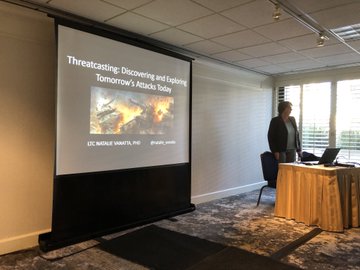
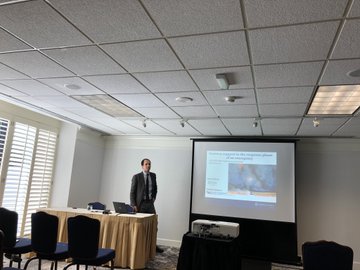
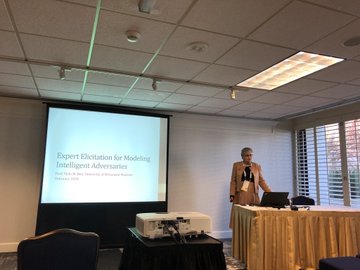
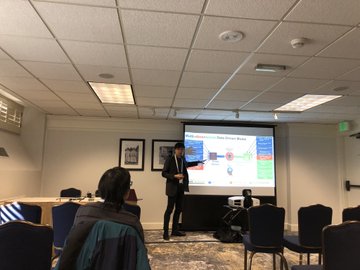
Below are some photos from the delivered talks and of one of the great lunches! Many thanks for the wonderful presenters. Special to also hear from Jun Zhang and James Minas.
Image

Image
Image
Image
Image
Image
Image
The venue was extraordinary - the hotel is located in downtown Monterey with hiking/biking trails in proximity and views of the Pacific.

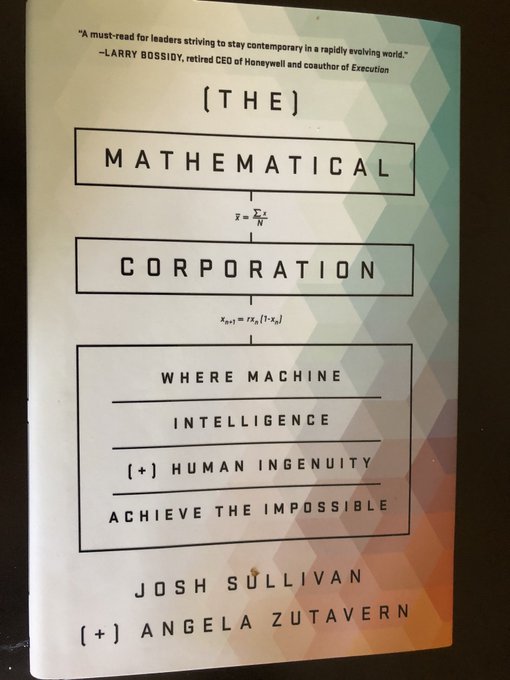
And, at its best, a conference generates new research ideas, new collaborations, reconnecting with colleagues, and growing your network. The INFORMS Conference on Security delivered on all counts and at a location that would be hard to improve upon.  I was even presented with a book by Booz Allen Hamilton consultants. Interestingly, I had had an offer from this company when I was finishing up my PhD.
Image
Image
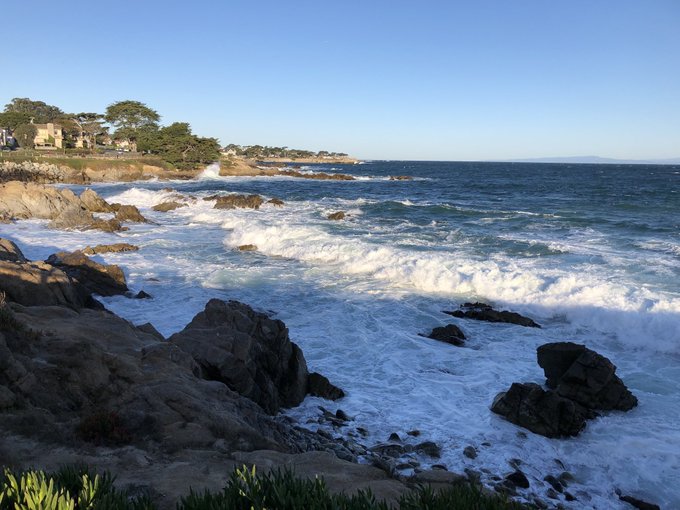
Below I have posted a few photos of the beauty of the natural environment of Monterey.
Image
Image
Image
Image
I am looking forward to the next INFORMS Conference on Security but, in the mean time, there is a lot of important research to be done by our community!

Thursday, January 16, 2020

Beginning of My Sabbatical and My Twelfth Year of Blogging

It is hard to believe that this month I am celebrating 11 years of writing on this blog. My first post  was on the New Year - New Administration - New Blog. In that post I also noted a Letter to the Editor that I had had published in The New York Times on the students in my Transportation and Logistics class that I teach at the Isenberg School.  It is quite interesting to look back at the posts. Many provide timely advice. Interestingly, my third post was on my interview with Linda Baker on the Braess Paradox, for an article that she wrote for the Scientific American. And, coincidentally, my most recent article is on The Braess Paradox, an invited chapter for The International Encyclopedia of Transportation.

My blog has over 1,600 posts that I have written!

I am about to start my sabbatical, which means that I will not be teaching this Spring 2020 semester. I must admit that I will miss not teaching Humanitarian Logistics and Healthcare and also my PhD Seminar but there are many projects to start and others to finish up and also numerous very exciting speaking engagements and visits. Some service activities to the Isenberg School (and beyond, of course), will still be on my plate.

I am very excited about the INFORMS Security Conference, which takes place next month in Monterey, California. The website is live and the speakers and talks look fabulous - I am especially delighted that all speakers get a 50 minute time slot, so one can really share insights and also gain some!

At this conference, I will be speaking on: Game Theory Network Models for Disaster Relief. Coincidentally, the first conference presentation that I ever gave was when I worked in the high tech sector for the Naval Underwater Systems Center in beautiful Newport, Rhode Island, and it was at an MIT/ONR Conference at the Naval Postgraduate School in Monterey! I was the only female presenter. In addition to working, I was also pursuing a Master's at Brown University at that time. It will be very special to be back there.

Some other highlights of my sabbatical, in terms of conferences and visits are the following:

In March, I will have the honor of giving a plenary talk at the Netgcoop Conference in Corsica, France, while my PhD student, Deniz Besik, presents on our work on tariffs, quotas, and trade at the INFORMS Optimization Society Conference in Greenville, South Carolina.

In April, I will have the pleasure of being an invited speaker at an International Workshop at the University of Brescia in Italy on Variational Analysis and Applications for Modelling of Energy Exchange. There I will see many wonderful Italian colleagues!

In May, it will be time to fly to Iowa, a state that I have never been to. Many thanks to Professor Ann Campbell for inviting me to give a plenary talk at a very exciting 2-day workshop - Future BA (Business Analytics) Prof! This workshop will take place at the Tippie College of Business at the University of Iowa and all expenses for accepted applicants will be covered. The workshop is for advanced PhD students and post-docs —especially women and individuals from underrepresented groups — who are interested in academic careers in Business Analytics.

A huge highlight of my sabbatical will be the CORS Conference in Toronto in June. Also at this conference I will have the immense honor of delivering the Harold Larnder Prize plenary talk. The list of previous recipients of this prize can be found here. I am absolutely thrilled by this recognition and am the only the second female to receive this prize, which dates to 1986. The title of my Larnder lecture is: Trade Wars: OR in the Economic Battlefields.

I spoke at the CORS Conference in Halifax and had a tremendous time. Having been born in Canada, and having lived for a few years in Toronto, it will be great to be back. 
I will also be giving a seminar at the University of Toronto in March.

There will be other conferences in June and I will be busy also co-editing a new Dynamics of Disasters volume with Panos M. Pardalos and Ilias S. Kotsireas. We have received a contract from Springer and work has already begin with refereeing some of  the contributions, etc.

And, in late August, as my sabbatical is coming to a close, it will be time for the CLAIO 2020 Conference in Madrid, Spain. In 2019, I had the pleasure of speaking in Chile,  Colombia, and Mexico, and am so honored to have been selected the IFORS Distinguished Lecturer (IDL) at CLAIO. I will give my IDL plenary at this conference with the title: NetwORks: Changing Our WORld for the Better. This will be my first visit to Spain.


Of course, as my schedule and time permit, I will still be supporting the great UMass Amherst INFORMS Student Chapter and its Speaker Series and also directing the Virtual Center for Supernetworks and working with my PhD students! Updates on my sabbatical will certainly be posted on this blog.

Many thanks to everyone for 11 great years of support of this blog!

Thursday, March 29, 2018

Hospital Emergency Preparedness - An Outstanding Lecture by a Security Expert

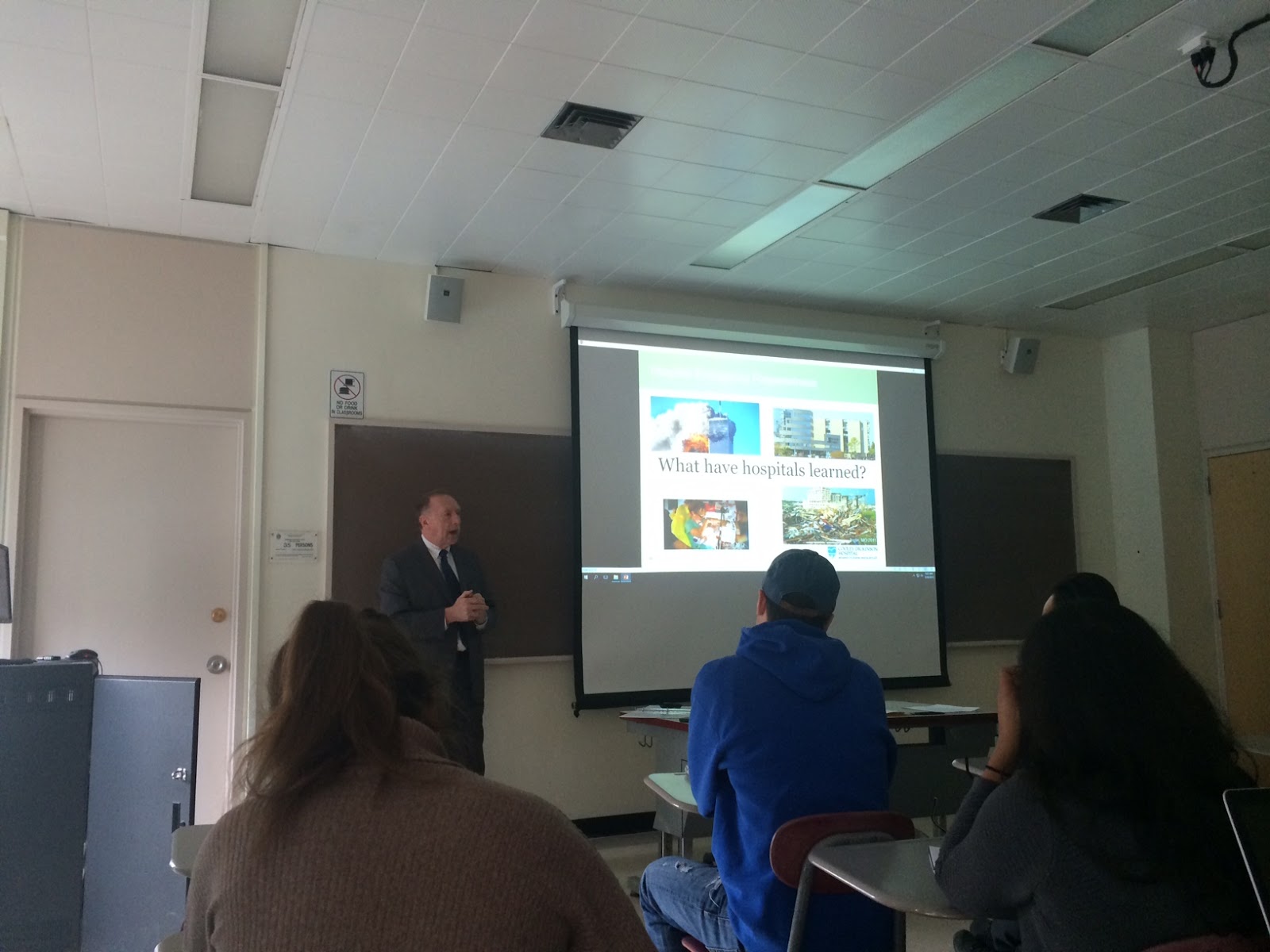
Today, the students in my Humanitarian Logistics and Healthcare class and I had the true honor and pleasure of hearing Mr. Brian Rust, who is the Manager of Security and Emergency Preparedness at Cooley Dickinson Hospital in Massachusetts, deliver a guest lecture on Hospital Emergency Preparedness at the Isenberg School of Management. Cooley Dickinson Hospital is a 140 bed acute care community hospital, providing primary care 24/7 for Hampshire County residents and neighboring communities. It is part of the Partners Healthcare Network and is now owned by Mass General Hospital in Boston, one of the world's leading hospitals. Cooley Dickinson aims to provide the best healthcare in the most appropriate setting.

Mr. Rust has 11 years of experience at Cooley Dickinson Hospital and previously also worked in the police department and at Smith College.

Mr. Rust's guest lecture was fascinating and provided us with a wealth of information on emergency preparedness in the very important hospital healthcare setting.

At the beginning of his lecture, Mr. Rust told us that hospital emergency preparedness lies somewhere between preparing for emergencies and preparing for disasters since every day a hospital is involved in life or death decisions. He noted that it is important to identify: What are we preparing for? since preparing for anything, anytime, is much too general.
He noted that the hospital prepares for "any incident that has the potential to have a negative effect on normal operations of the hospital." The Joint Commission is the regulatory body that also accredits hospitals and it emphasizes communications, resource and asset management, the importance of the functioning of utilities (he mentioned the huge impact that a water main break would have on hospital operations, for example), as well as patient clinical support. Events, originating with 9/11, and including natural disasters such as Hurricane Katrina, have stimulated the growth in and emphasis of hospital/healthcare emergency preparedness. I was delighted that he mentioned so many issues and events that we had been talking about in the course so far (and even had other guest speakers on) from the Ebola outbreak in western Africa (that Cooley Dickinson even prepared for and learned lessons from) to the Boston Marathon bombing.

He also spoke about the ASPR (Assistant Secretary for Preparedness and Response) and that hospitals have realized that one needs a system-wide perspective, even if hospitals, which are non-profits, compete with one another for patients, since although they are non-profits, they are still businesses. Means of cooperation include: fatality management, information sharing, dealing with medical surges, and even volunteer management, along with emergency operations coordination. Cooley Dickinson Hospital is part of a health and medical coordinating coalition. Members include hospitals, public health facilities, long-term care facilities, community health centers, and EMSs. He also emphasized - as several of the guest lecturers this semester have - that relationships between these various entities have to be built before emergencies and disasters occur. Despite numerous documents and plans, when an emergency happens, the training and experience kick in, and no time should be wasted in response.

Mr. Rust also reinforced the importance of practice drills and mentioned a recent exercise that his hospital was involved in which simulated a norovirus outbreak post a wedding with twenty patents arriving in the emergency room in twenty minutes. He also spoke on the scheduling of hospital staff, and the replenishment of supplies and medicines, and the fact that older hospitals do not have much (if any) space for warehousing. He talked about the maximization of existing resources (great reference to operations research) and the strengthening of community health resources and emphasized that it is humans that play the most important roles.

In speaking about the different regulations (and associated organizations) he mentioned CMS (Center for Medical Services) and how it identified such key essentials in hospital emergency preparedness as: safeguarding human resources, maintaining business continuity, and protecting physical resources. A hospital is supposed to be operational and self-sufficient for 72 hours following a disaster. Towards that end, he noted how Cooley Dickinson has alternative fuel sources and also mentioned how generators on low levels of healthcare institutions flooded both during Hurricane Katrina as well as Superstorm Sandy (something I had also mentioned to the class).

One of my favorite takeaways and quotes from today's fabulous lecture, during which I took copious notes, was that "hospitals are a team sport."

He spoke about the hospital incident command center and how incident command centers evolved from battling fires (I had shown the students a video of the response to San Diego's fires of a while ago which illustrated precisely such an incident response system, so the analogy, although not perfect, was great for the students to hear).

More precisely, what are the challenges for hospital emergency preparedness (EP)? Mr. Rust identified the following challenges, reminding us, again, that hospitals are non-profits:

  • hospitals compete with other hospitals
  • EP can be complex and confusing
  • it is costly to stock supplies and equipment that may be needed in emergencies
  • it is labor-intensive to prepare 
  • there is a low probability of high-impact large events
  • "apathy" - it won't happen here
  • defining triggers - when does it become an emergency, given that hospitals are involved in life or death decisions each and every day
  • "storm of century" media hype.
And what have hospitals learned from the various events and experiences? They now have procedures and policies and understand the value of working in concert plus "in a disaster, we all have to be together as one."

After the class and so many very interesting questions from the students, we took the group photo below.
We are truly grateful to Mr. Brian Rust for taking the time out of his very busy professional schedule to share his very valuable insights and expertise on hospital emergency preparedness with us. This is a guest lecture that we will never forget. He was an amazing Professor for a Day at the Isenberg School!

Sunday, November 6, 2016

Game Theory for Security Conference in NYC Attracts Speakers from Around the Globe

We returned yesterday evening from NYC from the fabulous Decision and Game Theory for Security Conference, GameSec2016, which took place November 2-4 at the New York University (NYU) Tandon School of Engineering,  located in Brooklyn. The view below is from our hotel room on the 18th floor of the Marriott. Since the venue was close to one of my absolutely favorite structures, the Brooklyn Bridge, I had to walk it.

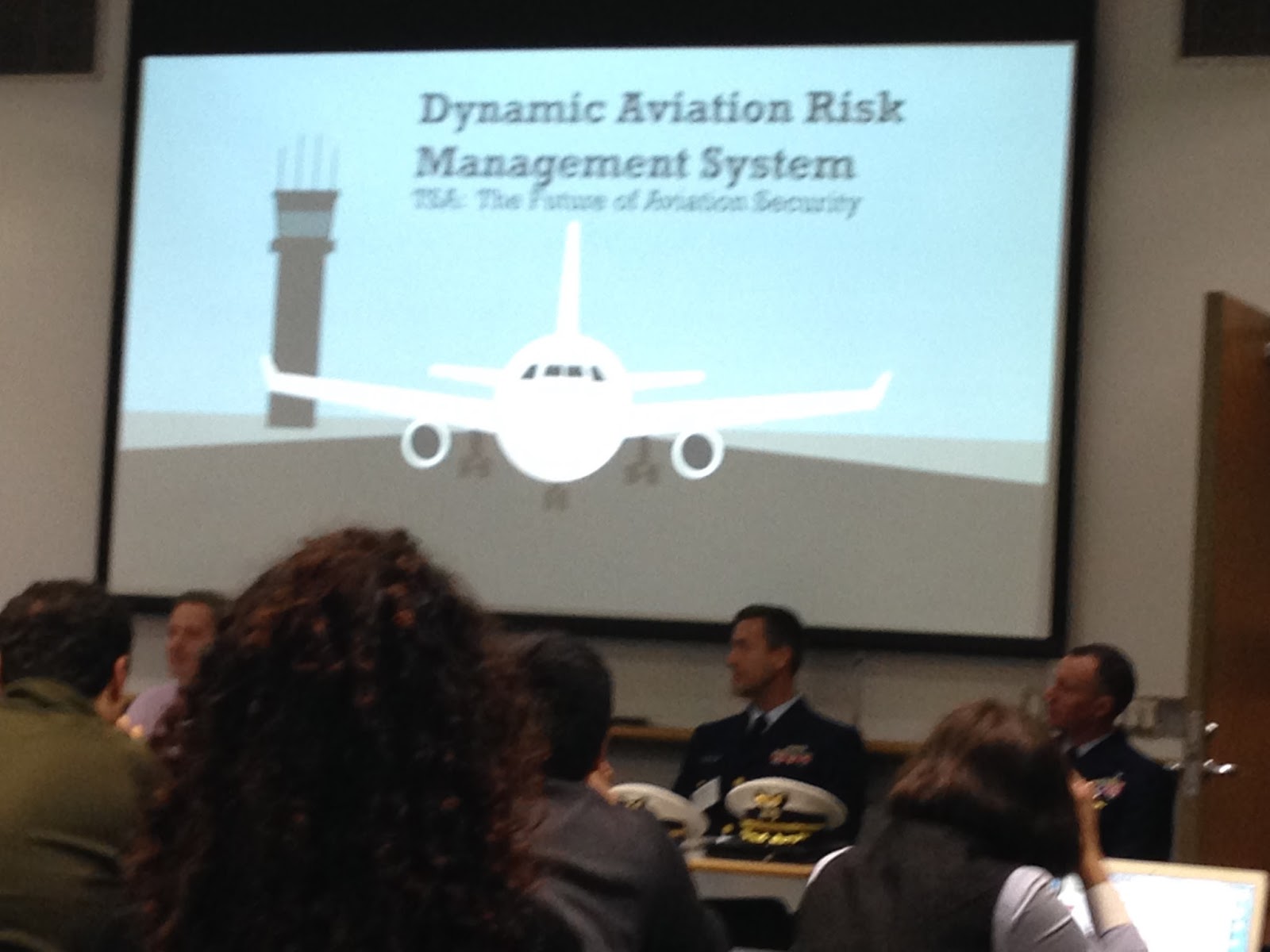
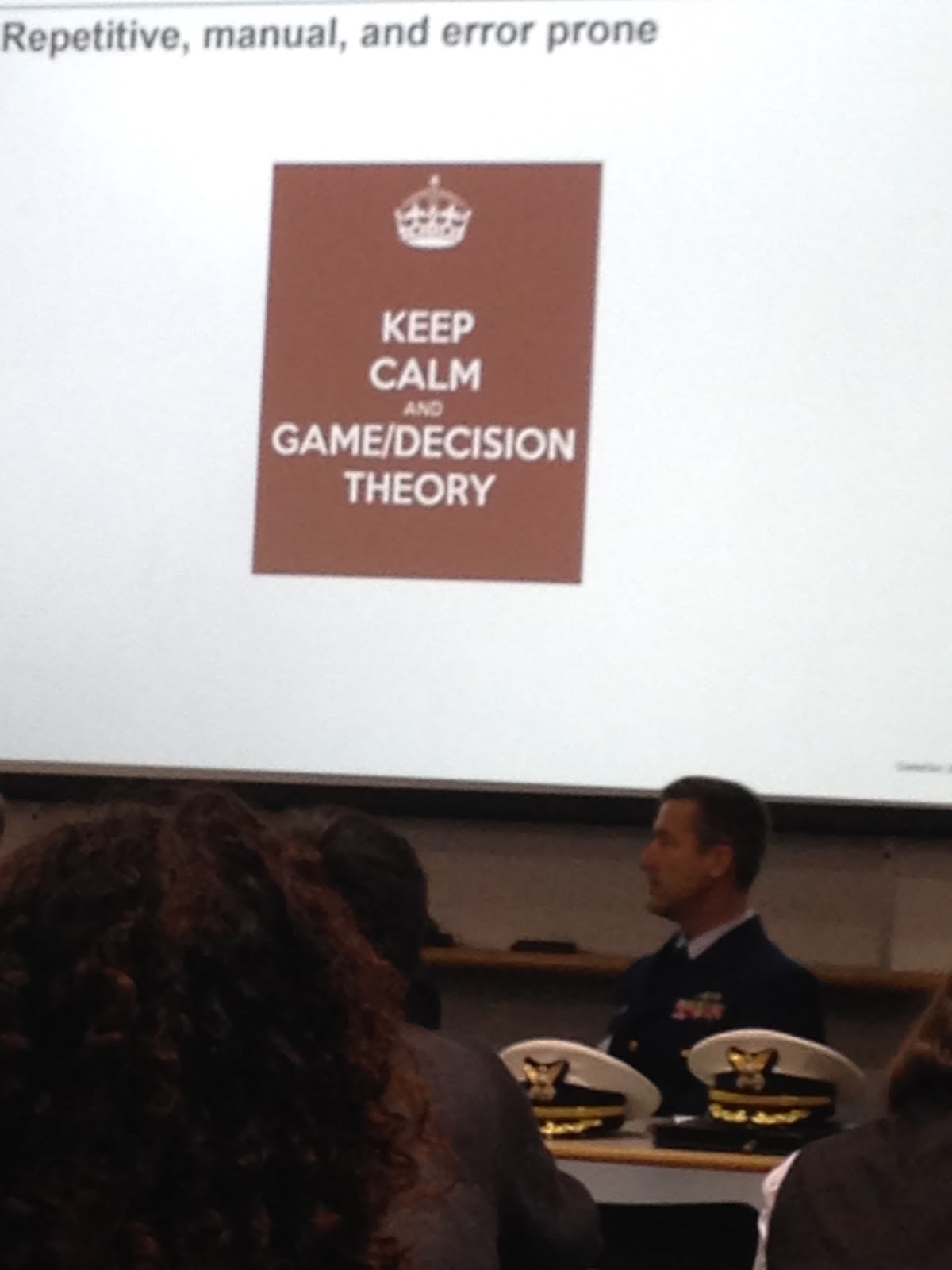
The General Chair of the conference was Quanyan Zhu of NYU and he deserves a big congratulations on the success of the conference as do the steering board and all the organizers. This focused conference, with the elegantly produced conference proceedings, had a single stream of presentations,  a panel with experts from the Coast Guard, the Transportation Security Agency, industry and academic reps, and two plenary talks given by George Cybenko of Dartmouth and me.

The special session on validating models and the panel were alone worth coming to the conference!
 Panel Discussion - Panelists Include:

  • Capt. Tom Morkan (US Coast Guard)
  • CDR Brian Murphy (US Coast Guard)
  • Nathaniel Gleicer (Illumio; Former Director for Cybersecurity Policy for the National Security Council)
  • Dr. Pratyusa Manhadatta (HP Labs)
  • Ron Sartini (Transportation Security Administration) 


It was outstanding to hear from the expert panelists how game theory is essential to their decision-making in practice and that includes such major tasks as protecting the Port Authority of New York & New Jersey and the port of Boston. Hearing how research that one engages in can make a difference is very inspiring, motivating, and energizing, and I will be sharing some of the insights when I teach my class on Tuesday at the Isenberg School of Management! 

Below are additional photos taken at the conference.


Lunches were provided, as well as snacks during the conference breaks.
On Thursday evening we were treated to a sumptious banquet at NYU's Torch Club in Manhattan.  It was great fun to travel together on the NY subway.

 
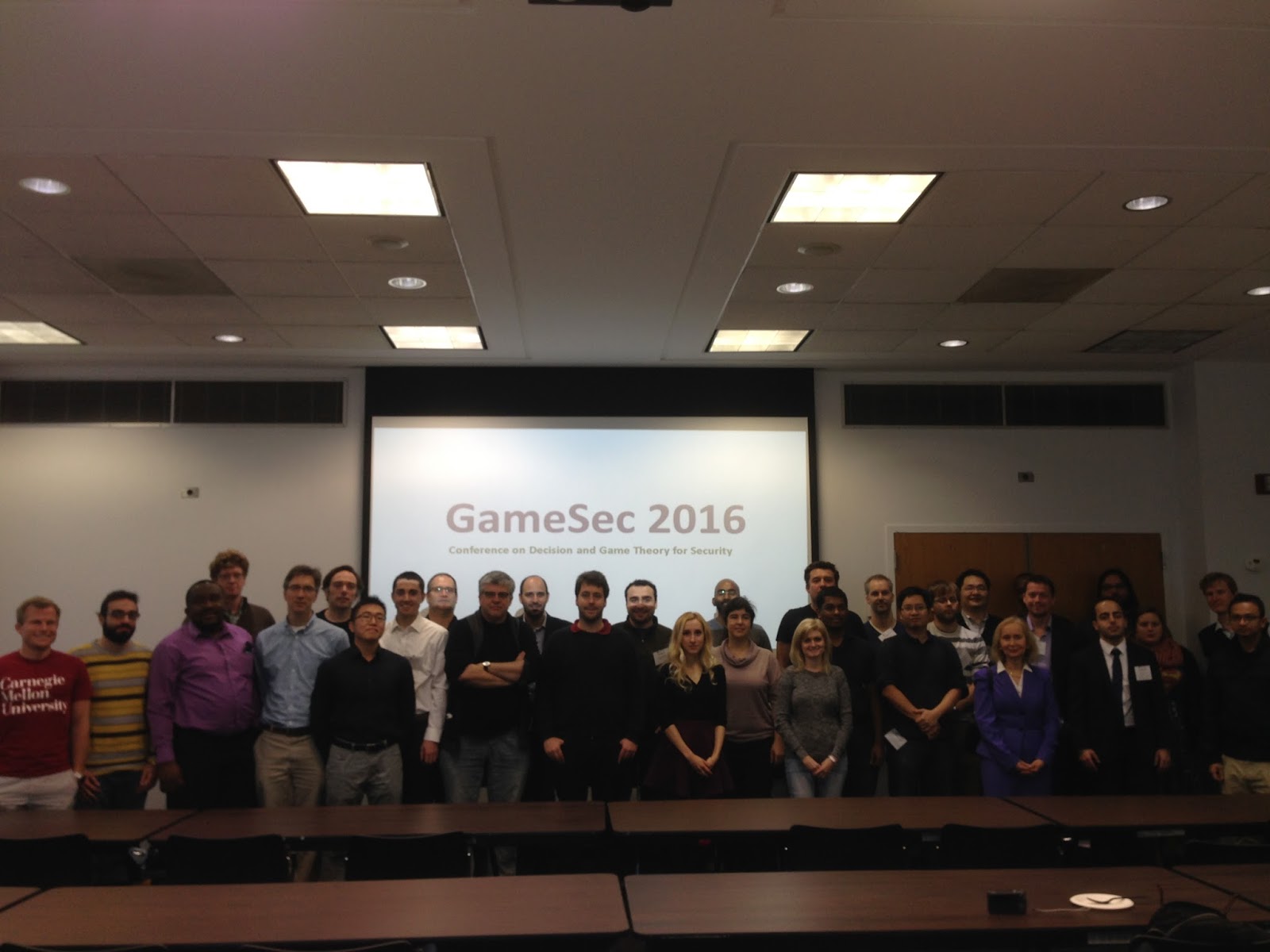
Below is a group photo of many of the participants, which was taken on Friday.
As can be seen from the conference program, the talks described many creative theoretical frameworks that add to our understanding of the strengths of game theory in a wide range of security settings, including: cybercrime and cybersecurity, cyber-physical systems, auditing elections, Internet of Things (IoT), denial of service attacks, strategic cybersecurity investments, voting systems, compliance, denial of service attacks (DOS), and more! I know that I will be reading the proceedings edited by Quanyan Zhu, Tansu Alpcan, Emmanouil Panaousis, Milind Tambe, and William Casey, from cover to cover, and will be citing the papers in this very valuable volume.
What very much impressed me about the participants and their talks and this speaks to the caliber of this conference, which was started in 2010, was the global participation, with speakers from, besides the US (including California), France, Austria, England, Australia,  Greece, Poland, Czechoslovakia, Switzerland, and other countries. The quality of the research and science was inspiring and the conversations and discussions throughout the conference made for very enjoyable networking as well  as scientific exchanges.

I was so honored to be introduced by Tamer Basar of the University of Illinois, whom I last saw at the great NETGCOOP conference in Paris, France. Professor Basar is a member of the National Academy of Engineering and his work on game theory and security is truly innovative and, if I may say, beautiful.

My friend, Rae Zimmerman of NYU also stopped by to say hello before flying out to speak at a conference in Portland. Below is a photo of Quanyan Zhu with Rae and me after my plenary talk. My plenary talk slides can be downloaded here.

Another highlight was to see the Springer booth with books on security, including a book in which my husband, my doctoral student, Shivani Shukla, and I have a book chapter: A Supply Chain Game Theory Framework for Cybersecurity Investments Under Network Vulnerability, Anna Nagurney, Ladimer S. Nagurney, and Shivani Shukla, in Computation, Cryptography, and Network Security, N.J. Daras and M.T. Rassias, Editors, Springer International Publishing Switzerland (2015) pp 381-398.

 And, on Friday, several of us, coincidentally, just happened to be wearing the NYU school color of purple, so I had to have the photos below taken as mementos.
To add to the excitement of the conference was that the NYC marathon is taking place today, November 6, 2016, so we also saw the planning for this mega race with about 50,000 participants taking part and with the finish line in Central Park and with a mini international race taking place in NYC in Manhattan yesterday morning. Since my fist language is Ukrainian I was delighted to see the Ukrainian flag in Central Park.

Thanks to Quanyan Zhu and the conference organizers for such a memorable, exciting, and very informative conference!