Saturday, May 8, 2010

Scenes and Sweets of Georgetown


I am back from serving on a multidisciplinary proposal review panel, which was intellectually and professionally very rewarding and enjoyable.

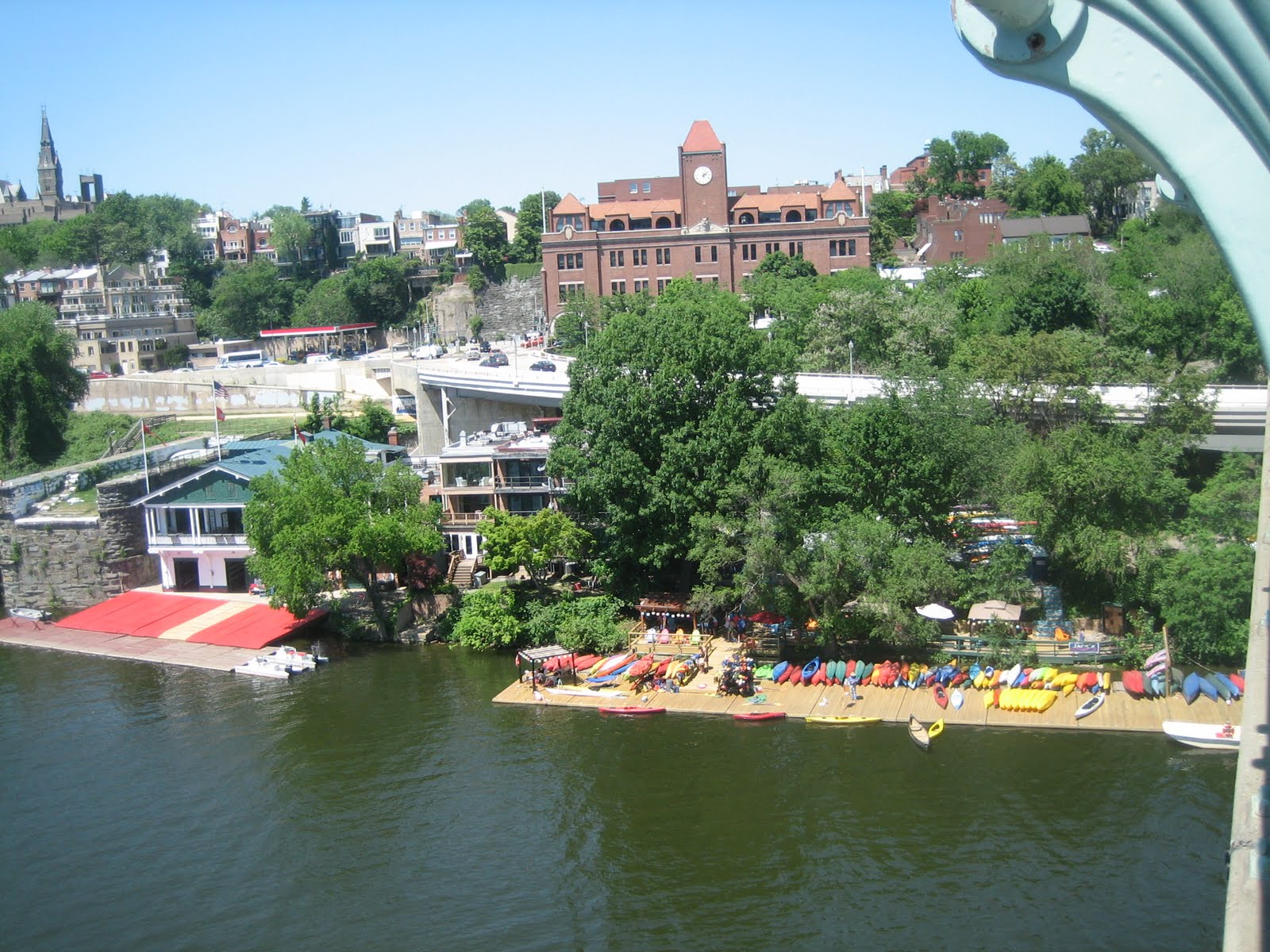
In my "free" time and since one can only sit so long, I enjoyed walking around neighboring Georgetown. The above photos were taken during my explorations.

I had some company sampling some of the delicious cookies at Dean and Deluca in Georgetown. Some of the cakes and other goodies featured in the photos above would make scrumptious Mother's Day treats.

I also came across the Ukrainian embassy in Georgetown with the flag flying proudly. Since Ukrainian is my first language, I could not resist taking a photo of the flag.

2010 World Science Festival Events are Announced

Earlier, I wrote in this blog, that the cosmologist, Dr. Stephen Hawking, will be a headliner at the 2010 World Science Festival (WSF), which takes place in NYC June 2-6.

The full lineup of 2010 World Science Festival speakers and commentators has now been officially announced. You may find the list of events and additional information here. This festival is definitely multidisciplinary and it is an extraordinary experience. I wrote about my impressions of it last year, since I was a panelist on Traffic at the 2009 WSF.

One of the events at this year's WSF that especially intrigues me is the one on music with Marvin Minsky of Media Lab at MIT, who is considered the founder of artificial intelligence, and Tod Machover, the composer. Marvin Minsky's daughter is a neighbor of mine in Amherst and, coincidentally, next week I will be at the Media Lab at MIT to speak at the NetSci2010 conference.

I would like to thank Brian Greene and Tracy Day, the organizers of the WSF, for putting together the 3rd WSF and wish everyone who is taking part in it this year a magnificent experience.

Wednesday, May 5, 2010

Sustainable Supply Chain Network Design

We are pleased to announce that the paper, Sustainable Supply Chain Network Design: A Multicriteria Perspective, has been accepted for publication in the International Journal of Sustainable Engineering. The paper is based on research conducted by Professors Anna Nagurney and Ladimer S. Nagurney.

Supply chain networks provide the infrastructure for the production, storage, and distribution of products as varied as pharmaceuticals, vehicles, computers, food products, furniture, and clothing, throughout the globe. Hence, the design of supply chain networks is a topic of engineering importance since it involves the determination of both the sites and the levels of operation of the relevant facilities that enable the manufacture, storage, and delivery of products to the consumers. Sustainability of supply chains has emerged as a major theme in both research and practice since the impacts of climate change have made both producers and consumers more cognizant of their decision-making and how their decisions affect the environment.

In this paper, we developed a rigorous modeling and analytical framework for the design of sustainable supply chain networks. We considered a firm that is engaged in determining the capacities of its various supply chain activities, that is, the manufacturing, storage, and distribution of the product to the demand locations. The firm is faced with both capital costs associated with constructing the link capacities as well as the links' operational costs. Moreover, the firm is aware of the emissions generated associated with the alternative manufacturing plants, storage facilities, and modes of transportation/shipment, which may have different levels of emissions due, for example, to distinct technologies of, respectively, production, storage, and transportation. The firm is assumed to be a multicriteria decision-maker who seeks to not only minimize the total costs associated with design/construction and operation, but also to minimize the emissions generated, with an appropriate weight, which reflects the price of the emissions, associated with the various supply chain network activities. We provided both the network optimization modeling framework and an algorithm, which was then applied to compute solutions to a spectrum of numerical sustainable supply chain design examples in order to illustrate our approach.

The paper may be accessed here.

Monday, May 3, 2010

Will be Speaking on Supply Chain Network Design for Critical Needs at NetSci2010

The NetSci2010 Conference will be taking place next week at the Media Lab at MIT, which is a gorgeous venue. I will be delivering the paper: Supply Chain Network Design for Critical Needs with Outsourcing, which is joint work with Dr. Patrick Qiang and my doctoral student, Min Yu.

The abstract of the paper is below:

Abstract: In this paper we consider the design of supply chain networks in the case of critical needs as may occur, for example, in disasters, emergencies, pending epidemics, and attacks affecting national security. By "critical needs" we mean products that are essential to the survival of the population, which can include, for example, vaccines, medicine, food, water, etc., depending upon the particular application. "Critical" implies that the demand for the product should be met as nearly as possible since otherwise there may be additional loss of life.

The model that we develop captures a single organization, such as the government or a major health organization or corporation that seeks to "produce" the product at several possible manufacturing plants, have it stored, if need be, and distributed to the demand points. We assume that the organization is aware of the total costs associated with the various operational supply chain network activities, knows the existing capacities of the links, and is interested in identifying the additional capacity outlays, the production amounts, and shipment values so that the demand is satisfied with associated penalties if the demand is not met (as well as penalties with oversupply, which are expected to be lower). In addition, the organization has the option of outsourcing the production/storage/delivery of the critical product at a fixed/negotiated price and with the capacities of those entities being fixed and known. The solution of the model provides the optimal capacity enhancements and volumes of product flows so as to minimize the total cost, which we assume to be a generalized cost, and can include time, subject to the demands being satisfied, as nearly as possible, under demand uncertainty.

Pipe Fixed but Still No Clean Water in Boston

******* An Update on this Story ********

Today, May 4, 2010, The Boston Globe is reporting that the water is now safe to drink in Boston and previously affected towns by the water pipe rupture.

**************************************

The critical pipe has been repaired that channeled fresh water to Boston and surrounding towns east of Weston, Massachusetts. However, tests still need to be conducted to ensure that the water that is coming through is clean and safe to drink. President Obama has declared a state of emergency in Massachusetts.

Students at the colleges in Boston are coping as best as they can, but with the heat, and this period being final exam period for many colleges and universities, it is not easy. Besides the dirty dishes that are piling up, many are going without showers and without their coffee. The Boston Globe has an update on how students are trying to cope.

All those affected will be appreciating and never again taking for granted fresh, clean water.

Sunday, May 2, 2010

Catastrophic Water Pipe Rupture Affects Boston

A single water pipe rupture in Weston, MA has affected the availability of water for 2 million in the Boston area. Ironically, this huge pipe is less than a decade old. There is speculation that the cause of the failure was in the rubber sleeves.

Boston receives its water from the Quabbin reservoir, which is located not far from Amherst, in western Massachusetts. The Quabbin was formed decades ago by destroying homes and relocating people. Cambridge has its own water supply and was not affected.

The Boston Globe has a report on this catastrophic failure in which the loss of a single critical network link is affecting millions. People in the affected towns (east of Weston) are required to boil the water that they consume for a minute. There is backup water for bathing and flushing toilets (but not for drinking).

The planners and engineers were concerned that such a failure might happen but could not construct a redundant link in time (it is scheduled to be completed in 2014).

According to the Globe: “You always need redundancy,’’ said Joe Favaloro, executive director of the MWRA advisory board, which advocates for ratepayers. He said it was unclear how bad the problem is, and what costs would eventually fall to ratepayers.

“You don’t budget for catastrophic failures on pipes less than a decade old,’’ he said. “The irony is of course that the [much older] tunnel is fine. The piece that collapsed is less than a decade old.’’

Also, according to the Globe: Water authority spokeswoman Ria Convery said that the authority, working with the Boston Water and Sewer Commission, was able to reconfigure the water pipe lines in the Longwood Medical Area. That temporary fix allowed four major hospitals in the area — Children’s Hospital, the Dana-Farber Cancer Institute, Beth Israel Deaconess Medical Center, and Brigham and Women’s Hospital — to go about business as usual, without having to resort to bottled water. These are premier medical institutions and, thank goodness, there is clean water for the patients and staff members there.

A colleague (and former doctoral student of mine), who is now a Visiting Scholar at UMass Amherst, and is a tenured faculty member at the University of Sydney in Australia, is spending this weekend in Boston. His wife arrived from Sydney at Logan this past Friday and since they had not seen each other since he began his sabbatical two months ago at the Isenberg School, they are spending this weekend in Boston. The weather has been glorious but without clean tap water, the store shelves have been emptied of bottled water and one has to be very careful about what one is drinking (and eating, frankly).

I do hope, for everyone's sake, that this huge problem is corrected as quickly and as thoroughly as possible. The themes of the Fragile Networks book that I co-authored with Patrick Qiang continue to make the news on a (much too) regular basis.

Saturday, May 1, 2010

A Thank You from a Student

The surprise gift and Thank You card were left in my office mailbox. These unexpected acknowledgments that I received yesterday came from an excellent, and very hard-working, undergraduate student that had taken my Transportation & Logistics class last semester. She is majoring in Operations Management and will be graduating later this month from the Isenberg School of Management at UMass Amherst. I have enjoyed the conversations that we shared very much.

The kindness and thoughtfulness of this student filled me with a very special warmth.

In the Thank You note that accompanied the beribboned box of Lindt chocolates, the student had written:

Professor Nagurney, You are one of the very few women role models that I have had in my life. You are very motivated and successful and inspire me. Thank you for giving me the opportunity to be your student. I got the job as a *********** and that is due to your partial contribution from your referral and your inspiration. Thank you so much! I wish you well.

**************
Fall 09 Student


Last night I wrote back to this student that I will always treasure the Thank You note that she sent me and that I know that she will be very successful both personally and professionally.

Teaching is not easy but the rewards of connecting with students, mentoring them, and seeing them begin to realize their dreams are some of the best acknowledgments that a professor can ever receive.